Author: Alan MacKenzie
Over 100 cities are racing to reach climate neutrality as part of the EU Cities Mission – but their work stretches much further in pursuit of a critical second goal. Keen to share its experience, Mannheim recently hosted delegates from ambitious cities and regions who were equally keen to learn from them on energy and engagement.
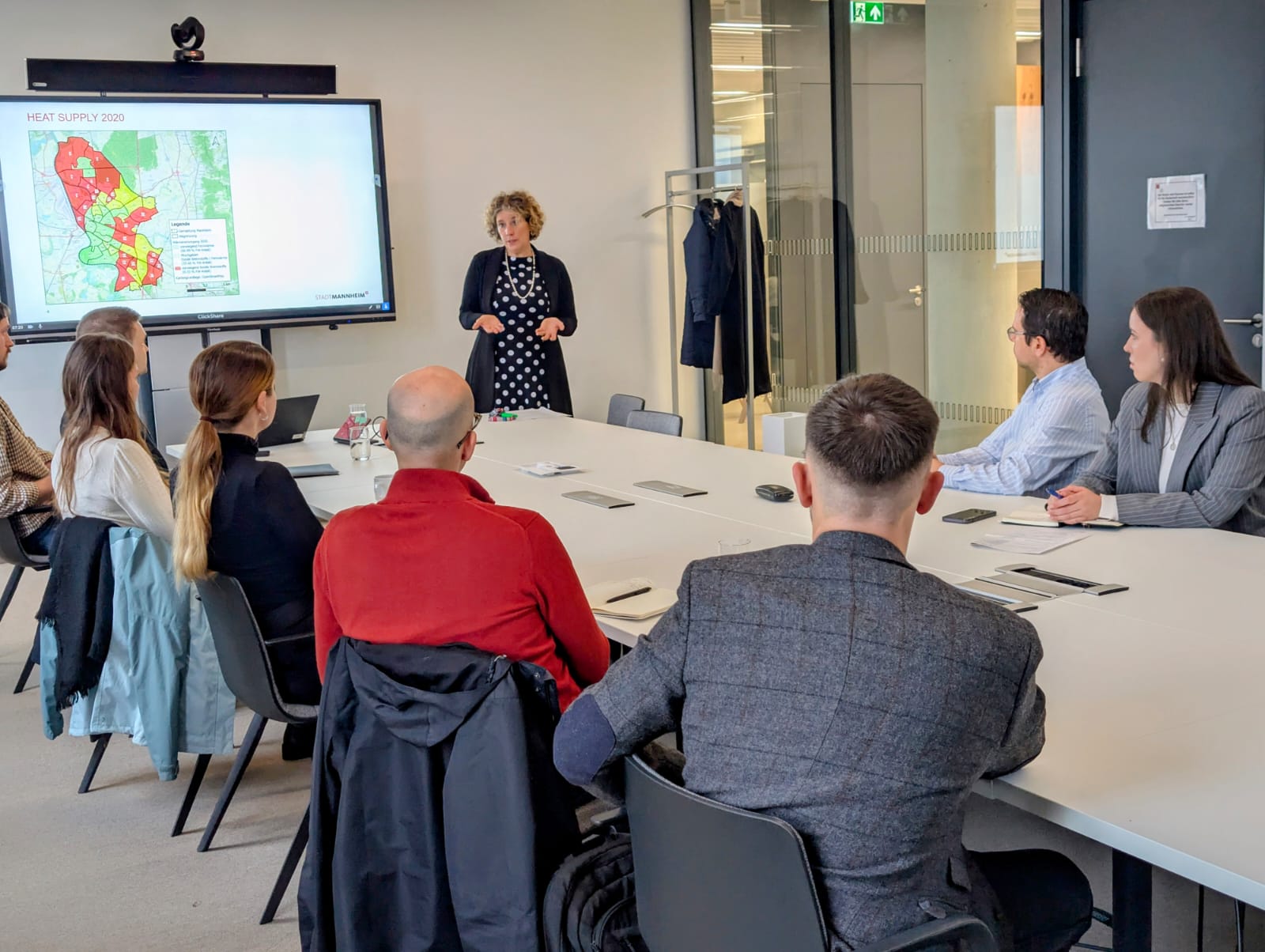
In a plain, glass-walled conference room, a dozen people watch politely but attentively as the speaker explains detailed PowerPoint slides, describing his city’s actions in a modest, ordinary tone – even though the content is, for most cities, extraordinary.
As part of the EU Cities Mission, Mannheim has strengthened its long-running commitments to sustainability and is working towards being climate neutral by 2030.
‘We will make this happen’
“These [climate] goals are goals for our future, for our industry and for our citizens. And we see them as part of our future,” says the city’s deputy mayor, Diana Pretzell, before going to greet the group in the conference room.
“We decided to do a big change in the heating system, even before we decided to be part of the Mission, and we thought, ‘Okay, then we can be part of the Mission as well and be climate neutral by 2030, we will make this happen.’”
Reaching this 2030 goal is the first objective for the 112 Mission Cities, but there is second critical role for them: to act as hubs of experimentation and innovation to allow all European cities to follow to climate neutrality by 2050.
The guests around the table are not short of ambition when it comes to their own hometowns, which is why they are here, listening keenly, to learn.
A learning mission
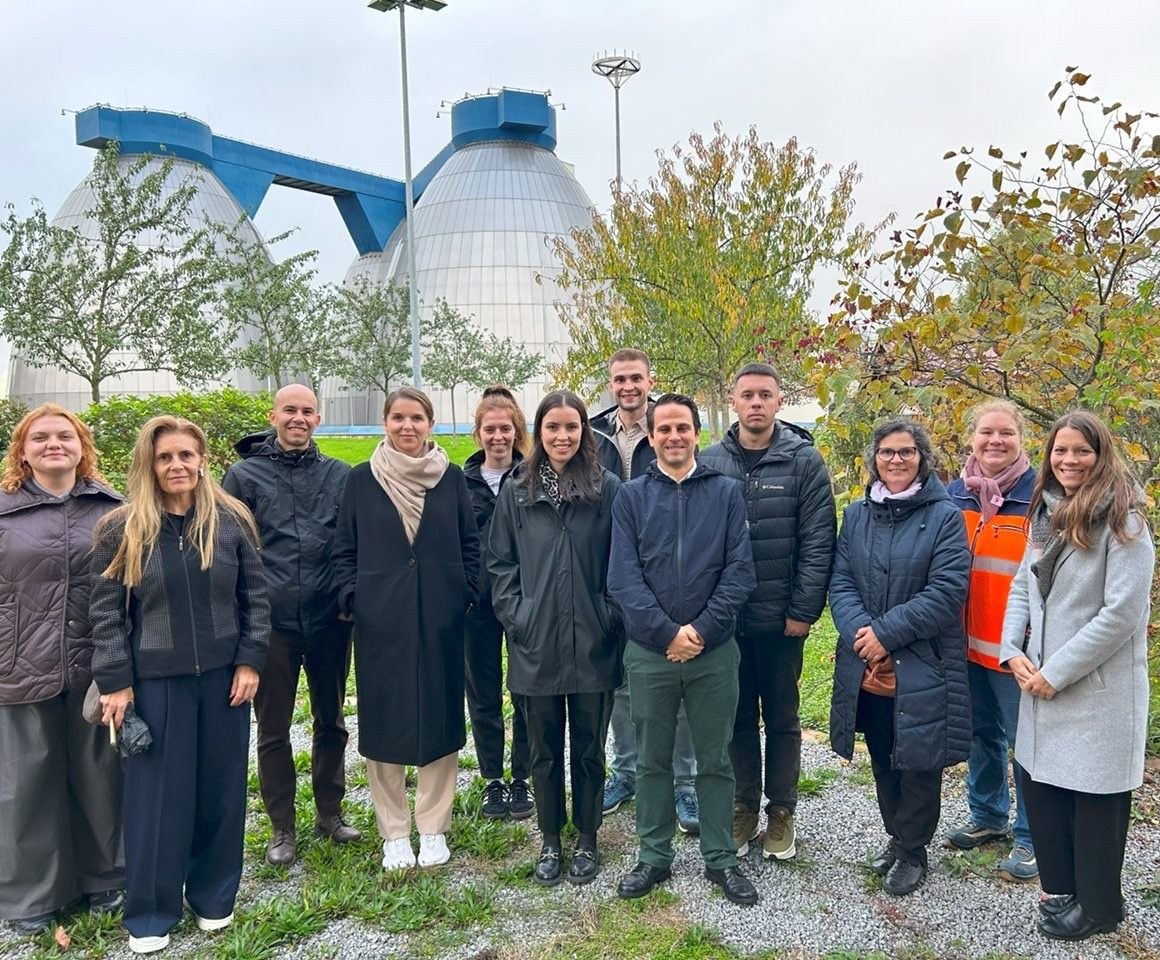
They are on a three-day visit facilitated by the Mission platform, managed by NetZeroCities, and have travelled from quite different corners of Europe to attend – one group from Lviv, Ukraine, and one group each from the city of Torres Vedras and the Coimbra Region, both in Portugal.
With the presentation coming to an end, the group assemble downstairs to take a minibus to visit this afternoon’s sites, to see for themselves how the city’s projects work.
Yesterday included a visit to the city’s innovative sewage treatment plant, which produces thousands of tons of treated wastewater sludge for the cement industry and aims to operate 100% on self-generated energy and waste heat. A project to produce carbon-neutral shipping fuel from the wastewater treatment process was also launched there this year.
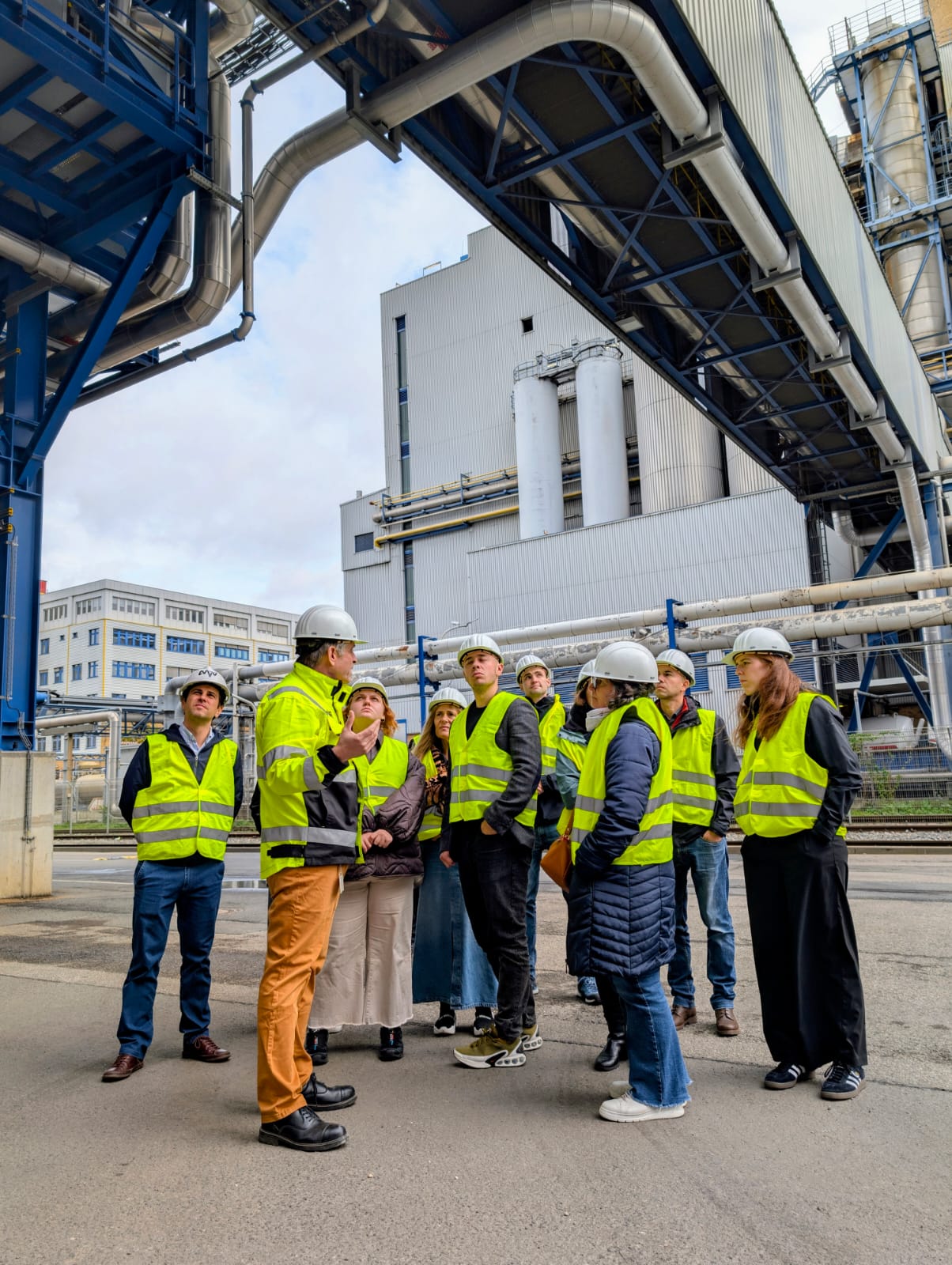
The group’s first destination today is the city’s heat plant – another site of large-scale technical innovation in Mannheim – that is partly owned by the municipality. Russia’s aggression and invasion of Ukraine has brought the issue of energy security to the top of European governments’ agendas, encouraging faster innovation and the diversification of energy sources.
Up to 30% of Mannheim’s district heating is currently served by climate-friendly energy and intends to be 100% green by 2030. The plant itself, which uses incinerated waste and the Rhine river as heat sources, aims to be climate positive by 2035 and to offer exclusively 100% climate-neutral products.
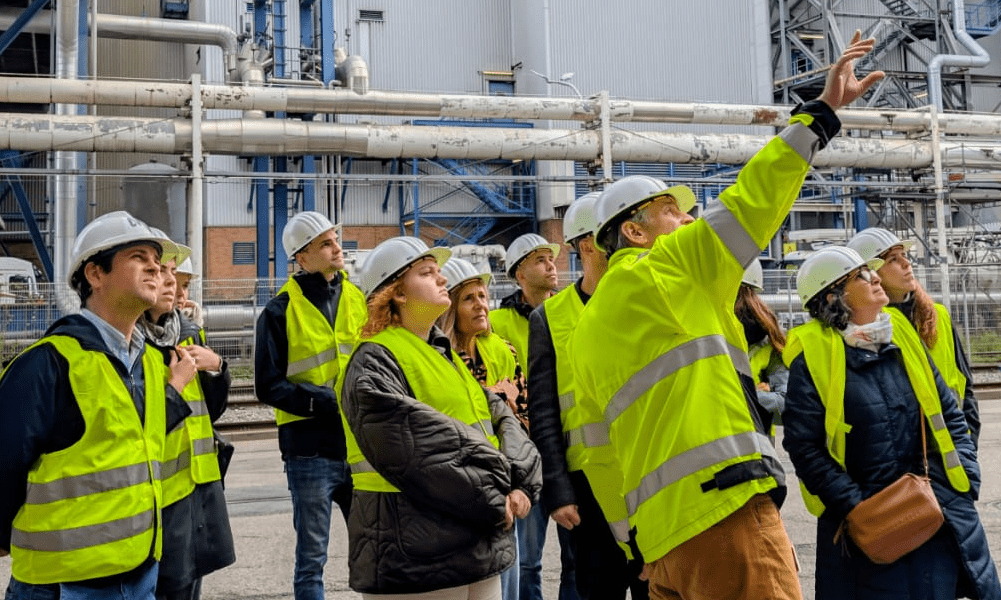
After a short introduction to other key figures and technologies, visitors don hardhats and safety vests to look around the plant and see in practice what those figures amount to. A trip to see the operation of the waste vat – where thousands of tons of rubbish is moved around with a giant crane suspended from the roof like a claw machine at an arcade – is a highlight for all.
Bringing learning to life
Valeriia Levchyshyna, one of the two young attendees from Ukraine, works as an analyst for the City Institute, a municipal institution in Lviv. She explains how this visit could support the city’s climate work while living under invasion.
“Ukraine right now is in a very hard position, but nevertheless, it is very important to play a long-term role – the initiatives that support climate neutrality are very important for Lviv,” she says.
“We aim to be very progressive, and we aim to better the results for our city and for the planet as well.”
Several Ukrainian cities are connected to the EU Cities Mission via the Sun4Ukraine programme, which pairs them with Mission Cities to allow learning and knowledge exchange, and offers technical support to integrate climate neutrality plans with recovery.
Of particular importance, therefore, is learning about Mannheim’s actions in the energy sector – a crucial sector in any country without being the target of missile attacks.
“Securing the energy sector [in Lviv] is crucial. And if we can combine this with a green transition that we can get from more experienced cities, it’s very useful for us.”
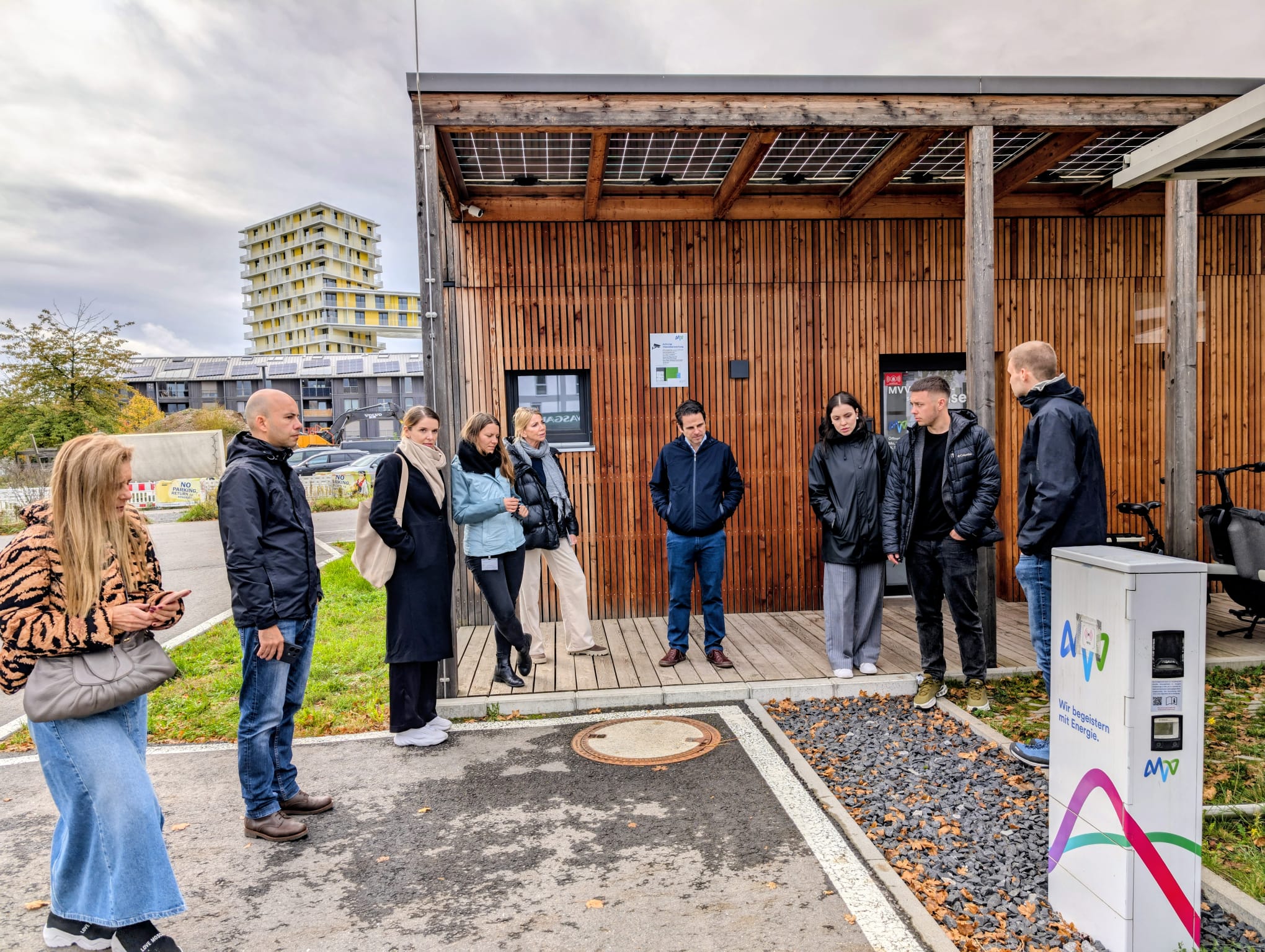
From energy generation to energising generations
Torres Vedras’s representatives are also interested to learn about Mannheim’s successes in local sustainable energy, but perhaps more applicable to their situation is the German city’s experience of engaging stakeholders, including through its Climate Action Agency. The agency was founded as a non-profit organisation in 2009 to raise awareness of the city’s climate measures.
André Alves, the head of sustainability and climate action in Torres Vedras, says they have been working on engagement for a few years, trying to bring businesses on board.
“It’s going very well but we still have a lot to do with the big industries, including transportation and agriculture, which in our territory are the main emissions factors.
“The city has a part to play in climate neutrality, but we can’t reach climate neutrality without our stakeholders. So, we have engaged [them], creating a climate council to put the information about what we are doing on the table, and also establishing a climate pact between the stakeholders and aligning them with our goals,” says Alves.
For Torres Vedras, the value of joining a European programme and visiting a city with strong climate goals is clear.
“The city is also working on a climate action plan, and we have the ambition to be climate neutral by 2050. So it’s important to learn with a Mission City and NetZeroCities, to do this kind of exchange and to learn with cities that are more advanced on this issue.”
Also visiting from Portugal is Nuno Pomar from the Coimbra Region, an association of 19 municipalities that is “heavily affected” by climate change.
“We are facing droughts, floods, extreme events, and so we need to tackle it,” he says.
Part of that action will include engaging its citizens and stakeholders and Pomar too is keen to take home lessons from Mannheim.
“The governance model of the city is very important to learn from them and how the city can engage not only with the citizens, with the private sector, with the universities, but also with the public agencies, working together in order to boost their climate adaptation plan.”
And how Mannheim is engaging with its population via its climate agency was “really inspiring,” he says.
“It’s been very fruitful to see this reality and for sure we will take many insights to our region to also implement similar projects.”
Leading, but still learning
Dominik Stroh, who is responsible for monitoring Mannheim’s path to climate neutrality, says the city has a big history of climate action, but there is still more to learn from other cities who are thinking about different priorities.
“We are a very industrial city, and so we often think about the energy sector, how we can make our energy supply renewable, and about energy efficiency measures,” says Stroh.
“But many other cities are thinking quite a lot about the mobility and transport sector. Our strength is really in the heat transition and energy production, and the mobility sector is quite a big challenge here in Mannheim, so we could learn a few things from the other cities who are further [on in this sector].”
Where can cities start on climate action?
And for those cities who are not so far on their climate journey, but want to go further?
Mannheim’s deputy mayor has some sound advice: “Bring people into action. Bring them together and help them bring things into action, bring up new ideas and have a good plan that you fulfil. Also, measure it. That’s extremely important.”
Representatives from Lviv, Torres Vedras and Coimbra Region met in Mannheim as part of a series of group study visits, facilitated by NetZeroCities and delivered through the EU Cities Mission. Applications from cities to join a second series of visits in 2026 are welcome from 15 December – see here for more information.