Author: Sean Errey
As some of the most ambitious cities in Europe, Mission Cities have made strong climate commitments, but how are they moving from plans to action? In Portugal, Guimarães is anchoring climate neutrality in everyday experience, with the community, private sector and the landscapes of home – and sharing their know-how.
For Guimarães, the 2026 European Green Capital, the visit of three peer cities was more than a chance to showcase its projects. It was an opportunity to reflect alongside contemporaries on how far the city has come in building a shared climate transition rooted in local ownership and long-term stewardship.
"In just two and a half days, we shared what we're doing, and also learned what we can do better," said Francisco Carvalho from Guimarães's climate transition and landscape laboratory teams. "We wanted cities to see how political consensus, citizen engagement, and private sector partnerships can reinforce each other. But we also wanted their feedback, and their questions."
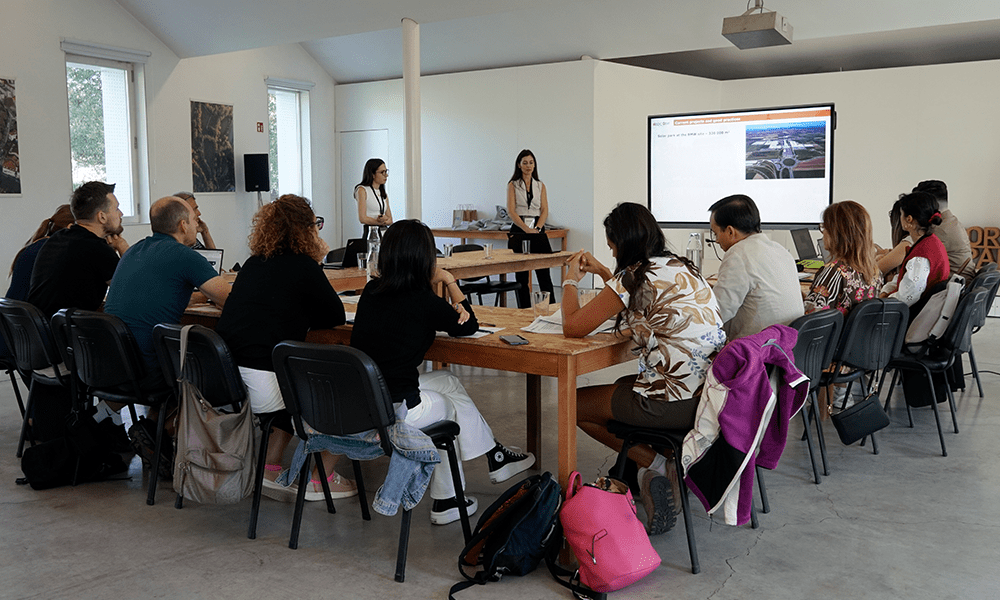
As host to Debrecen (Hungary), Ústí nad Labem (Czech Republic), and L'Aquila (Italy) for a study visit, Guimarães welcomed partner cities to the innovative research and education centre of Laboratório da Paisagem. This hub, acting as a home for sience–based policy making, gave structure to the visits and shaped the focus around the key transformative climate actions of the city.
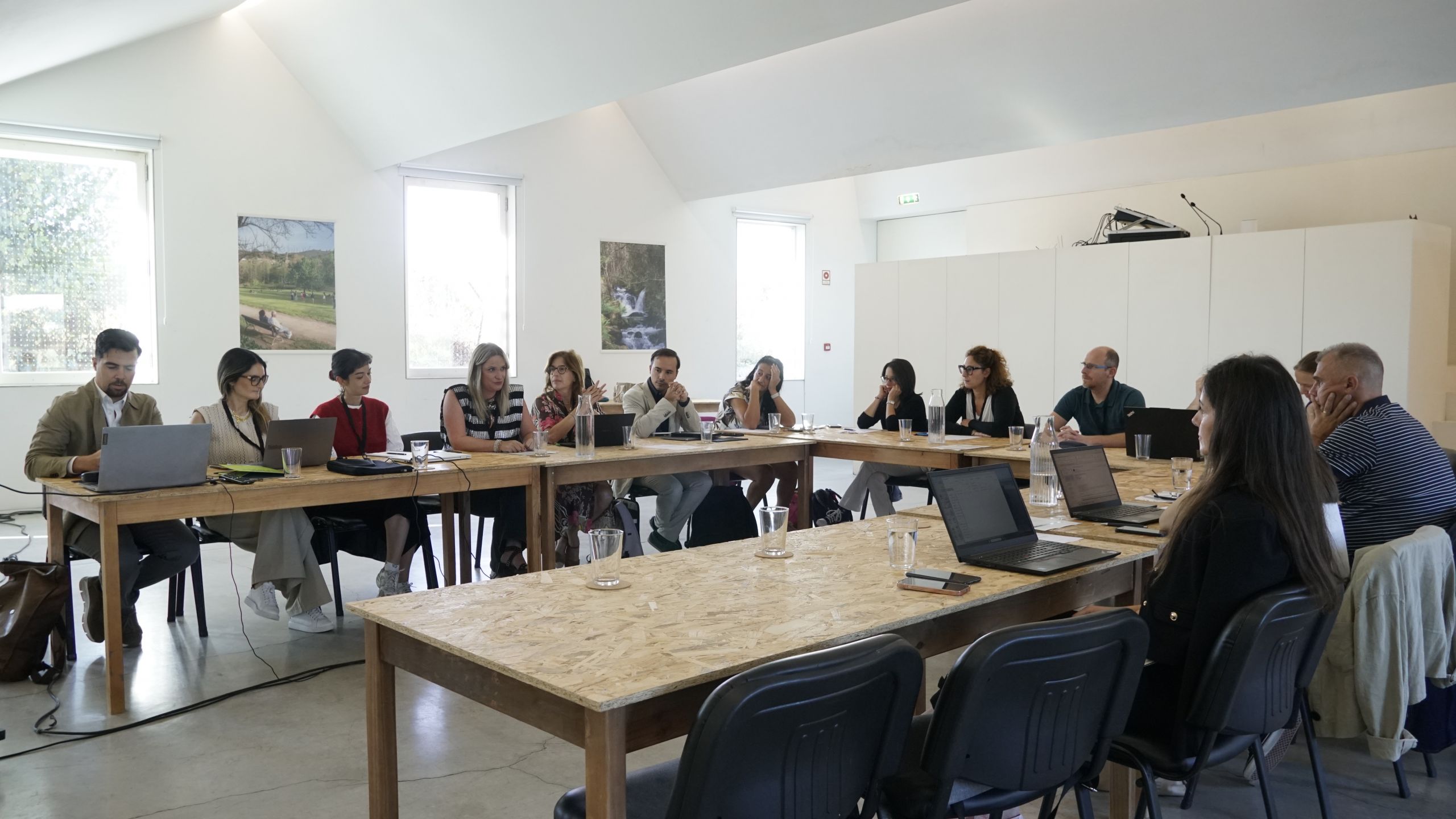
Credit: Laboratório da Paisagem
In District C, a pilot area for climate action, participants explored how citizen assemblies, ‘greenways’, and community gardens are transforming passive consultation into ongoing civic dialogue.
“We focused on study visits in our pilot District C,” explained Francisco Carvalho from the city’s climate transition and landscape teams, “showcasing what we are doing in transforming the landscape, but also engaging the citizens, engaging the private sector with the climate pact, [and] having the citizens assemblies.”
At a nearly zero-emission gymnastics academy, Debrecen saw a vision for their own energy community begin to emerge, linking architecture, public services, and climate ambition in one space.
Meanwhile, along re-naturalised rivers and carefully engineered retention basins, representatives from L’Aquila found inspiration for how they might apply a Nature Restoration Law within their own mountainous region.
These weren’t isolated interventions. They were part of a broader ethos of co-creation, blending top-down vision with bottom-up momentum. As Carvalho put it to the participants, to inspire a thought, “How do we build a methodology for a citizen’s assembly? How do we collect the outputs and give that back to citizens? How do we engage the private sector?” Each of these questions lies at the heart of Guimarães’s approach; one rooted in action, reflection, and a shared, cohesive responsibility.
Learning across cities and across systems
What made the visit powerful was not just what Guimarães presented, but how it resonated differently in each visiting city.
- For Debrecen, the key insight was that buildings can catalyse systems change. “It was really interesting to see how we can build in this way and use it as a first step for energy communities,” said Emese Molnár, a Debrecen city representative.
- Ústí nad Labem left reflecting on the city’s informal voting mechanisms during assemblies, simple tools for surfacing shared values.
- L’Aquila, working to restore the Aterno River, found alignment between its ecosystem goals and Guimarães’s flood mitigation work.
“How they will implement nature restoration plans is important to understand the problems in restoring ecosystems,” their representative said.
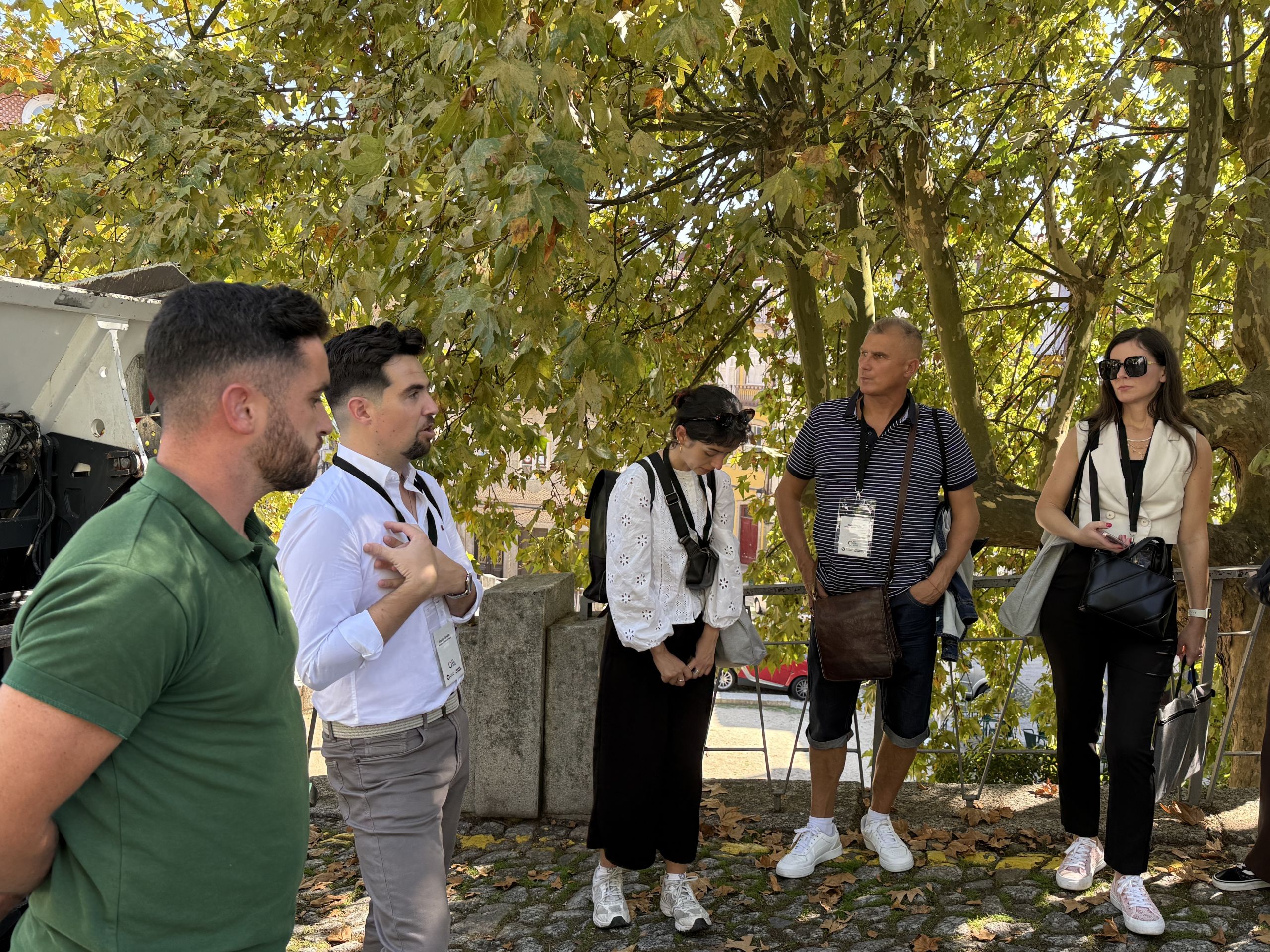
Credit: Laboratório da Paisagem
More than a visit: a shift in mindset
The study visit was co-facilitated by Meline Gonzalez Piloyan, from Eurocities, who has designed several peer learning programmes through NetZeroCities. She says real transition happens when cities don’t just showcase best practices but also open up their processes to be shared with other cities.
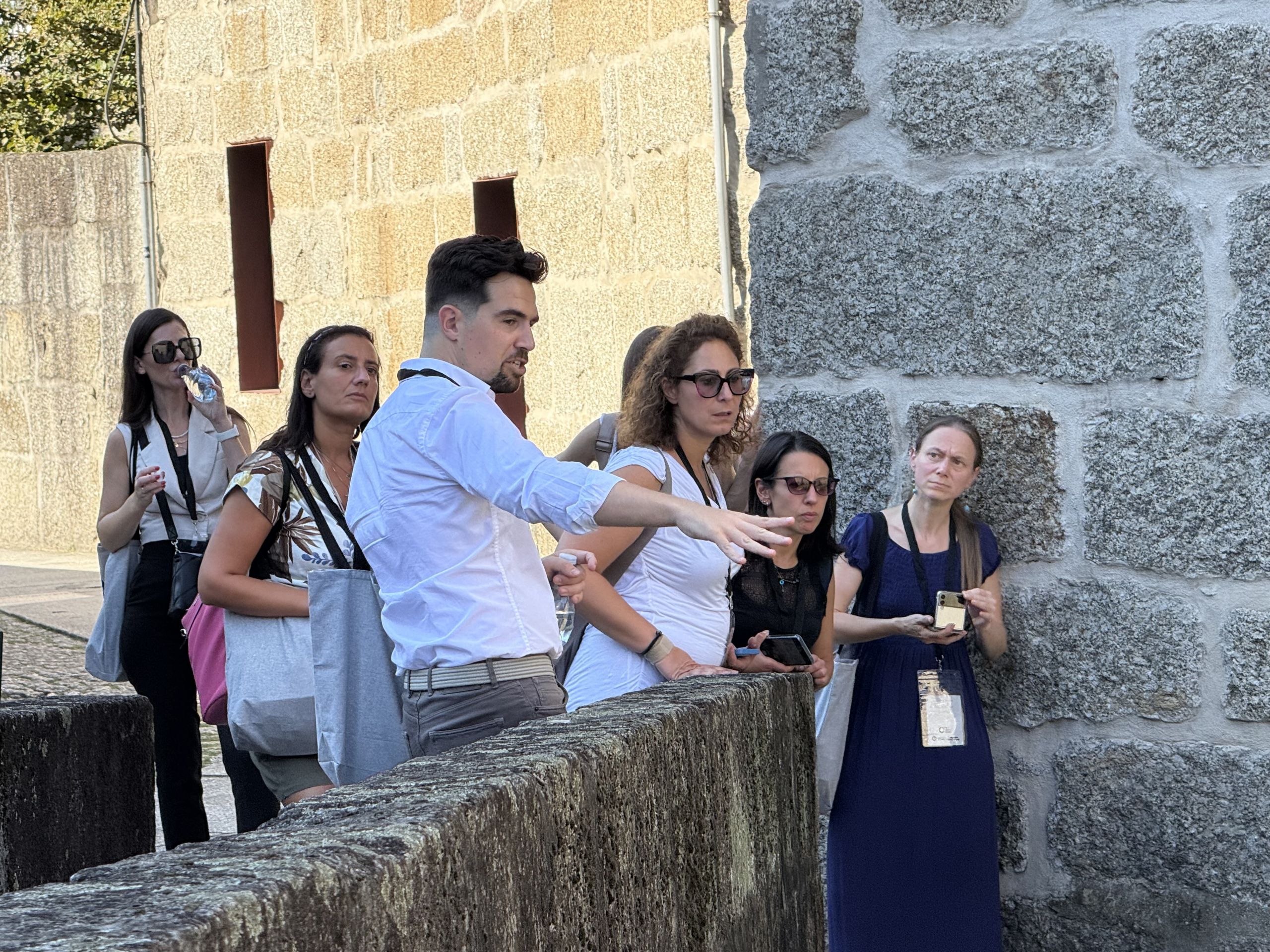
Credit: Laboratório da Paisagem
“My key takeaway is that when a city is working collaboratively with their internal departments, but also externally with stakeholders such as the private sector and engaging their citizens through a bottom-up approach, then a climate neutrality transition is possible.”
Indeed, the Guimarães experience offered more than technical inspiration. It provided a model for what it looks like when a city owns its transition, not only administratively, but culturally, when local actors, from multinational companies to SMEs, show up not just as stakeholders but as citizens and co-authors of the process.
As NetZeroCities continues to support Mission Cities on their journey, experiences like Guimarães’s show what’s possible when place-based innovation, multi-sector partnerships, and collective visioning are given the space to flourish.
Guimarães hosted representatives from Debrecen, Ústí nad Labem, and L’Aquila in September 2025 under the Group Study Visit programme, which is facilitated by NetZeroCities, the EU Cities Mission platform. For more information, follow the link below: