Written by Alan MacKenzie
Cities can't reach climate neutrality without help – not only do they need the consent of locals for ambitious plans, but they need their ideas too. Grenoble–Alpes Métropole in France is treating the challenge seriously and recently told other cities how they are making collaboration meaningful with their citizens.
"We know that it's not only talking to the brain that provokes change, so we also try to change our way of acting and trying to talk to the emotions also," says Ylva Brasjo from Grenoble-Alpes Métropole's climate team.
Speaking to and from the heart in an often-heated political space could be asking for trouble. However, Brasjo and her colleagues are committed to hearing diverse voices from across the region.

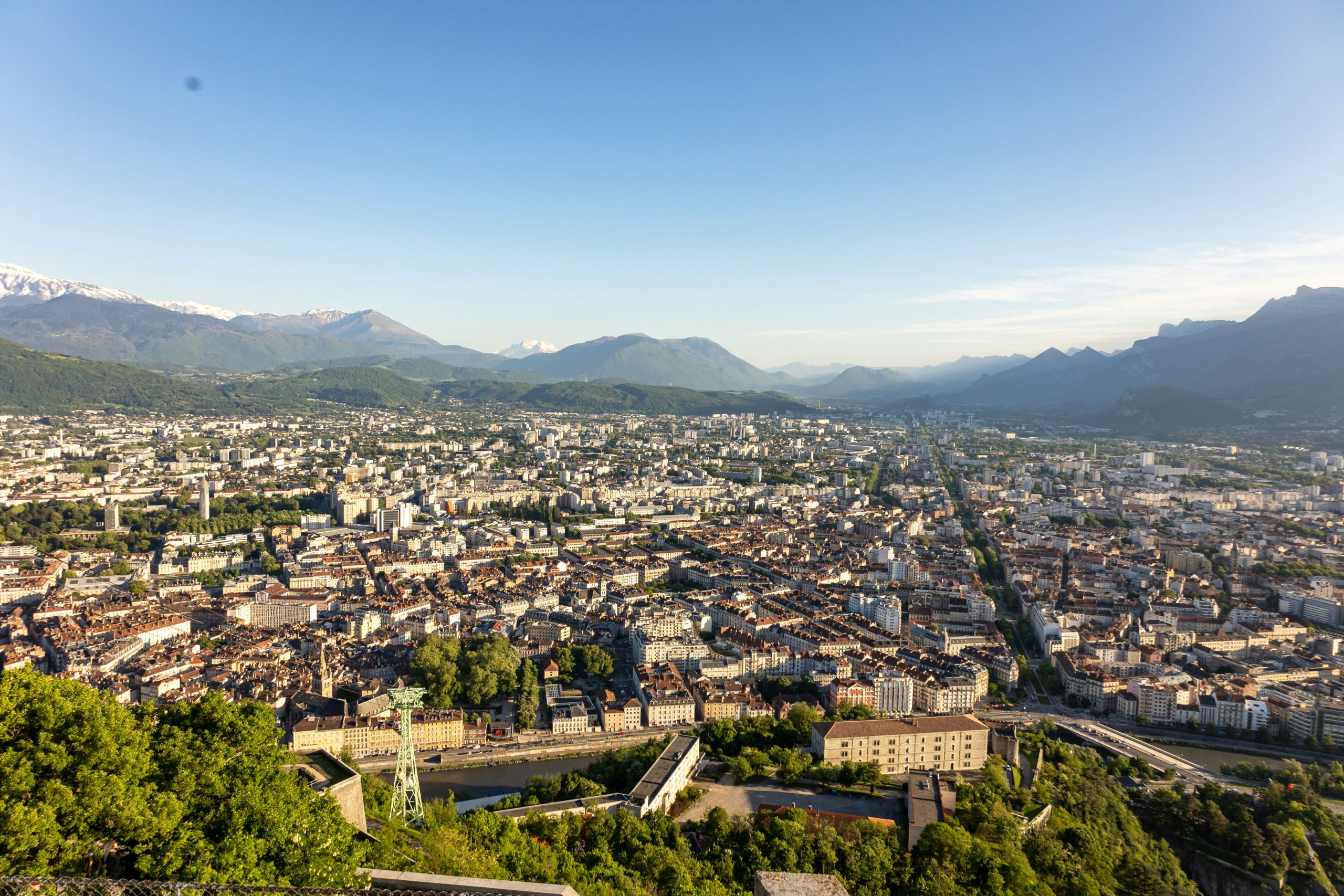
The metropole is made up of 49 municipalities (including the city of Grenoble) with varied landscapes – urban, suburban, rural and mountainous – and has 450,000 inhabitants, making local needs and concerns tricky to capture.
"It's something that we take really very seriously," she says.
From their work on engaging local people, you can see they mean it.
"Climate justice goes hand in hand with citizen engagement, so we have a whole department that works specifically on citizen participation and also the importance of behavioural change to act on climate and emissions."
The metropole was the first in France to have a climate plan in 2005 and became the European Green Capital in 2022, coinciding with its first climate assembly – a complex project requiring great time and resources, but worth it for the "truly transformative experience," says Marine Fabre, part of the citizen engagement team.
Speaking to people from across a spectrum of opinion is critical. This requires a "safe space" to air opinions, including negative ones, "where you can express yourself and you can change opinion," she says.
"The way we gave voice to people – the fact that it's not people who raised their hand and said, 'We want to work on climate,' but we were seeking people quite far from the question of climate – was very strong," says Hélène Clot, who directs the metropole's citizen engagement agenda.
Kicking off a climate assembly
The goal of the assembly then was straightforward: give citizens a say in tackling climate change locally.
One hundred locals, selected by lottery, worked a total of 100 hours across five weekends to create concrete climate action proposals, with the sessions run by a committee of academics, rather than by Grenoble-Alpes Métropole. Having a committee oversee the sessions, says Fabre, ensured the independence of the process from the metropole, while the random selection lent it legitimacy.
"I think it can be the same question, legitimacy and representativeness. I think it's because they were representative of the population that they are legitimate to express a good opinion what is acceptable, or affordable, or not," she says.
Listening and learning through local engagement
A final report from the assembly contained more than 200 proposals and brought a few important lessons for Grenoble-Alpes Métropole and other municipalities thinking about making the same commitment to community engagement.
For example, most citizens accept that reaching carbon neutrality means making difficult choices, says Fabre, but they also need support and guidance, not only bans and restrictions. They also want to see that the transition effort is shown to be shared by everyone (including public authorities, companies and individuals), and to know what actions are ongoing or have already been taken.
These lessons can be applied to several key steps for a successful climate assembly:
- Ensure the panel is representative, not only by gender and age but education level and environmental awareness
- Clearly define the governance, i.e., who makes what decisions and when
- Guarantee an independent process (as Grenoble-Alpes Métropole did with its committee of academics above)
- Create a space for co-creation
- Follow up.
The final point is another notable action for building trust, showing participants that their input won't be left in a drawer and forgotten.
"That's why we created a monitoring committee including some former participants and academics, to keep this momentum alive and track progress over time," says Fabre. And the committee has met annually with politicians since 2023 to ensure the recommendations are put into action.
Walking the walk – acting on citizen input
Six months after Grenoble-Alpes Métropole's climate assembly, its relevance was underlined when local politicians voted to implement several of its proposals, including the creation of a new peripheral bike route and funds for solar panels.
There was also political will to build on the success of the assembly. Through ‘climate debates’ between citizens, stakeholders and experts on local climate issues, the metropole used an “educational format to reach a wide audience and involve residents in the story of carbon neutrality future,” says Fabre.
Two debates, one on food and another on cooling the city (Grenoble could face 40 days of heatwaves per year by 2050), with workshops and events with professionals. Cooking classes, in the case of the food debate, for example, created a strong link between theory and practice, and contributions were made by other experts such as healthcare workers, chefs, and farmers.
What is clear from Grenoble-Alpes Métropole’s actions to engage citizens, both deeply and widely, is that it has paid serious attention to what comes next. With its climate assembly, it understood how necessary it was to follow up and how this would strengthen and maintain the bonds it created with participants.
These connections also have another value beyond repeated contribution, and during the debates the metropole took those who were “already motivated and concerned” and trained them as citizen ambassadors “to inspire their friends, families, colleagues to change habits.”
“What truly makes a difference we think is taking actions and embodying the change with living experience,” says Fabre.
“I can just say that it’s not finished” – but it’s clear they have made an excellent start.
What strategies can cities take for better engagement?
Hélène Clot, who also leads Grenoble-Alpes Métropole's strategy and innovation, says there are three routes cities can take for engagement, but they have to choose one only and spend two or three years on it, rather than focusing too broadly.
"The first one is a very wide communication for everyone and saying, 'Ok, I won't focus on [a particular group of] people, but I'll give the information to everybody,' and it's a strategy which takes time and money," she says.
"The second one is to focus on a particular problem and take all the steps of behavioural change," from making people aware of the problem to delivering change in a certain time.
Finally, "look for allies, people who are already changing and could be your assistants and give them capabilities to grow and work with you."
Her colleague Marine Fabre advises to highlight 'co-benefits', like health or saving money, rather than speaking about ecological issues. Also, show that everyone has a role to play, separately and together.
"We all do our part," she says. "We are from the same system and we have to make individual change but also collective change and show that collectives or municipalities are moving but also individuals, neighbours, NGOs, and so on."
Be clear on what is possible
And for any trusting relationship – in personal, professional, or civic life – promises are made sparingly and only if they can be kept.
"We were clear that we can't do everything because we don't have the national competence and so we were really clear, 'we won't do that', 'we can do that,'" says Fabre.
Grenoble is now working on an update of their Sustainable Energy and Climate Action Plan, to be finalised in December. Of the 200-plus recommendations from the assembly, around 170 were within the competence of the authority – and all but four of those are now written in the plan.
Can local engagement be any more meaningful?
Grenoble gave this update on its climate activities during an online discussion in November 2025 that was facilitated by NetZeroCities and attended by other cities and practitioners. You can watch the full presentations by Grenoble and the Finnish city of Turku here.