Author: Joanna Trimble
The Swedish city of Lund is testing how high a city can soar by rethinking how it governs the climate transition. By pulling dozens of initiatives into a single portfolio, the city is charting a common path to accelerate the pace of change. Now, this city is set to forge an innovative and adaptive model for governance, pushing the boundaries on what people can achieve together and how to activate collective impact for the long term.
Lund has made great strides towards decarbonisation, with emissions falling 45% compared to 2010. But the city needs to reach an 80% reduction by 2030. A report from Lund's climate policy council warned that this means the pace of reduction needs to roughly double by an average of 10% per year until 2030.
To meet this level of urgency head-on, the city took inspiration from its living test bed for innovation, CoAction Lund. This "systems demonstrator project" partially embedded in the city's vibrant Innovation District brings together over 37 key actors – from public, private, research and civil-society organisations – to develop, test and bring to life more than 40 initiatives focused on energy and mobility. Using successful governance approaches developed there as a blueprint, the city aims to expand and adapt the model, laying a foundation for city-wide climate governance.
© City of Lund
From individual pieces to a quilted patchwork of progress
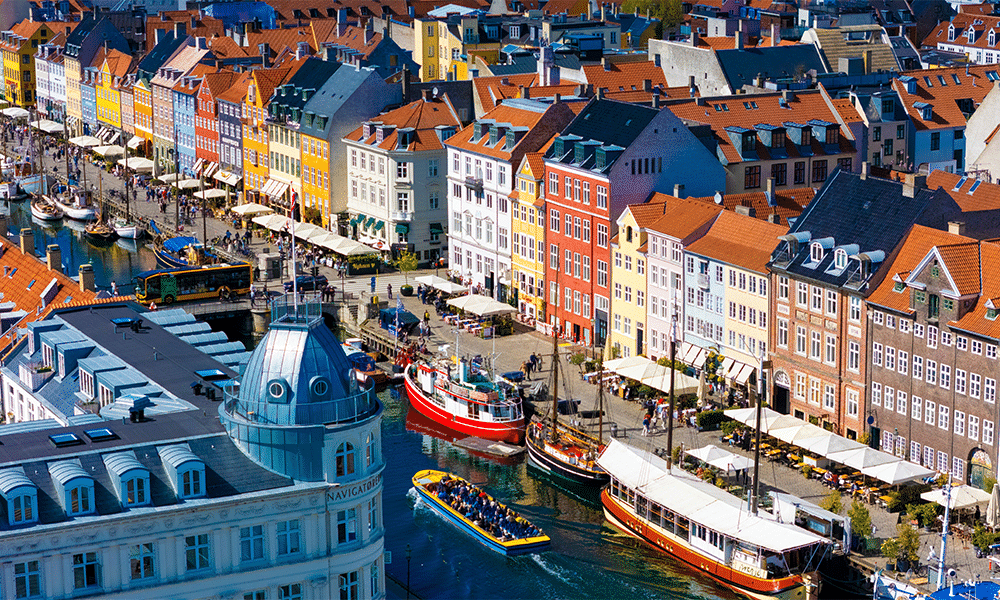
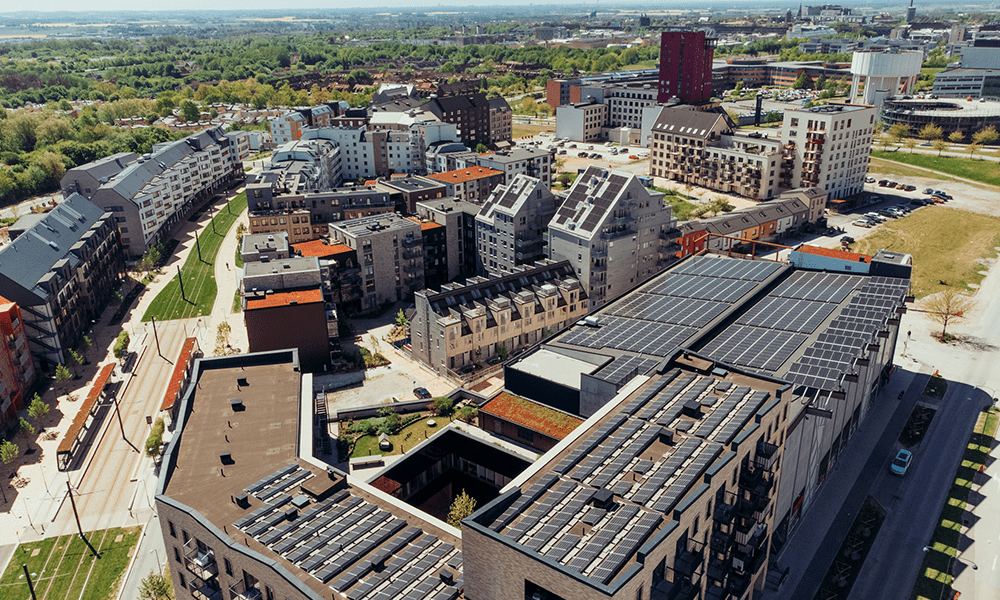
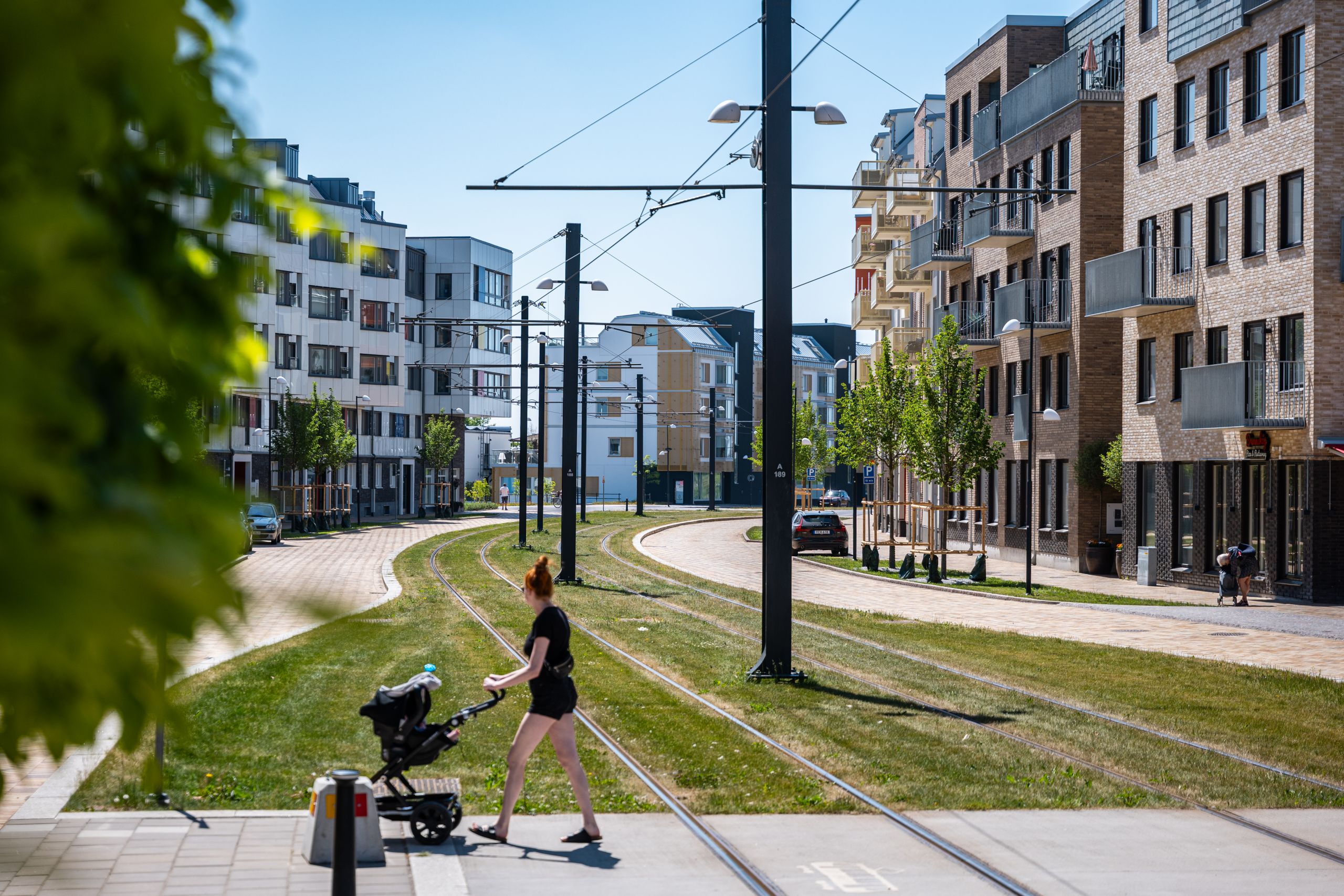
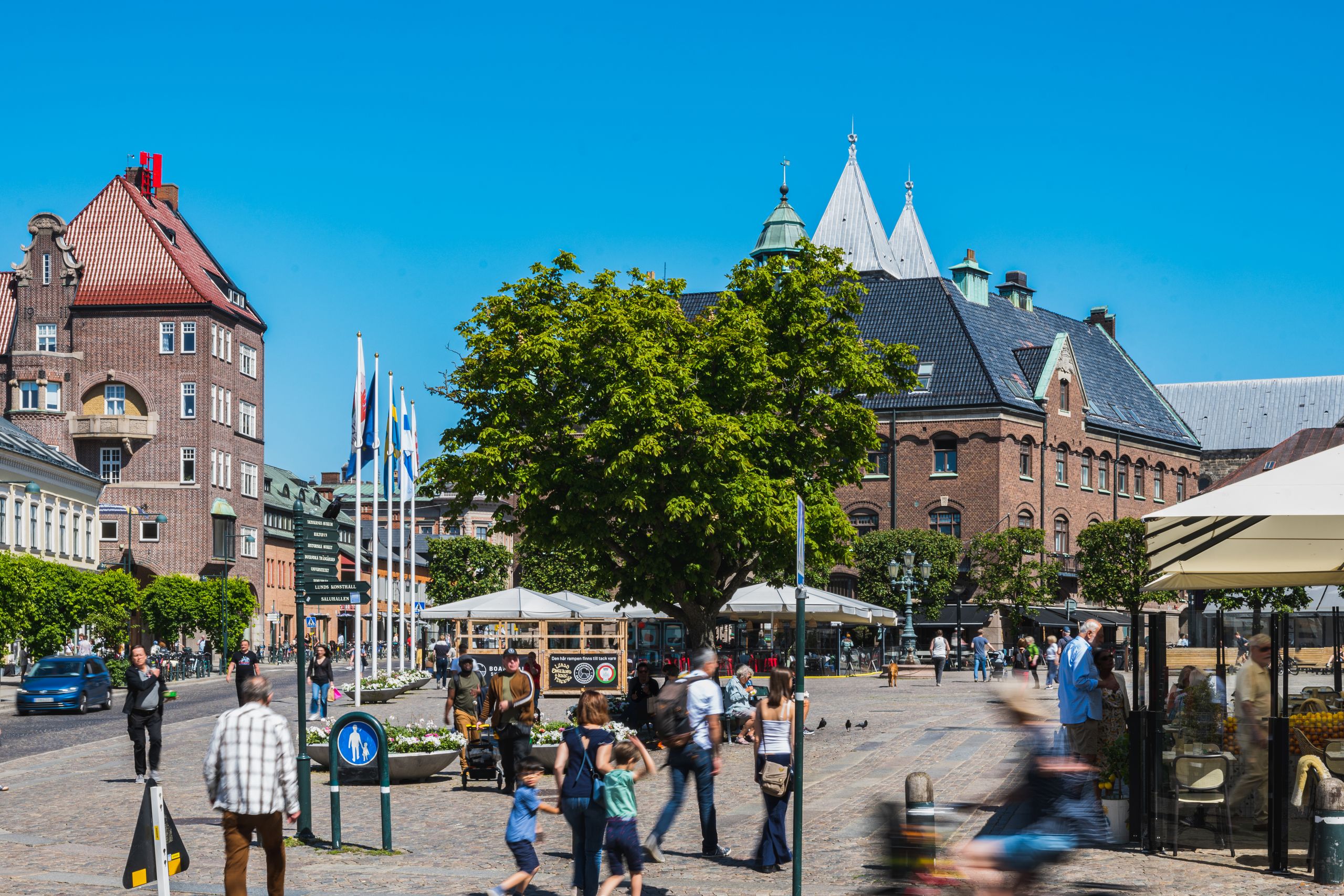
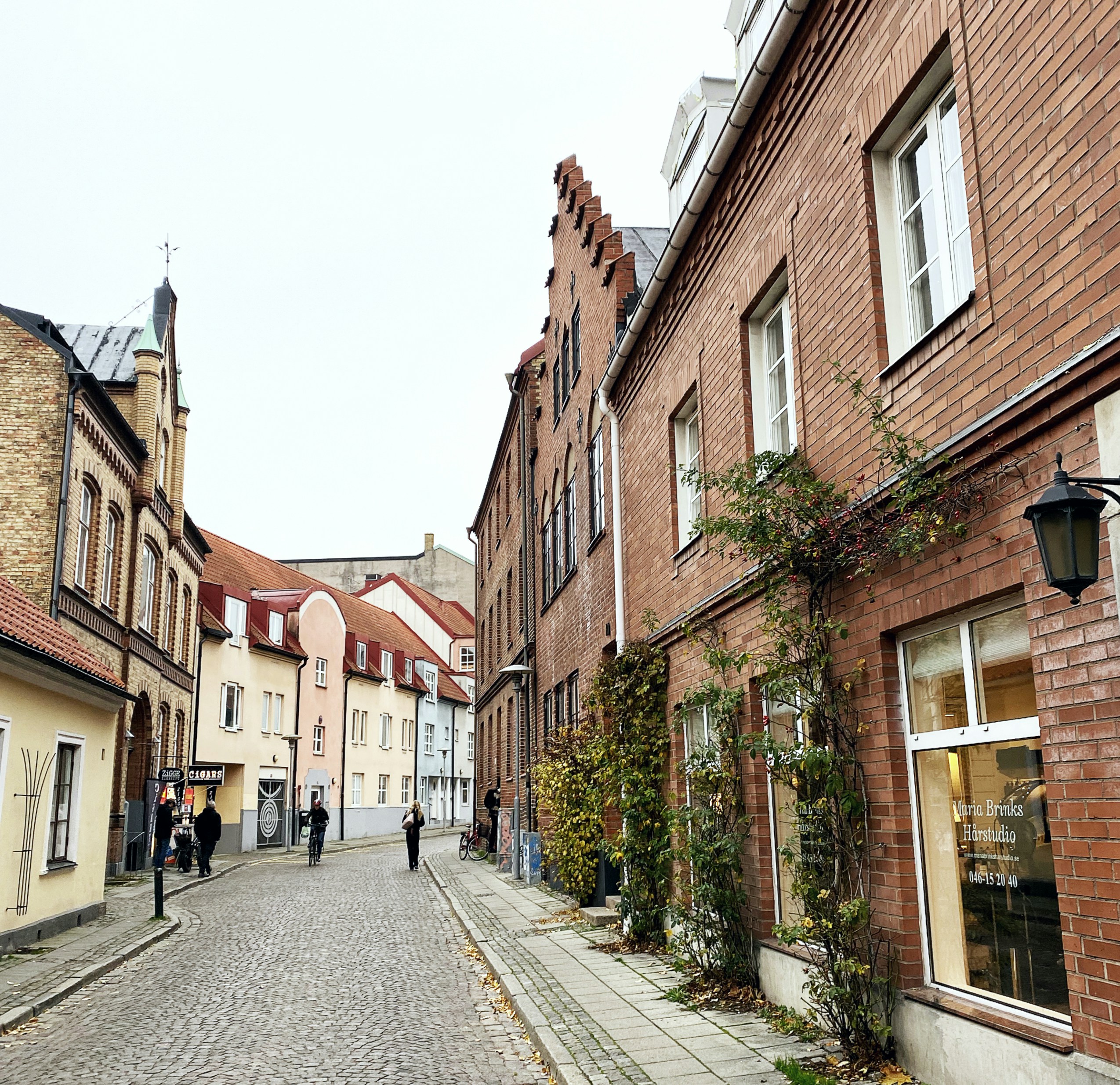
Drifting in a hot air balloon over Lund, a bird's eye view reveals a city with an old soul guided by a spirit of innovation. Surrounding farmland gives way to red- and orange-tiled roofs lining medieval streets where bicycles flow in every direction. Lund University's historical campus blends green courtyards and energy-conscious buildings, and the innovation district unfolds as a dynamic enclave, each reflecting a culture of sustainable living.
© City of Lund
Such an elevated viewpoint shows how parts of this climate-friendly city ebb and flow together: how neighbourhoods connect and transit crawls, where buildings create barriers or opportunities, where green spaces form networks, and where gaps or imbalances exist.
Creating an air balloon effect is exactly what Lund's city officials hope to cultivate by embracing a portfolio approach as part of their participation in NetZeroCities' Pilot Cities Programme.
"A portfolio approach enablesboth different departments and external stakeholders to zoom in and out and see the bigger picture. Then they can see how their work contributes to completing the climate neutrality puzzle," says Juliet Leonette, Process Manager for Climate Neutral Lund, with City of Lund.
From this vantage point, the city can design a governance model to best coordinate, sustain, and scale their climate efforts.
A portfolio approach brings separate paths into a shared journey
Siloes are all too often cited as a major barrier to progress. Sometimes different departments run parallel projects where valuable insights can be trapped, limiting transferable impact.
The portfolio approach tackles this by mapping all city projects across teams. With overlaps, gaps, dependencies, and opportunities in plain view, the municipality and its partners can see how this diverse blend of initiatives reinforces each other over time. And at its core, this portfolio is about building a shared way of moving forward. It is not about creating something entirely new, but about learning how to connect what already exists.
"Our vision is to transition the municipality from a public authority in the traditional sense to being an enabler for the climate transition for the whole of Lund," says Johanna Sandström, Project Manager at the Department of Sustainable Growth, Environmental Strategy Unit, with the City of Lund. "The question then becomes: what governance model do we actually need to achieve this, and how do we sustain it year after year? Climate challenges keep evolving, so we must too. We then need a model for change that allows us to stay adaptive, and that's exactly what this project is about."
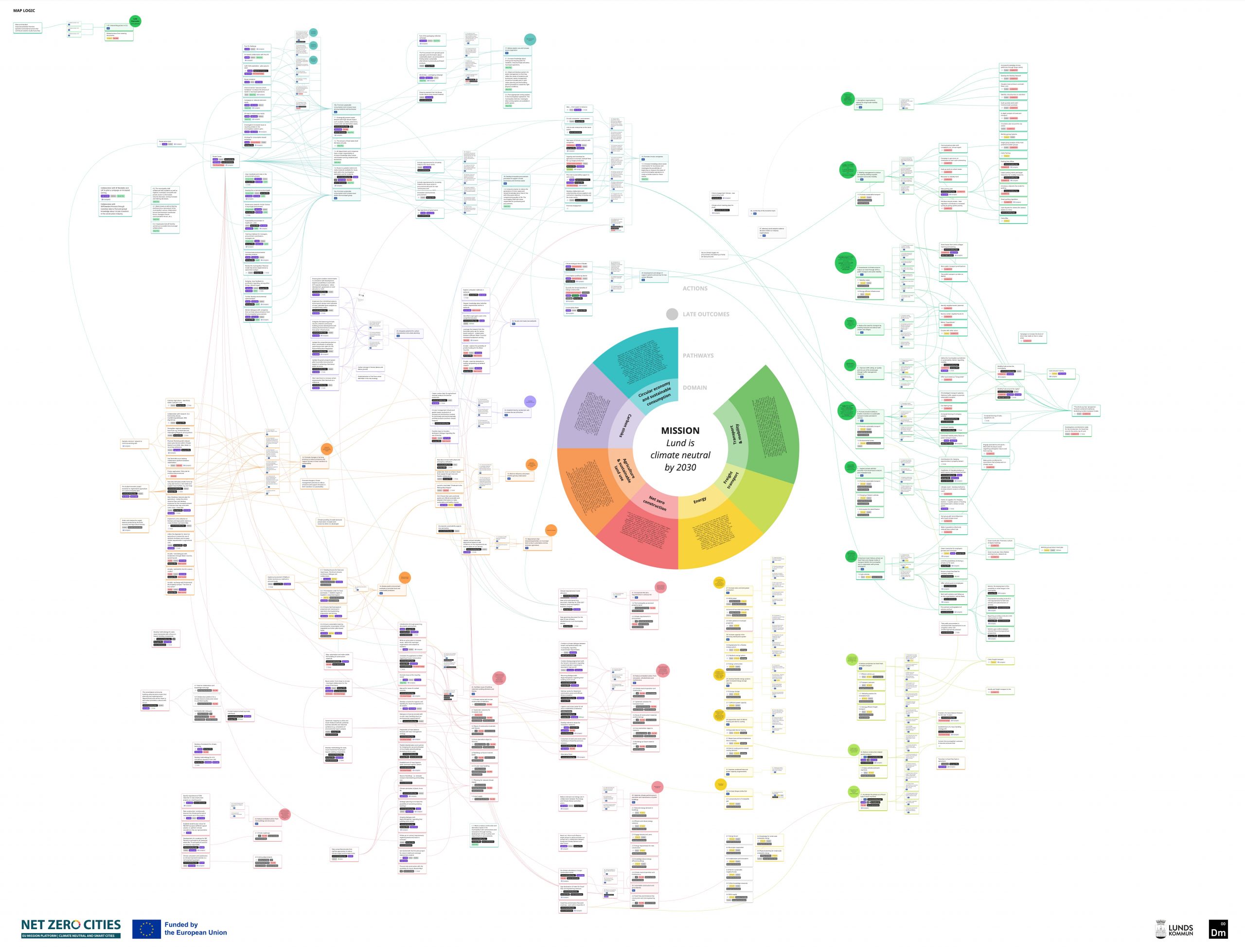
Lund's Climate City Contract became a backbone of this effort. In the portfolio, the city's six main emission domains are laid out in the shape of a colour-coded wheel, with 37 climate measures neatly matched to each. Through this vibrant palette, the city links actions, actors and assets (like funding, data and policy) to highlight what's needed to deliver.
© City of Lund
"There are two sides. One hosts current and past projects with visualisations and statistics on what has been done and where investments are flowing," says Sandström.
The other side is the forward-looking portfolio of current and future activities, showing a deep commitment to innovation and investment projects. Together, they form a basis for decision-making for the city's politicians and other external actors in the city.
With this shared reference point, city actors can connect the dots from past investments to sharpen their future climate strategies, giving the governance model fertile ground to take root.
From workshops to data collection, NetZeroCities partners spring into action
Piecing together an expansive set of projects and onboarding departments across the entire municipality is no small feat. That's where the NetZeroCities support team sprang to action, pairing Lund with programme partner, Dark Matter Labs (DML) – a systems-change research and design organisation, helping cities and institutions reimagine how to build climate-neutral futures.
To build the portfolio, the city first hosted a series of workshops led by DML.
"We were cautiously optimistic at first. The workshop series started with maybe three to five key people in each workshop, but in the end, a lot of people contacted me requesting that others join. You could tell people could see the value in what we were doing, which created a snowball effect," says Leonette. "In the end, around 15 people from each sector joined. That helped us build this network within the city, and we're a lot more connected now."
These connections helped crystallise two other goals. The city was able to onboard far more municipal employees into the development of the climate portfolio and, importantly, create ownership over the actions in the Climate City Contract. "And that is really key to its long-term success. It's not solely owned by the city office, but by the city as a whole, including other departments and municipal companies," says Leonette.
Building the portfolio also meant integrating data to track impact and guide learning. The city brought in climate investment data from local housing and energy companies and, with Lund University and Future by Lund, turned multiple data sources into visualisations, such as graphs. These collaborations gave officials a clear, holistic view of climate investments across the entire municipality, including its companies.
"We see the interconnections more clearly," says Sandström. "The amount of data we've gathered and put together into our portfolio has already laid the groundwork for data-driven decision-making, so we can imagine how to increase the opportunities for both the city and researchers to analyse and draw insights from it," reinforces Leonette.
A foundation for change, a roadmap for scale
Climbing aboard the hot air balloon has another benefit: by holding the horizon in sight, the portfolio approach makes intersecting goals visible.
"Portfolio management is not just about mapping and planning," says Sandström. "It's about creating a culture of continuous learning so promising projects can be scaled early. Every project should have a clear pathway forward, and models must be easy to maintain so knowledge doesn't stay locked in pilots."
That's why the new governance model runs on a continuous loop of feedback, monitoring, and learning.
"Progress isn't just measured in CO₂ reductions," says Leonette. "It includes new methods, business models, guidance, and policy tools. We conduct regular follow-ups and annual learning seminars with partners to review progress and tackle challenges that still lack clear solutions."
At the same time, the city recognises that scaling results involves strengthening institutional cooperation.
"We're really trying to make sure that the municipality hosts all necessary expertise," says Sandström. "So we're trying through transition teams to break silos and connect competencies across departments and organisations."
Coupled with portfolio mapping, the city is shaping an approach to multilevel governance that other climate–ambitious cities can replicate. By climbing aboard the hot air balloon, Lund lifts its gaze beyond the siloes built project by project to pave a unified and impactful citywide movement towards climate neutrality.