Author: Joanna Trimble
Slovakia's Košice – a European Capital of Culture – is an old city with fresh ambitions. Stirred to refashion energy governance, the city set out to establish dedicated energy teams, renovate municipal buildings, and tackle energy poverty – where heating, electricity, and hot water consume a large share of already stretched incomes. With some residents facing impossible trade-offs between energy, food, and rent, city leaders turned to local partners who broke new ground for Slovakia to tailor assistance to people's needs.
“How much energy does the washing machine or the oven use?” asks Petra, a single mother of two living in Košice. Every day, energy bills are weighed against other needs, like paying rent and food for her family. “In the winter, we all sleep in one room under blankets, so I don’t have to heat the whole apartment.”
Petra is one of many voices humming in Košice’s choir of reform, as the municipality takes on the role of a conductor, holding a steady hand to orchestrate a new model of energy governance. Through the NetZeroCities, Pilot Cities Programme, the city channels two ambitions: to reimagine how energy is managed and how the city serves its citizens.
© ETP Slovakia
“Changing the way governance works within the municipality requires building a municipal energy policy, which includes a system for data-driven energy management, and creating more targeted assistance for people most vulnerable to energy poverty,” says Adriana Šebešová, from Košice’s Department of Strategic Development.
Echoes from an inherited system help rewrite the city's energy planning
The scale of the challenge brings Košice's history into view. Like many cities in Central and Eastern Europe, Košice relies on a district heating system from the socialist era, strained by aging pipes, inefficient boilers, and poorly insulated buildings.
"Buildings are one of our biggest challenges. The municipality owns more than 200 of them. Primary schools, kindergartens, healthcare facilities, and office buildings, many of them built in the 1970s. They have very high energy consumption," says Šebešová.
© ETP Slovakia
This reflects a broader European reality: buildings account for roughly 40% of total EU energy consumption and more than a third of its greenhouse gas emissions, making them one of the biggest frontlines in the race to decarbonise.
For Košice, this challenge was intensified, with energy responsibilities and information splintering across departments and institutions over decades. This left the city without a clear picture of who should take ownership and how much energy is consumed overall. Bringing those pieces back together to guide renovation plans became a central task.
"Our pilot project's goal was to decrease energy consumption and emissions from municipal buildings. But we first needed to build the very foundation for harmonised energy governance," says Šebešová. "So, we started by establishing a Department of Energy, as well as an Energy Management Team."
Setting that groundwork serves an ambitious future goal: support Slovakia's landmark geothermal project, set to supply heat to 75% of Košice's district-connected households. That eliminates the need for 20 million cubic metres of imported gas per year.
Orchestrating the city's energy governance
With the strategic backbone in place, the city sought to unearth and bring into sync a vast and fragmented landscape of data. The Energy Management Team (EMT) brought together people from across municipal departments and city-owned companies – public transport, city forestry, district heating, and the teams managing cultural venues and public spaces. The EMT then launched an energy management platform to collect a digital inventory of its public building stock.
“We hit a really significant milestone by creating a centralised and unified database of energy consumption,” adds Šebešová. “Every municipal organisation responsible for public buildings is connected to the system, and the emissions from 170 city-owned buildings are tracked –with records from 2023 to 2026 already on file.”
Having this data infrastructure in place has been a guiding force for city officials.
“Before Košice created its Energy Department, energy contracts were negotiated building by building, often by building managers without the needed expertise,” says Šebešová. “This left the city paying higher rates. Now, we can centralise procurement, helping to cut costs.”
© ETP Slovakia
Data also tips city officials off on where to invest and confirms whether energy-saving measures work. With the power to compare data, the city already recorded a major win by saving 20% on electricity costs. To forge a holistic approach, data from natural gas, heating, and water were also included in the database.
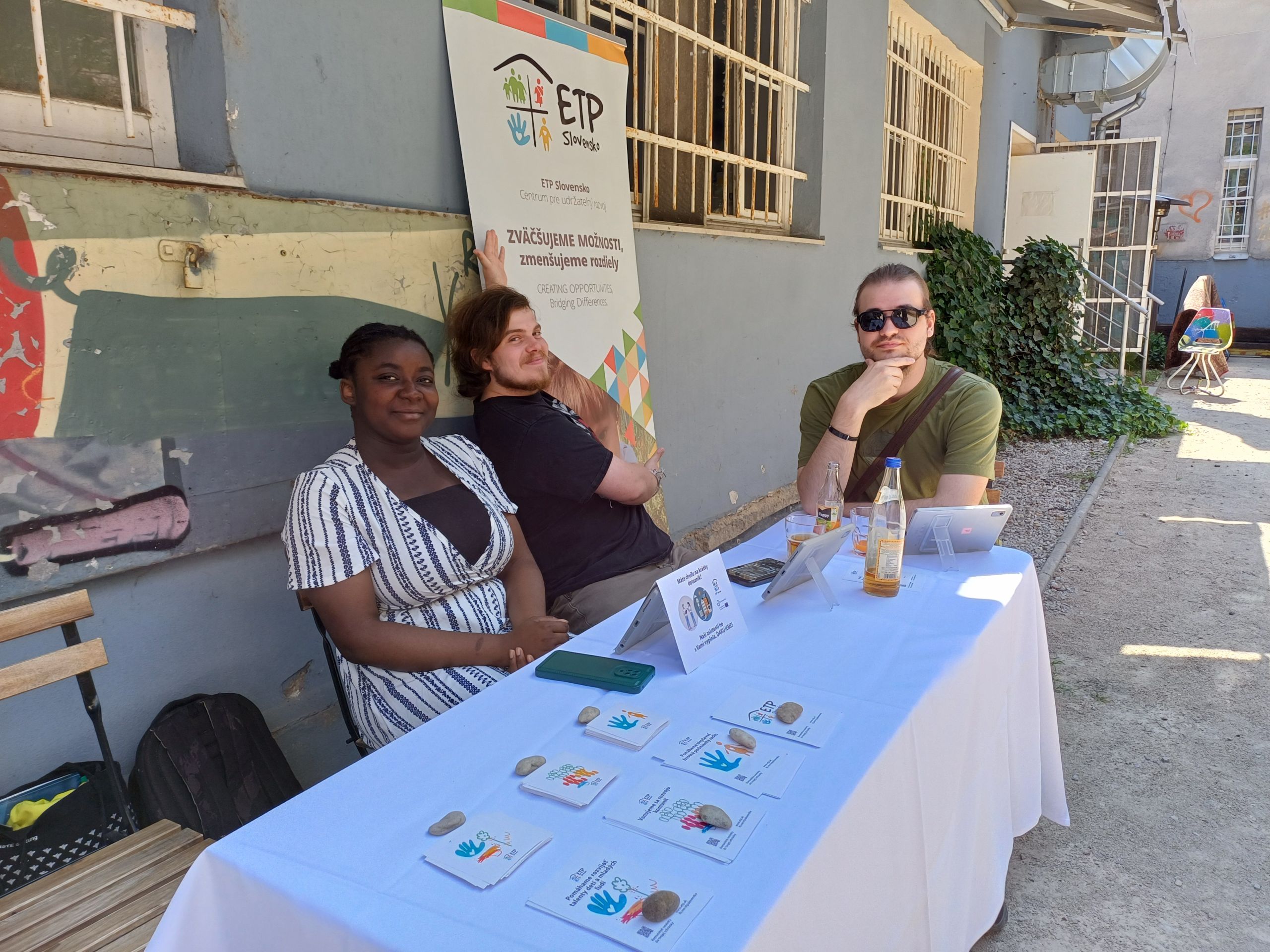
But the picture was not yet complete. While energy use was coming into focus, the city knew people like Petra needed help being heard. By partnering with local non-governmental organisation, ETP Slovakia (ETP), they could bring their voices to the fore.
The voices that compose the city’s grid
Energy poverty can take several forms, including when households spend a large share of their income on basic energy needs like electricity, heating, and hot water. The lower the income, the higher the risk. Energy poverty strikes every EU country to some degree. And in Slovakia, 40% of the lowest-income households face a hefty financial burden, paying around 20-25% of their annual income for energy costs.
© City of Košice
For example, Emília (65) shares an apartment with her daughter who lives with a disability.
“My daughter needs special appliances that increase our electricity bill by 100 Euros a month,” she explains.
Without any targeted support from the city or state, Emília took on part-time work after retirement. Now, she carefully balances managing rising energy bills, high medication costs, and the additional labour that comes with care work.
When the EU passed its Energy Efficiency Directive in 2023, it put people like Petra and Emília, those most vulnerable to energy poverty, at the heart of policy. Now, Member States are required to prioritise their needs. Through this project, Košice delivers on this with ETP by mapping the landscape of needs.
“The main hurdle is that energy assistance is very broad and not yet directly targeted to address energy poverty,” explains ETP Director, Veronika Poklembová. “Our goal was then to connect targeted solutions to the actual needs of the most vulnerable people and verify that what we’re doing reflects reality on the ground.”
That goal motivated ETP to ground its endeavours in a community-centred approach with the goal of creating personas – fictional profiles based on real people’s experiences of energy poverty. As a first of their kind for all of Slovakia, these personas illustrate distinct challenges faced across Košice and mark a major step forward in informing more targeted policy design.
The first step was to build trust with local communities. ETP worked closely with social service providers, community centres, senior centres, and schools. With this carefully crafted approach, they also reached communities experiencing greater social exclusion, like the Roma people.
“We used an assisted survey to collect quantitative and qualitative data. And reached 530 households in Košice, representing around 2,000 residents,” explains Veronika.
“We also learned about people’s backgrounds and daily lives to understand more deeply each group’s needs. Some are directly linked to energy poverty. Others are distinct but collide in a way that asks people to live in a careful balancing act between accessing energy and meeting basic needs, like having food.”
That balancing act looks different for each person.
In Luník IX, an informal settlement hosting a large Roma population, Martin lives with his wife, their five children, and his brother’s family. More than ten people share a damp, two-room social housing apartment. Without central heating or water access, they rely on a credit system paid in advance. Instead of stoves that use wood or gas – a common but dangerous method used by neighbours – the family uses an electric heater to warm the flat to protect the children from breathing soot. And to keep any warmth inside, they leaned on ingenuity under constraint and insulated it themselves. Yet, with limited income, every decision is a trade-off between essentials.
“We would rather save on food than lose access to energy or housing,” says Martin. “But we are mainly worried about the health of the children.”
© ETP Slovakia
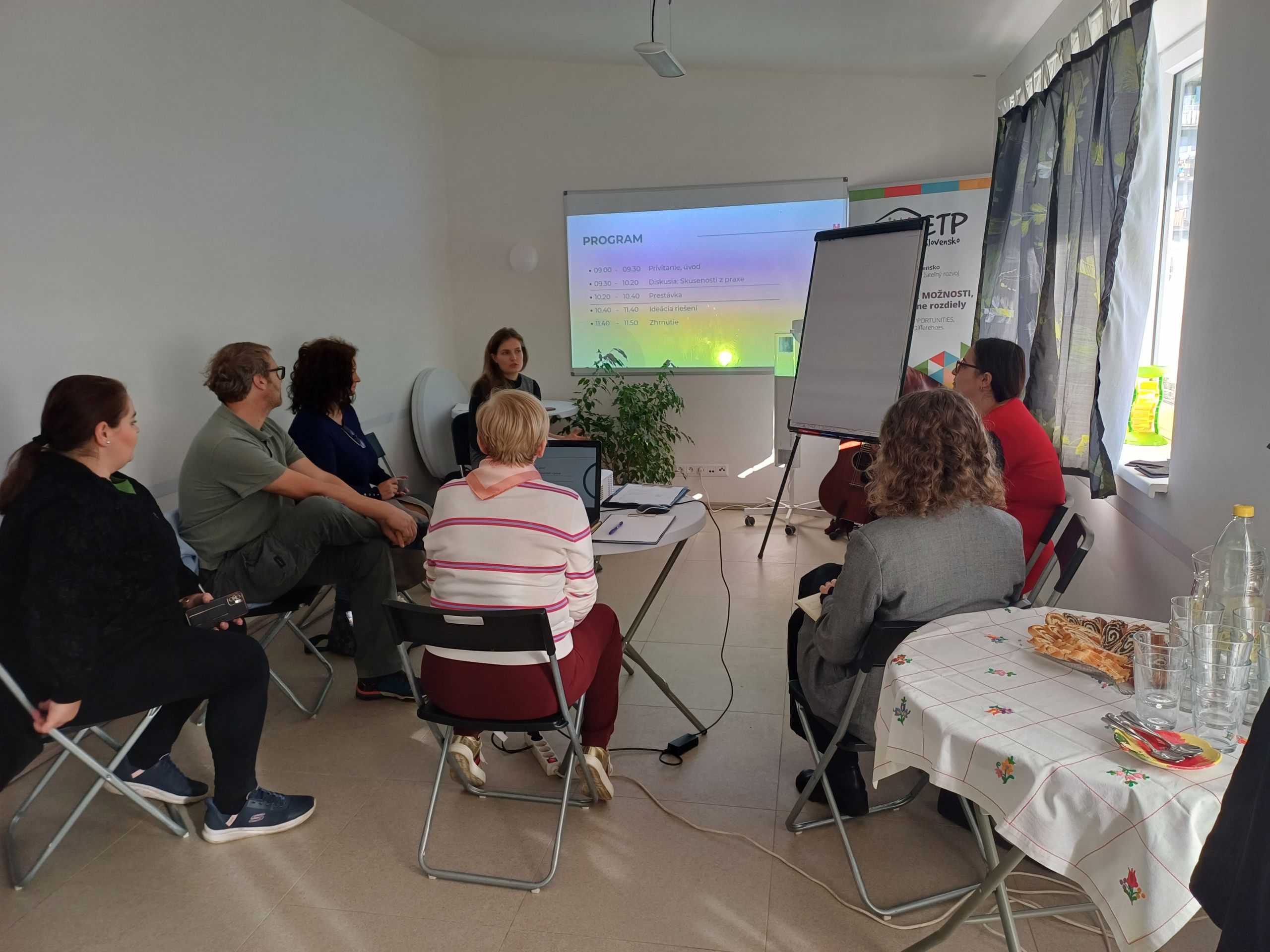
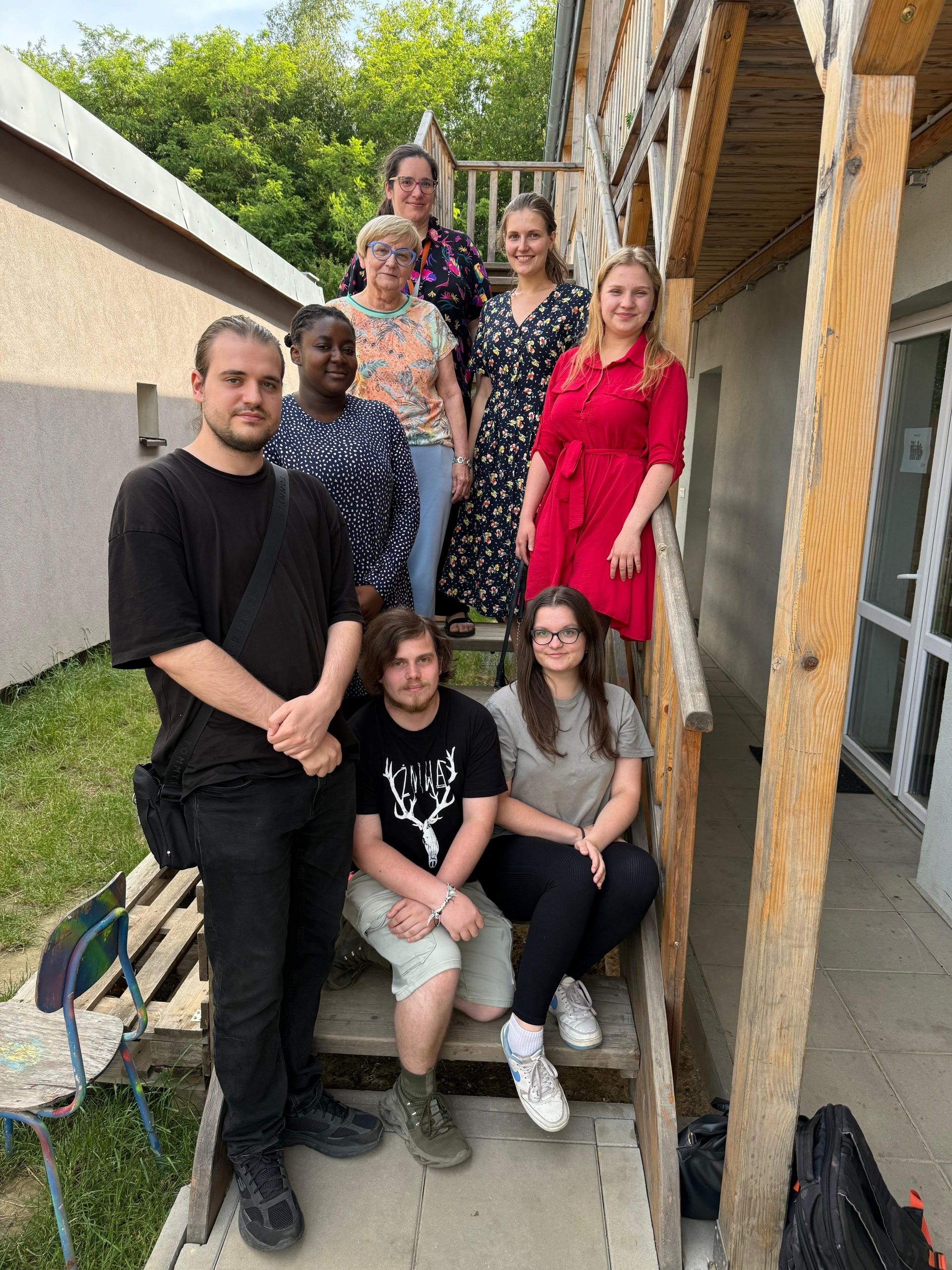
Petra, Emília, and Martin are three of six personas, offering a nuanced picture of needs to ensure assistance is tailored to meet it. These personas were finalised after a series of workshops, co-designed with ETP and selected representatives from groups most vulnerable to energy poverty. Their perspective was then woven into research to shape the first round of proposed solutions.
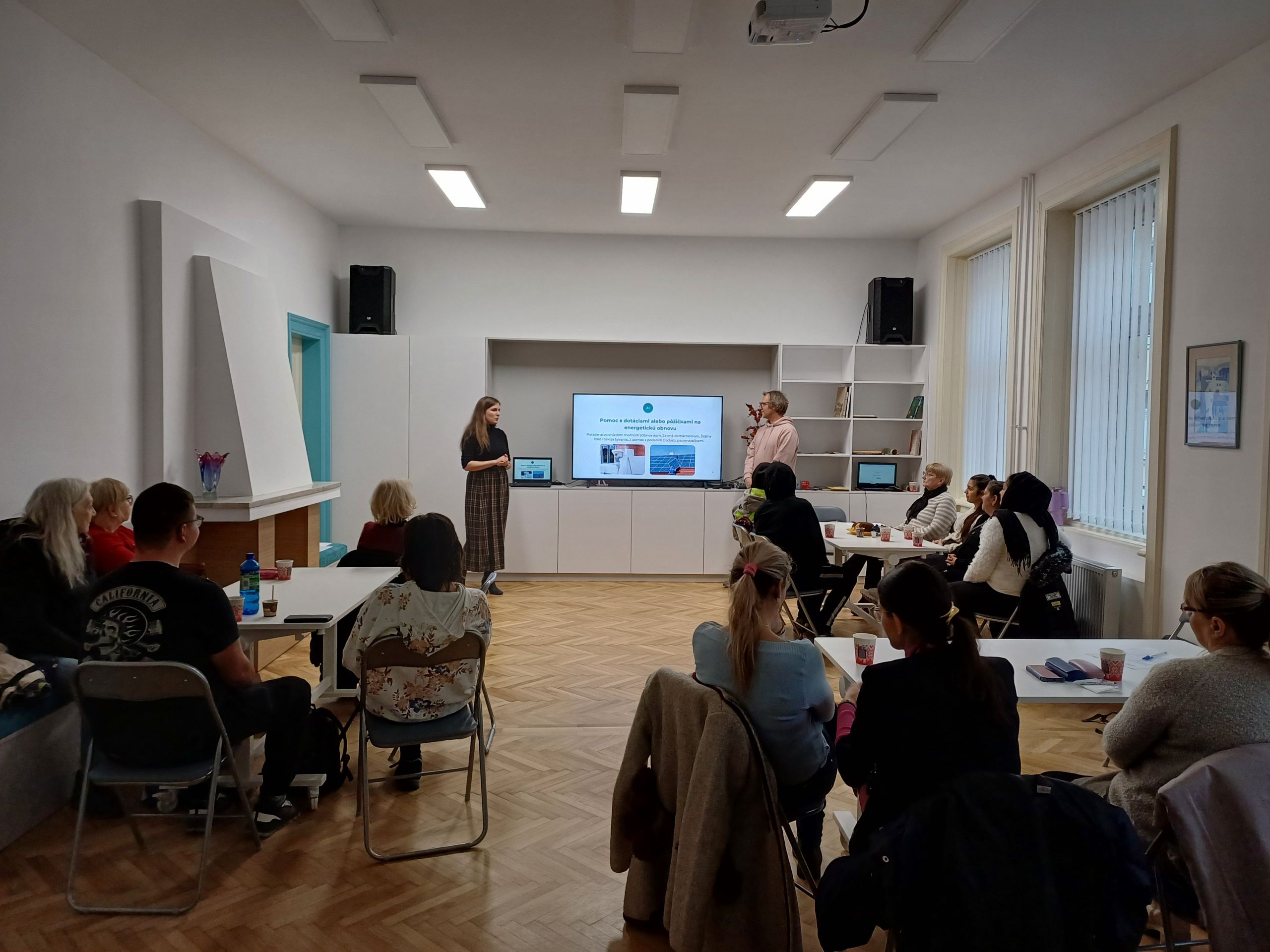
"We brought the first solutions back to participants and city representatives to confirm they were suitable, creating an iterative dialogue to refine them around real community needs," expresses Veronika. "Now, we have a catalogue of more than 20 solutions that are practical and possible, as well as a strong foundation for scaling tailored energy assistance."
Conducting a nation-wide symphony
Košice is not alone in this work. Bratislava, Slovakia’s capital, is also building its energy governance model in parallel, as part of the Pilot Cities Programme. In addition to creating an EMT, it set its sights on engaging the private sector, which accounts for 36% of citywide emissions. Together, the two cities demonstrate how the architecture of energy governance can take on different challenges.
© City of Košice
"With the introduction of the Energy Department and the Energy Management Team, the municipality can standardise energy management across its organisations," says Šebešová. "Now, we have a robust framework for planning, implementing, and monitoring energy efficiency measures, influencing investment decisions and advancing climate neutrality targets."
In Košice, what was once a collection of separate instruments – fragmented data, siloed departments and unheard voices – can play the same energy governance tune in harmony. That sets the stage for their ambitious geothermal project set to drastically cut their foreign energy dependence.