Working in networks is widely promoted in public policy, urban innovation, and climate action – but too often, they create more meetings than results and more expectations than impact. NetZeroCities partners at the Technical University of Madrid offer a method to rethink how to get the most from networks.
In highly complex environments, real innovation is not about doing more, but about working together better.
But why do networks – a necessity for urban transformation – sometimes fail? Building a network is not just about adding people or organisations or even making sure they talk to each other. It’s a strategic task that requires understanding the relationships being created and the places where they interact.
Networks therefore work better when they are designed with intention, not when they are left to chance.
When working in networks feels hard
Working in networks is often presented as a clear win. It helps tackle systemic problems, align fragmented agendas and mobilise resources that no single actor could activate alone. But anyone who has worked in a real network knows that the moment collaboration begins, things also get more complex and less predictable.
Very soon, these problems may start to appear:
- Actors come with different mandates, timelines and ways of speaking.
- Alignment is no longer only technical, but also strategic and narrative.
- Control becomes shared, as no single organisation can fully steer or claim the results.
- Progress also feels less predictable, because change rarely follows a straight line.
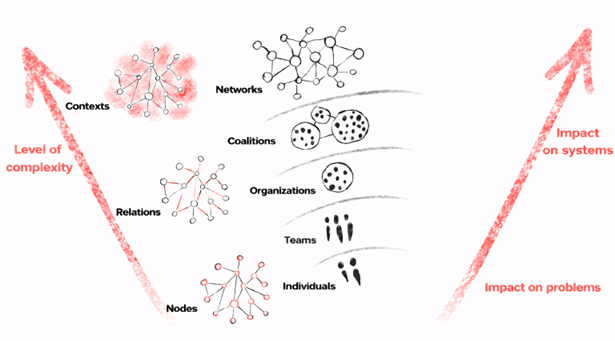
Image 1. Visual representation of the elements that shape a network. Atelier itd, adapted from the Collaborative Value Creation (CVC) Framework.
When these realities are not recognised from the start, networks tend to struggle. Some networks become overly operational and rigid, focused on delivery but unable to adapt when conditions change. Others drift in the opposite direction, turning into open and inspiring spaces that generate ideas but very little action. This tension is not new. It reflects a well-known challenge in collaborative work: the need to balance execution and learning to remain effective in complex environments.
Looking beyond the actors: what really makes a network work
When we talk about collaboration, the first question is usually who is involved. We spend a lot of time thinking about the actors around the table. Sometimes we also look at the links between them. Much more rarely do we pay attention to where, why and how those interactions take place.
Yet a network is not just a list of participants. It is made up of three inseparable elements:
- Nodes: the actors involved — institutions, teams or individuals.
- Relationships: the connections between nodes, which shape how information, resources, and influence flow across the network.
- Contexts: the spaces, timings, formats and shared understanding that shape how interactions happen.
In collaborative work, we often overestimate the importance of nodes, under-analyse relationships and overlook context altogether. But for a network to function, two things are especially important:
- Quality of connections matters: not all relationships are the same, and not all of them generate the same value.
- Context matters as much as actors: where people meet, for what purpose, under which rules and how a shared sense of belonging is created through common narratives.
Designing a network is, to a large extent, about designing those contexts for interaction.
How “one more meeting” became a network design challenge
In the first blog of this series, we argued that stakeholder management isn’t a contact list – it’s a living system that needs to be designed. This second piece builds on that argument, focusing on how that perspective applies to multi-level governance in practice.
Between April and July 2025, the Technical University of Madrid supported the creation of a multi-level governance group within the URBANEW EMC3 project. The goal was to speed up the energy renovation of the built environment through better coordination between cities, regional governments and national ministries.
Early in the process, two realities became clear and ended up shaping the work:
- Multi-level governance isn’t optional: responsibilities and competencies are split across different government levels. Without coordination, even well-designed policies struggle to land.
- The system is already saturated: ministries were already running multiple forums linked to national plans. People were stretched. New meetings were not automatically welcome.
So, the challenge was not to create “one more space”, but to add value to the existing ones without duplicating efforts. That is exactly where network thinking becomes practical.
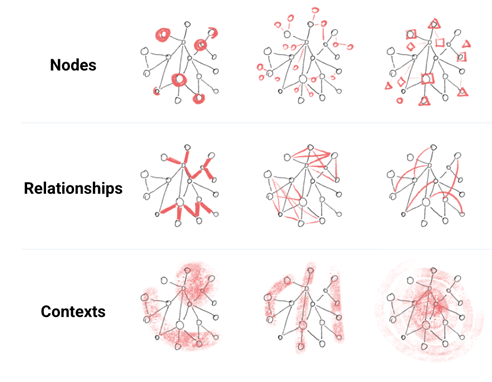
Image 2. Illustrative representation of nodes, relationships, and context. Atelier itd, adapted from the Collaborative Value Creation (CVC) Framework.
A roadmap in three levels: nodes, relationships, and contexts
To strengthen the impact of the group and ensure its continuity, a roadmap was proposed, structured around the three levels of the network: nodes, relationships and contexts.
- Nodes: activating key actors (not just inviting them)
The first step is to strengthen the commitment of actors at each governance level:
- Cities: ensuring the active participation of all Mission Cities, using existing projects as spaces to add engagement.
- Ministries: expanding the group by involving teams responsible for key policy instruments that are not yet at the table.
- Regional governments: reinforcing their involvement through bilateral meetings to listen to priorities, build trust and define shared value, and making “why this matters to you” explicit.
In networks, attendance doesn’t mean engagement. People commit because the value and their role is meaningful.
- Relationships: building trust and thematic focus
The second level focuses on working deliberately on relationships, rather than simply increasing contact:
- Structuring meetings around concrete topics (planning, financing, regulatory framework).
- Defining a clear agenda with shared milestones and objectives.
- Encouraging direct links between cities and regional governments.
- Using shared digital tools (such as Notion) to ensure continuity and transparency.
Relationships do not strengthen through repetition alone – in other words, frequency is not enough. They are strengthened through better designed interactions, reliability, and shared progress.
- Context: paying attention to timing, formats and narratives
The final layer is often treated as logistics but is actually strategy.
For the group to be useful and sustainable, meeting spaces need to be recognisable, useful and stable. This includes:
- Using existing events to create synergies (instead of competing for attention).
- Placing key meetings at strategic moments (such as national plenary sessions) when energy and alignment are highest.
- Strengthening a sense of belonging over time, so the group feels like a shared endeavour, not an obligation.
Therefore, context is the infrastructure that makes collaboration possible.
From managing actors to designing networks
Developing a network is a strategic design exercise that requires moving from control to influence, and from simply gathering actors to creating shared value.
This became clear in the URBANEW EMC3 experience. Progress did not come from adding more participants or meetings, but from carefully shaping how actors interacted, when those interactions took place, and what purpose they served. Small design choices – such as aligning meetings with existing national moments, clarifying roles across governance levels, or creating stable spaces for continuity – proved to be at least as influential as any formal mandate.
When nodes, relationships and contexts are considered together, networks stop being a formal requirement and become living infrastructures that can support collective action over time.
This post draws on applied research by itdUPM and Atelier itd on collaboration and network development. The conceptual synthesis is led by Carlos Mataix (UPM professor; Director of itdUPM) and Nayla Saniour (atelier itd researcher), while the practical case on multi-level governance builds directly on the work developed by Andrea Lusquiños (itdUPM researcher; CitiES 2030). The analysis is inspired by the Collaborative Value Creation (CVC) Framework.