Author: Joanna Trimble
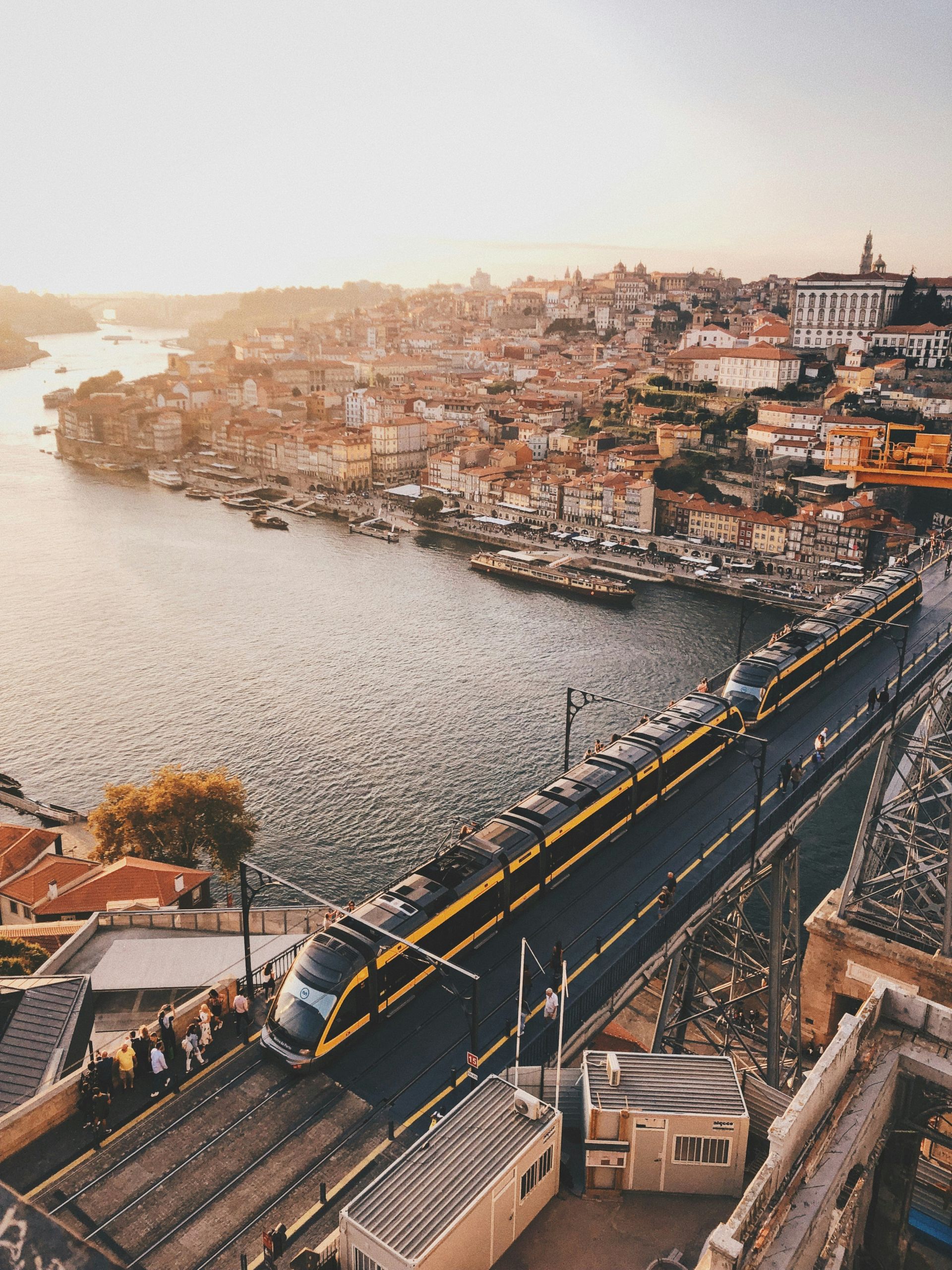
Porto's ambitious pledge to reach climate neutrality by 2030 is on the cusp of a citywide effort: one that embraces its people power, the ancient city's spirit of innovation and its tradition of reimagining itself for two thousand years of continuous urban life.
"Porto is a city where the past gives depth to the present, and where innovation is not a break with history, but a continuation of a long-standing ability to adapt, reinvent, and move forward," says Catarina Araújo, Vice Mayor and City Councillor for Porto's Urban Planning, Public Space, Environment and Sustainability.
"That's why we're addressing one of the most critical challenges in the climate transition: enabling and sustaining behavioural change at the citizen level in a way that is measurable, rewarding and directly connected to city-wide climate objectives."
With the NetZeroCities Pilot Cities Programme offering a ripe opportunity to translate this enduring determination into a model that puts citizens at the heart of urban climate action, Porto is rolling out the mobile application, "WAKE UP! – Wider Approach to Keep Engaged citizens on sustainable Urban Policies". As the first citizen climate app of its kind, WAKE UP! helps residents understand the impact of their everyday choices, connecting individual actions to real change at home and across the city.
Why citizens are key to change
With climate adaptation challenges like heatwaves and water management already felt throughout the city, urgency has sparked a clear strategic goal for Porto: unlock the potential of its residents to fast-track and scale up climate action.
"Climate neutrality cannot be achieved by the municipality alone, as emissions directly under municipal control account for only around 5% of the city's total," says Catarina Araújo. "Around 40% of emissions are linked to mobility and transport habits, while around 50% are associated with energy use in residential and service-sector buildings."
That means beyond infrastructure and technology, people's everyday choices – how they commute, how they use energy and water, and how they manage waste – all have an impact on the city's carbon footprint. In this way, encouraging residents to explore more sustainable options becomes essential.
Porto's Climate Pact, launched in 2022, offers a strategic backbone to ignite this shift. Beyond its robust policy framework, it serves as a platform to mobilise and empower residents to actively contribute.
"As our strategy evolved, it became increasingly clear that achieving climate neutrality by 2030 would only be possible if citizens were fully and meaningfully involved in this transition," Catarina Araújo expresses.
This vision takes shape through the Pact's power of partnerships, where public institutions, private companies, civil society organisations, and citizens work as a united front to accelerate the city's climate transition.
"Today, nearly 300 organisations and more than 2,000 citizens are formally committed to this shared objective," says Catarina Araújo. "What unites all these stakeholders is a shared willingness to co-create and experiment together" – a mindset central to cultivating a greener lifestyle.
Reimagining the urban citizen – a digital portrait of climate impact
As a labelled city in the European Union's Climate Neutral and Smart Cities Mission and Pilot City, Porto is testing how digital tools can help people see the impact of their everyday routines to inspire lasting behavioural change.
With Porto's over 230,000 residents as the starting point, the city turned to Cartão Porto, the trusted Porto Citizen Card: a key to the city already in people's pockets. It offers perks like free public transport trips, discounts at cultural venues and sports facilities, and access to municipal services, like libraries.
"The Porto Card today has more than 100,000 subscribers. This existing infrastructure allowed us to envision an additional, innovative layer of engagement: a personalised, data-informed relationship that will help citizens better understand the impact of their daily consumption choices."
Building on that foundation, Porto assembled a dynamic municipal consortium – the Municipality of Porto, Porto Ambiente, Porto Digital, the Porto Energy Agency, Águas e Energia do Porto and CEiiA – to sketch a digital blueprint of urban consumption on WAKE UP!, letting opted-in users trace use patterns across water, energy, waste, mobility and consumption habits in one place.
"Together, we identified the potential to combine existing data streams with citizen-centred digital tools, creating a solution that empowers individuals with clear, actionable insights into their personal carbon footprint and encourages behavioural change aligned with the city's climate objectives," says Catarina Araújo.
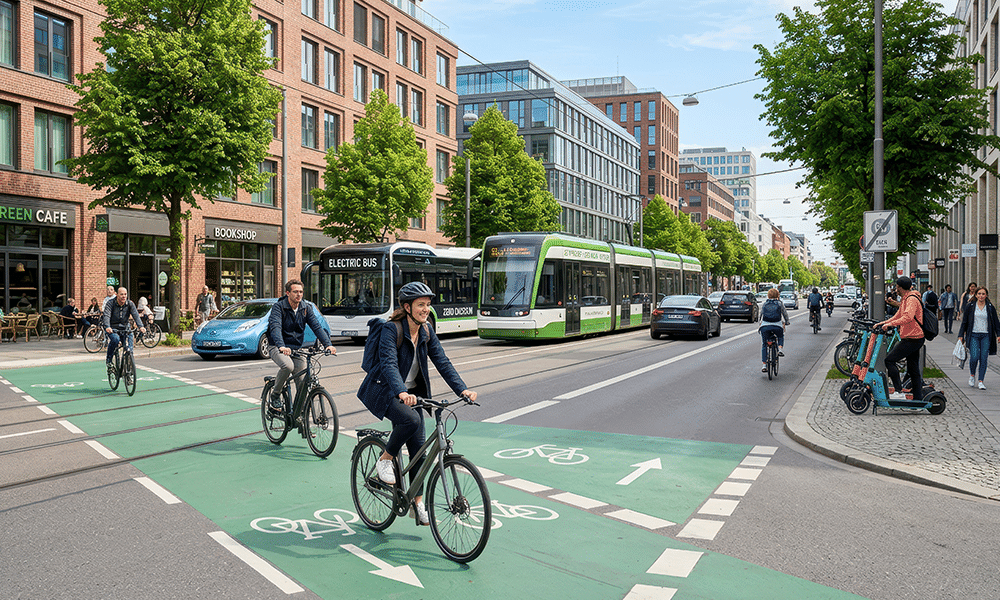
By assembling residents' consumption data and showcasing it on an accessible dashboard, WAKE UP! paints a digital portrait of a carbon-conscious urban citizen. For example, the app can sync with household smart meters, showing how much water and electricity were used in a month while comparing it to the prior month. This allows users to see both their current and past consumption habits at a glance. Waste sorting and healthy transport, like cycling or taking the metro, contribute to that personalised snapshot.
By combining automatic tracking through municipal systems with citizen-reported actions, the app offers a hybrid model that is accurate and less burdensome than other self-report platforms.
The dashboard also shows users broader consumption and sustainability patterns across the city. This comparative lens offers a promising ripple effect: bringing people together. When people see their actions as part of an urban ecosystem, it can spark conversations on what works, how results were achieved, and potential cost savings. That way, citizens can go offline, directly comparing challenges and guiding each other.
The app also offers a news feed to keep people updated on new services, city initiatives and events related to climate action, as well as tips and best practices, powering a continuous learning process to transform urban citizens into green city champions.
Unlike many behaviour-change apps, WAKE UP! not only paints a portrait of one person's climate impact – it also lays together pieces of the city's carbon puzzle, linking everyday choices directly to the city's net-zero targets. This connects personal action to a shared citywide goal, turning climate responsibility into a participatory movement rather than a solitary effort.
For greener efforts, citizens reap rewards
Rather than presenting users with raw numbers and hoping for motivation, WAKE UP! translates individual actions into measurable, easy-to-grasp impacts – and it rewards sustainable choices, giving them tangible value.
By using gamified features to keep users active, data streams on waste, transport, water and energy consumption score citizens' carbon footprint. The emissions avoided are then converted into points.
"These points can be exchanged for rewards. Importantly, the reward system is not seen merely as an incentive mechanism, but as a way to connect climate-friendly behaviour with broader city life, like participation in cultural, sports, or sustainability-related activities," says Catarina Araújo.
As a result, rewards connect personal actions, community involvement, and the city's climate goals in ways that reinforce each other.
Now, the city is considering "…whether individual incentives are sufficient to sustain long-term engagement, or whether community-based rewards and collective challenges can play a stronger role in fostering a sense of shared ownership and city-wide transformation," using this pilot as a testing ground for different incentive and compensation models.
Co-created and innovated: a living lab for scale
WAKE UP! came to life through a rich ecosystem of collaboration, ensuring it was co-created at every stage. Urban management, infrastructure, and waste services work hand-in-hand with education, social services, sports and youth organisations, innovation and living labs, and importantly, citizens.
"One of the most important lessons we have learned so far is the value and necessity of genuinely involving both citizens and organisations in the co-creation and co-development of climate-related tools and policies," says Catarina Araújo.
From her view, what initially appeared to add complexity has become one of the project's most valuable dimensions.
"Citizens provide relevant feedback, shape priorities, challenge assumptions and bring everyday realities into the project, which cultivate trust in this project."
Nurturing trust early is key to motivating citizens to use the app, track their activities and have confidence in the city's goals.
Similarly, participating organisations inspired by the diversity of viewpoints are moving beyond a pilot mindset, embracing their role in the city's broader climate transition and deepening engagement in the Porto Climate Pact.
Alongside vibrant partnerships, the path to forging a carbon-conscious citizen has been paved by the spirit of experimentation.
"NetZeroCities offers a safe space to test innovative governance models, digital solutions and engagement mechanisms that can later be scaled up and replicated," says Catarina Araújo who hopes to share Porto's experience with other EU cities facing similar challenges.
"WAKE UP! is conceived not only as a local solution, but as a learning and experimentation framework that can support peer cities facing similar challenges. By contributing these lessons learned and learning from others, we see the Pilot Cities community as a collective laboratory for accelerating climate-neutral transitions across Europe."