
Sweden's Enabling City Transformation Activity: HYDROSYM-2030
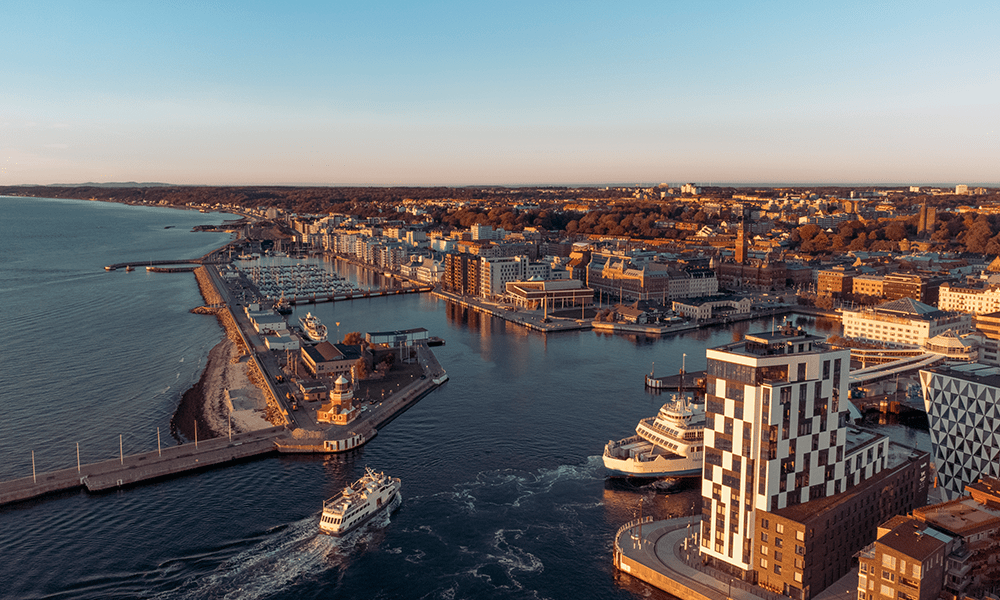
Context and Challenges
HYDROSYM-2030 aims to accelerate deep industrial decarbonisation by harnessing green hydrogen and industrial symbiosis. Helsingborg and Umeå are confronting the “messy middle” of climate implementation—where systemic barriers in investment, infrastructure, and cross-sector coordination often stall progress. By leveraging existing urban and industrial assets—such as waste heat, wastewater streams, and sectoral planning frameworks—the cities seek to become regional lighthouses for low-carbon industry and offer replicable models for other European cities.
Objectives
- Advance industrial decarbonisation through green hydrogen deployment
- Develop models for industrial symbiosis and circular resource flows
- Create integrated transition and technical roadmaps to guide investment
- Build stakeholder ecosystems and future-ready skills for transformation
- Deliver scalable, city-level frameworks for industrial climate action
Key Terms
Green Hydrogen | Industrial Symbiosis | Transition Roadmaps | Circular Economy | Investment Readiness
Activites and Innovations
Emission Domains
Levers of Change
Expected Impact and Outcomes
- Accelerated implementation of industrial decarbonisation projects
- Strengthened innovation and collaboration ecosystems
- Scalable, investment-ready frameworks for European replication
- Significant GHG reductions in hard-to-abate sectors