
Twinning learning programme
Cohort 5 (2026-2027)
Registration for Mission cities for the 5th cohort of the Twinning Learning Programme is now open!
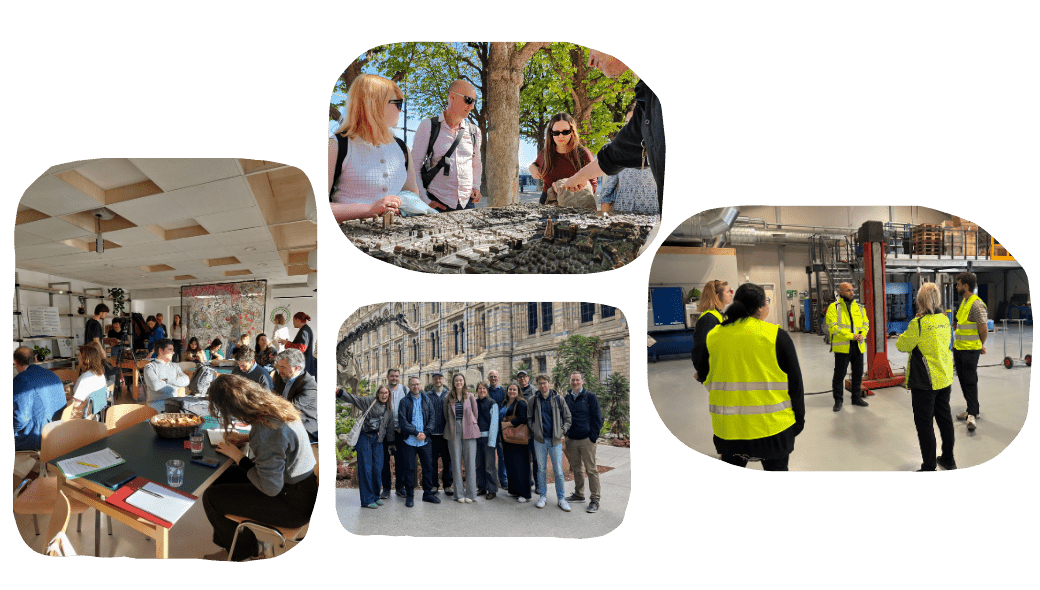
Now entering its 5th cohort, the Twinning Learning Programme, under the EU Mission: Climate-Neutral and Smart Cities has already supported 180+ cities since 2023 to exchange experiences, learn from peers, and replicate what works.
This new edition is designed for two types of participants: Mission cities looking to amplify their climate journey by engaging with peers who have developed concrete solutions to accelerate climate action, and Mission-minded cities (aligned with the Mission ambition) that have developed concrete solutions through a partner project and want to keep the momentum going.
24 Twin cities
12 countries
14 partner projects
Get to know your potential twin
Explore the Mission-minded cities catalogue highlighting cities already part of selected EU-funded projects partnering with NetZeroCities, driving real climate action:
- —Active in the Driving Urban Transitions (DUT) city network with a focus on Positive Energy District (PED) neighbourhoods, exchanging and developing approaches for green transition.
- —Uses testbeds and living labs and citizen co-creation to design, trial, and refine climate solutions in real-life urban settings.
- —Through PED-JUST, co-creates PED-oriented urban-regeneration strategies in disadvantaged neighbourhoods, supported by Learning and Action Alliances to embed and scale actions in wider city strategies.
- —Applies structured sustainability governance and urban-development approaches (e.g., Aalborg Charter / Aalborg Conditions) and partnership-based delivery to support climate action and implementation.
- —Learn from other Mission cities’ challenges and approaches on climate resilience, sustainability, and green transition—while sharing Aalborg’s experience from multiple EU projects and the DUT network.
- —Use the European Rising Innovative City 2026 recognition to inspire other cities and showcase practical ways to organise innovation (e.g., testbeds, living labs, partnerships).
- —Strengthen collaboration and transfer by exchanging replicable methods (co-creation, living labs, integrated urban development) through the Twinning Learning Programme.

- —Operates and scales beÁgueda, a shared electric-bike system across the municipality (22 docking stations, 69 e-bikes), including expansion and interconnection with public transport in rural areas (e.g., along the Vouga railway line).
- —Uses tracking/data tools (CIVITAS TRACE and related approaches) to plan and promote walking and cycling, supporting active-mobility uptake through evidence-based measures.
- —Implements European Green Leaf 2026 actions linking active mobility, public-space measures/tactical urbanism, and citizen engagement/awareness-raising as part of a cross-cutting local climate agenda.
- —Advances ecosystem restoration and climate-resilience actions via EU initiatives (e.g., LIFE Águeda, LIFE REVIVE), strengthening green/blue infrastructure and nature-based approaches.
- —Use twinning as a way to accelerate climate-neutrality efforts and strengthen an implementation-oriented climate agenda aligned with the EU Cities Mission.
- —Learn from Mission Cities’ technical expertise and governance models, especially around Climate City Contracts, integrated decarbonisation strategies, and large-scale delivery frameworks.
- —Co-develop pilot actions and shape investment-ready, scalable, measurable, and bankable climate solutions, positioning Águeda as a testbed for small and medium-sized European municipalities.
- —Implements safety-oriented cycling infrastructure at the Bicycle Campus junction point (e.g., traffic lights, dedicated bicycle-path connections, and safe transitions for cyclists).
- —Upgrades pedestrian infrastructure (e.g., sidewalks and crosswalks) to improve accessibility and safety for all users around the campus.
- —Improves entry/exit access points to make the campus more usable for staff and visitors, including during events (inclusive, user-friendly design).
- —Co-develops and pilots solutions as part of AMIGOS Safety Improvement Areas, aiming to reduce road-safety risks and support safer active mobility in conflict areas between motorised traffic and people walking/cycling.
- —Accelerate the transition to climate-neutrality by learning from proven Mission City practices and adapting them to local conditions.
- —Use twinning to build municipal capacity and reduce implementation risk, supporting long-term transformation.

- —Implementing digital initiatives to improve public transport perception, alongside traffic measures that support higher PT use (city input).
- —Invested €4M in a ~100 km cycling-path network to tackle air quality, noise, and GHG emissions while promoting public-health benefits and mode shift (soft mobility).
- —Uses a participatory and consultation-based approach with local actors and coordination with neighbouring municipalities to integrate cycling/soft mobility into wider planning and land-use dynamics.
- —Strengthens climate/energy transition governance via networks and commitments (e.g., Energy Cities member since 2007, Covenant of Mayors signatory since 2011, and a leadership role in Portugal’s smart cities mobility work).
- —Exchange knowledge with EU Cities Mission cities to accelerate Barreiro’s pathway towards climate neutrality, especially in sustainable urban mobility.
- —Learn how Mission Cities plan and deliver implementation (governance, financing, stakeholder engagement) to reduce risks and strengthen local capacity.
- —3. Share Barreiro’s own experience (e.g., large-scale cycling network rollout, participatory planning, public transport improvement measures) and adapt proven practices to local needs..

- —Participates in MULTIGINATION (DUT Call 2022), piloting a participatory method for the 15-minute city in Başakşehir to support urban-transition actions that reduce car use and CO₂ emissions.
- —Deploys open, digital participation tools in MULTIGINATION (co-imagination tool, online voting, and crowdfunding/mixed-financing support) to connect bottom-up ideas with city-scale decision-making.
- —Engages in CoEnerBuild (CET Partnership selected project) focused on Digital Twin-enabled approaches for buildings/energy-system optimisation toward carbon-neutrality and grid resilience.
- —Contributes to METABUILDING Labs, using a Living Lab/testbed network to lower barriers for testing innovative building technologies and support the transition toward near-zero/zero-emission buildings.
- —Speed up progress toward Net-zero goals by learning from other cities’ proven practices and adapting them locally.
- —Strengthen capacity by applying Digital Twin techniques to support higher-impact, lower-risk implementation.
- —Developing a Net Zero Neighbourhood Framework for a just, place-based transition, focused on the Linen Quarter and surrounding communities (Market, Donegall Pass, Sandy Row, Barrack Street).
- —Structuring neighbourhood interventions around retrofit, greening, and active travel, linking decarbonisation with resilience and a fair and just transition.
- —Embedding the framework into future regeneration by integrating tree planting/green infrastructure and co-design approaches (including engagement with young people).
- —Building a replicable model to scale net-zero neighbourhood approaches across the city and improve coordination/governance for delivery.
- —Having recently completed UP2030, Belfast wants to continue building capacity and networks and identify funding pathways for capital delivery.
- —As a coastal city, Belfast faces increasing climate pressures (water, wind, ecosystems/biodiversity) and wants to learn from Mission Cities on practical delivery approaches.
- —As a post-conflict city with segregation and duplicated resources and barriers that separate communities from services, amenities and infrastructure, Belfast wants to find practical entry points to accelerate net zero.

- —Contributes to CONFLICTEDSTREETS to understand and manage conflicts around street-space transformation in the transition to the 15-minute city (e.g., car space vs. “spaces of place”), including guidance on participation, experimentation, and impact monitoring.
- —Participates in JiM (Justice in Minutes) to embed social + environmental justice into 15-minute city planning by analysing movements/access, localisation of services, and integrating environmental data into planning tools and guidance.
- —Runs local engagement activities via Bodrum’s Climate Change & Zero Waste structures, including project-related meetings and stakeholder exchanges linked to 15-minute city work.
- —Builds on its SECAP work and focuses on strengthening delivery mechanisms (governance, monitoring, and financing pathways) to turn plans into implementable actions (city input).
- —Strengthen institutional capacity to move from planning to delivery, improving data management, project governance, stakeholder coordination, and monitoring so climate actions become measurable and bankable.
- —Use twinning as a structured way to learn how Mission Cities organise delivery (coordination across departments, implementation structures) to avoid trial-and-error and accelerate implementation.
- —Support the update and strengthening of the SECAP by learning practical governance, monitoring, and financing approaches from a Mission City.
- —Hosts an Urban Living Lab around Bademlidere Cumhuriyet Park and its surrounding area as a real-world testbed for circular, regenerative neighbourhood renewal and climate resilience.
- —Co-creates neighbourhood-renewal strategies with stakeholders to increase circular practices and balance environmental and socio-economic trade-offs in urban renewal.
- —Develops a decision-making / decision-support instrument for municipalities and developers to design and implement circular solutions at neighbourhood scale.
- —Builds a mapping system and user-friendly indicators (including environmental + socio-economic) to assess benefits of circular solutions (e.g., energy, water, materials), validated through co-creation and tested in Living Labs.
- —Turn climate commitments into concrete, locally grounded delivery, using peer learning to operationalise Çankaya’s SECAP through stronger governance, coordination, monitoring, and implementation practice.
- —Learn from Mission Cities’ implementation experience while contributing Çankaya’s strengths in participatory urban-governance, energy efficiency, nature-based solutions, and climate justice.
- —Through Re-Value, develops and tests integrated climate-neutral urban-planning approaches for waterfront areas, focusing on accessibility, resilience, and place-based transformation.
- —Implements nature-based and innovative urban-planning solutions, using co-creation and participatory processes to shape public spaces and review climate policies/governance models with stakeholders.
- —Under CLIMABOROUGH, pilots (Re)Vestir Cascais to promote textile circularity (collection of used textiles + digital tools to track impact + incentives linked to local commerce/engagement).
- —Advances its Carbon Neutrality Roadmap 2050 and efforts to raise household recycling rates (including textile and biowaste streams, and better tracking/collection approaches).
- —Accelerate progress toward climate neutrality through hands-on exchange with Mission Cities, adapting proven approaches to Cascais’ local context (city input).
- —Strengthen local governance and cross-departmental coordination, while deepening citizen and stakeholder engagement to support delivery (city input).
- —Scale what works and reduce implementation risk by learning from cities already implementing ambitious climate actions and transferring practical methods (city input).


- —Participates as an AMIGOS Twin City, replicating and adapting active-mobility and road-safety solutions already validated in AMIGOS Living Labs / Safety Improvement Areas.
- —Works to strengthen safe and sustainable urban mobility by reducing motorised individual traffic (and its space/land requirements), improving traffic safety and quality of life, and increasing area efficiency.
- —Addresses growing mobility on limited road space, managing competition between modes (especially during rush hour) in a major transport hub with high commuter volumes.
- —Supports behavioural change and accessibility by encouraging shifts toward sustainable modes (walking, cycling, public transport and shared micromobility), building on structured knowledge exchange and capacity-building.
- —Learn from Mission Cities’ implementation experience, with a focus on the climate actions in their Climate City Contracts.
- —Understand “what works” in practice (governance, delivery, scaling) to adapt proven actions to Frankfurt’s local context and reduce implementation risk.
- —Integration of public transport with other mobility services
- —Development of a multimodal hub at Gdynia Central including improved connections with Bike & Ride and Park & Ride facilities
- —Implementation of bus priority systems and dedicated bus lanes to increase public transport speed and eficiency
- —Introduction of a parking management scheme in the city centre
- —Development of on-demand free-of-charge mobility service will be developed to support transportation for refugees, including transportation between camps and schools.
- —Preparation of a strategic document on public transport prioritisation
- —Accelerate Gdynia’s climate neutrality transition by learning from experienced European cities
- —Adapt proven climate actions to the local context and strengthen internal capacities
- —Support sustainable mobility and foster long-term partnerships
- —As a partner city in the Neutralpath project, Ghent has established a Living Lab to accelerate the Muide Meulestede neighbourhood’s transition to a fossil-free, sustainable energy system in an affordable and rapid manner. The LL has the following objectives:
- —Develop an implementation plan and collaborative organizational model for an inclusive Positive Clean Energy District (PCED), including business models and exploitation strategies
- —Strengthen institutional capacity and stakeholder engagement using a participatory approach
- —Governance: Build civil-private-public partnerships for collective heating and energy systems; ensure strong leadership, public involvement, and clear division of responsibilities
- —Data-driven planning: Identify, collect, and analyze relevant neighbourhood-level energy transition data for effective strategy development
- —Citizen engagement: Develop inclusive and socially just neighbourhood energy action plans; involve both committed citizens and vulnerable residents in collective heat projects
- —Finance: Explore financial models and instruments to leverage investment, manage risks, scale up projects, and attract public and private funding

- —In the AMIGOS Living Lab (Hamburg-Lohbrügge), tests soft measures (awareness-raising and behaviour-change) to complement infrastructure and support safer, more inclusive active mobility.
- —In the AMIGOS Safety Improvement Area, pilots Hamburg’s first “school street” concept in Eimsbüttel (Rellinger Straße), in collaboration with Interreg North Sea “Active Cities”.
- —Deploys data-collection technologies plus a shared co-creation/public-participation methodology to strengthen evidence-based decision-making for street and school-area safety measures.
- —Targets reduced car-dominance, improved intermodality, and higher street liveability/safety (especially for vulnerable groups) through scalable measures.
- —Following a citizen referendum, Hamburg is now legally committed to reach net CO₂-neutrality by 2040 and wants to exchange good practices and innovative approaches with peer cities.
- —Hamburg’s climate plan will be revised by November 2027; twinning supports learning and benchmarking as the city updates measures (including in the transport sector).
- —As part of GreenInCities, Hersonissos is:
- —Piloting nature‑based solutions to address energy poverty and heat stress in a local neighbourhood by reducing urban heat island effects through added vegetation and multifunctional green spaces.
- —Promoting new technologies and bioclimatic building approaches to lower energy consumption and improve energy efficiency.
- —Engaging the local community, especially vulnerable groups, in co‑creation and awareness activities.
- —Targeting both human and non‑human groups (e.g., nesting birds) in project planning to improve inclusivity and biodiversity.
- —Build and strengthen the involvemnet in GreenInCities and broader strategic efforts to achieve a holistic approach to sustainability

- —Through Elaborator, Issy-les-Moulineaux is
- —Enhancing cyclist and pedestrian safety in high-traffic areas, facilitating access to offices and nearby recreational spaces.
- —Promoting sustainable transport modes, aligned with the city’s urban redesign of major roads to prioritise bikes and pedestrians
- —Collaborating with city departments, associations, companies, and road users; use measurement campaigns and ground-level light technology to reduce collisions and foster a long-term cultural shift toward sustainable transport. Through CLIMABOROUGH, the city is: - enhancing their existing climate budget strategy and Zero Carbon Challenge to accelerate its transition toward near‑zero emissions
- —Interest in learning how other European cities approach climate neutrality, aligning with Issy-les-Moulineaux’s goal and annual climate budget
- —Focus on the use of green hydrogen as a key area of interest
- —Emphasis on developing soft mobility modes (e.g., cycling, walking, public transport) as current city priorities

- —Advancing local energy strategies (SPARCS): Kifissia has developed concrete energy-focused strategies and pilot concepts to support its transition toward climate neutrality.
- —Engaging in inclusive mobility planning (ELABORATOR): As an Observer City, Kifissia participates in technical meetings and exchanges knowledge on data-driven, inclusive urban mobility design aligned with SUMP and climate goals.
- —Preparing circular economy actions (DUT): Kifissia is engaging in DUT activities focused on circular economy, resource reuse, waste reduction, and sustainable consumption, while connecting to funding opportunities and research partnerships.
- —Kifissia wants a fast track to implement tested climate mitigation and resilience solutions by learning directly from Mission Cities already delivering a Climate City Contract.
- —Build internal capacity and lasting partnerships: Through structured peer learning, municipal staff can translate successful practices into local projects and governance improvements, while strengthening long-term collaborations.
- —Develop a tailored replication plan: The city aims to gain the knowledge and tools needed to create a context-specific climate action and replication plan Kifissa.

- —City of Maribor is implementing and testing an integrated climate adaptation solution to combat urban heat islands at public transport stops. The solution combines:
- —Nature-based solutions, including green roofs on bus shelters,
- —Digital monitoring, through the installation of IoT sensors measuring air temperature, humidity, air quality and other microclimatic indicators;
- —Data integration, with collected data being integrated into the existing municipal spatial and data platforms to support evidence-based decision-making;
- —Citizen engagement, through surveys and awareness-raising activities before and after implementation.
- —Gain insights from other Mission Cities on integrated urban climate governance, data-driven planning, and scaling pilot projects to city-wide implementation.
- —Contribute Maribor’s experience with micro-scale urban heat mitigation measures, including lessons on regulatory, institutional, and technical aspects.
- —Align local pilots with long-term climate neutrality strategies and co-develop scalable action or replication plans for medium-sized cities.
- —As a follower city in GreenInCities, matosinhos is expected to: - Create green infrastructure such as ecological corridors, sustainable leisure areas and multifunctional spaces for people and biodiversity. - Implement nature-based solutions to increase climate resilience, biodiversity and air quality. - Use digital twins and augmented reality to predict and visualise interventions. - Strengthen active community participation through digital and in person surveys for co-creation of solutions. These actions follow the principles of the New European Bauhaus, promoting quality, aesthetics, inclusion and sustainability.
- —Interested in exchanging knowledge with EU Mission cities, accelerate innovative solutions for urban sustainability, and strengthen local capacity to address climate challenges, fostering greener, more resilient, and inclusive urban development.
- —As part of UNCHAIN, Mechelen is implementing data-driven tools to support sustainable urban logistics planning, including SUMP/SULP guidance, freight-efficient land use, UVARs, and shared IT management platforms to improve collaboration and decision-making As part of GreenLog: the city is piloting zero-emission last-mile logistics, through a city hub and cargo bikes, and a Logistics-as-a-Service platform that bundles deliveries. Together these projects aim to reduce delivery traffic and emissions while making urban logistics more efficient and sustainable.
- —Mechelen wants to join the twinning programme to learn directly from Mission Cities that are already implementing advanced climate-neutral solutions. This collaboration helps the city strengthen its own climate planning and speed up local implementation.
- —As part of URBEATH, Pilsen is revitalizing the Republic Square by introducing NbS solutions such as greenery, permeable paving, rainwater management systems. This will help to improve air quality, biodiversity, microclimate regulation, and resilience to heat and flooding, while enhancing pedestrian and cyclist comfort, public transport flow, safety, and residential quality in its central historic square. In CLIMABOROUGH, the city is working with selected primary schools to introduce calming measures to support sustainable modes of transport in school trips
- —Interested in exchanging knowledge with Mission Cities to acclereate adoption of climate neutral solutions and strategies.

- —Promoting walking and cycling: Expanding pedestrian zones, safe crossings, protected bike lanes, and secure parking to make active mobility the main mode of transport in the city center.
- —Improving public transport: Increasing bus frequency, enhancing connectivity between neighborhoods, and linking key hubs like the airport, train station, and university.
- —Implementing smart and low-emission mobility: Deploying real-time transit info, digital ticketing, shared mobility (bikes, e-scooters, e-car sharing), and supporting electric vehicles with charging infrastructure and incentives.
- —Pisa is motivated to join a twinning programme to accelerate its transition toward a more sustainable and innovative city. By learning from Mission Cities, Pisa can adopt proven climate-neutral and smart-city solutions, strengthen its digital and mobility strategies, and enhance collaboration with local universities and European partners.

- —The city is developing and testing concrete solutions to support the transition towards Positive Clean Energy Districts (PCEDs), with a strong focus on integrated energy planning, smart neighbourhood concepts, and replication potential for other urban areas. Specifically, as part of ASCEND, Prague is implementing and developing:
- —Developing a Smart Neighbourhood in Dolní Počernice: Prague is piloting advanced data-driven district management, participatory mobility planning, and co-designed public spaces on 13 hectares, including 4 hectares of green space.
- —Implementing a comprehensive Energy Master Plan: The city is focusing on high-efficiency buildings, renewable heating/cooling, seasonal energy storage, and a photovoltaic microgrid to reduce heat demand by 30% and electricity demand by 25%.
- —Establishing renewable energy communities with clear governance, ownership, and technological frameworks.
- —Participatory approaches to analyse energy-related transport behaviour and to co-design mobility and public space solutions, including the development of approximately 15,000 m² of pedestrian-oriented streets; - Creating replication and investment frameworks: Lessons from the district-scale pilots inform guidelines for other Prague districts and generate transferable knowledge for climate-neutral urban planning.
- —Commitment to climate neutrality: Prague aims to achieve net-zero CO₂ by 2050, reduce emissions by 45% by 2030, and implement its Sustainable Energy and Climate Action Plan, supported by governance structures, energy efficiency, renewable energy, low-emission mobility, and circular economy measures. Learning from peers and practical implementation: The city joined the EU Cities Mission Twinning Programme to exchange experience, test solutions in real urban contexts, and adapt proven approaches to accelerate local climate action. Complementing ongoing projects: Participation builds on Prague’s involvement in ASCEND project, enhancing expertise in integrated energy planning, governance, and stakeholder engagement for climate-neutral districts.

- —Rethymno’s mission is to strengthen micro-mobility options for both residents and visitors while balancing safety and public space concerns.
- —The city engages stakeholders, implements pilot actions, and organises community activities to encourage acceptance of innovative mobility solutions.
- —By integrating local identity with sustainable transport, Rethymno aims to serve as a model for Greek municipalities, easing congestion, enhancing visitor experiences, and promoting collaborative urban planning for long-term mobility improvements.
- —Strengthening sustainability and resilience: Rethymno aims to optimize existing municipal plans (SUMP, SULP, SECAP) and implement high-impact interventions to build a climate-neutral and resilient urban environment. Balancing tourism and climate goals: The city focuses on addressing seasonality challenges while promoting sustainable urban development and reducing environmental impact. Learning through peer exchange, gain knowledge, share good practices, and improve planning by adopting proven approaches from other Mission Cities.
- —Implements measures to reach net-zero emissions by 2050 and -55% GHG by 2030, with a strong focus on energy and transport.
- —Ambitious policies to expand and improve heating networks and reduces energy consumption, supported by local coordination (including a climate agency to support stakeholders and residents).
- —Promotes sustainable mobility through incentives and services such as car-sharing, carpooling, and active mobility, alongside a robust public transport system (incl. tram network) and intermodality.
- —Invests in cycling and walkability (extensive cycling infrastructure, bike parking/racks, pedestrian-priority approaches) to shift trips away from private cars.
- —A strong opportunity to upscale competencies, strengthen ongoing projects, and learn faster through peer-to-peer exchange with cities facing similar net-zero challenges.
- —Exchange practical experience on how to deliver net-zero and keep momentum toward ambitious local targets through regular, dynamic collaboration.
Disclaimer – Information presented here is not exhaustive and only gives an overview.
Ready to take part?
Are you a Mission city interested in the opportunity? Register to the Matchmaking days and meet your potential future twin:
Still have questions? Feel free to contact twinning@netzerocities.eu