European cities are working together and engaging national governments to meet their climate goals, but a clear picture of city activity presented country by country was lacking. Newly launched National Mission Ecosystem pages, compiled by NetZeroCities, will bring clarity and opportunities, our partners from UPM, the Technical University of Madrid, explain.
Cities working towards climate neutrality don't operate in isolation, and understanding the many forms of support available to them under the EU Cities Mission isn't always easy.
Who is involved? Where do you go to connect? And how do local and national efforts link together? Questions that should be straightfoward to answer but would have required a lot of effort to search for different sources.
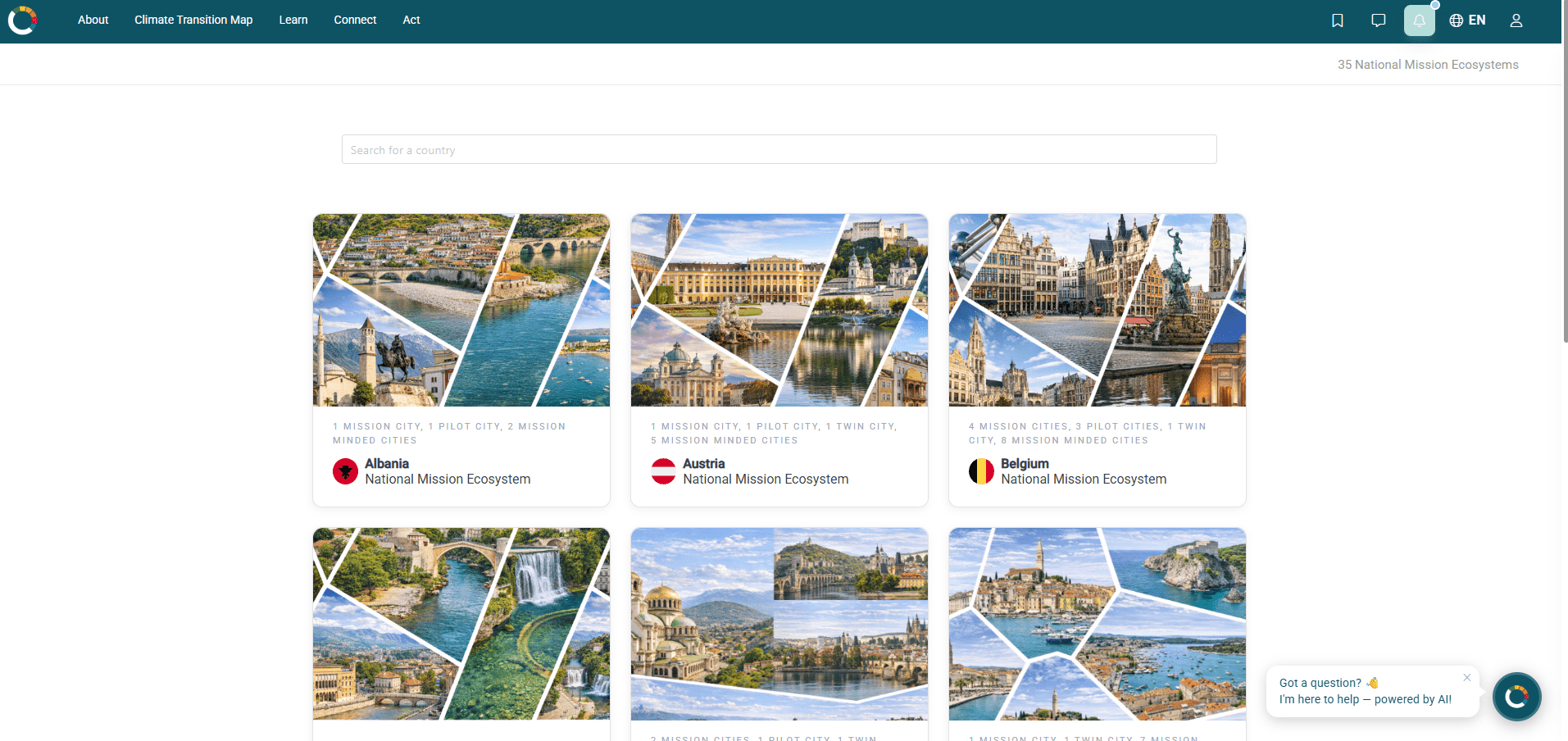
To address this, NetZeroCities, the EU Cities Mission platform, has launched the first version of its National Mission Ecosystem pages, now available for 35 countries. These pages aim to offer a clearer and more accessible way to explore how each country is organising its journey towards climate neutrality and support cities, national stakeholders, EU partners and the wider climate neutrality community to navigate this complex landscape.
Why are National Mission Ecosystem pages needed?
Whether you’re part of a city team, a national organisation or another actor involved in climate neutrality, you’re likely already engaging, in one way or another, with national actors, platforms or support structures. But these connections are not always easy to see or navigate.
You might be asking yourself:
- Who else is working on this in my country?
- What kind of national support exists?
- Where can I connect or find relevant information?
The challenge is not that these elements don’t exist, it’s that they are often spread across different places, making it harder to get a full picture or understand whether there is any coordination.
These pages are an attempt to bring some of that together.
As Jordi Mazon, Deputy Mayor of Viladecans, explains, spaces like this can become very valuable for exchange and learning between cities, especially if they remain active and useful over time:
“NetZeroCities platform for sharing projects and ideas between cities, and for training, can be very useful. At the same time, I think spaces like this need continuous facilitation and engagement, so they remain active and valuable over time.”
What are National Mission Ecosystem pages?
The pages are not a complete or fixed picture, but a practical starting point to understand who is involved, what is happening, and how efforts connect.
Each page brings together, in one place, key elements that make up a country’s climate neutrality ecosystem.
This includes:
- Cities engaged in climate neutrality efforts, from Mission Cities to Mission-minded cities participating in NetZeroCities initiatives.
- Key stakeholders and partners connected to the NetZeroCities ecosystem and national-level organisations supporting the Mission, including universities, civil society organisations, private sector actors and national contact points.
- Engagement spaces, such as country groups on the NetZeroCities Portal.
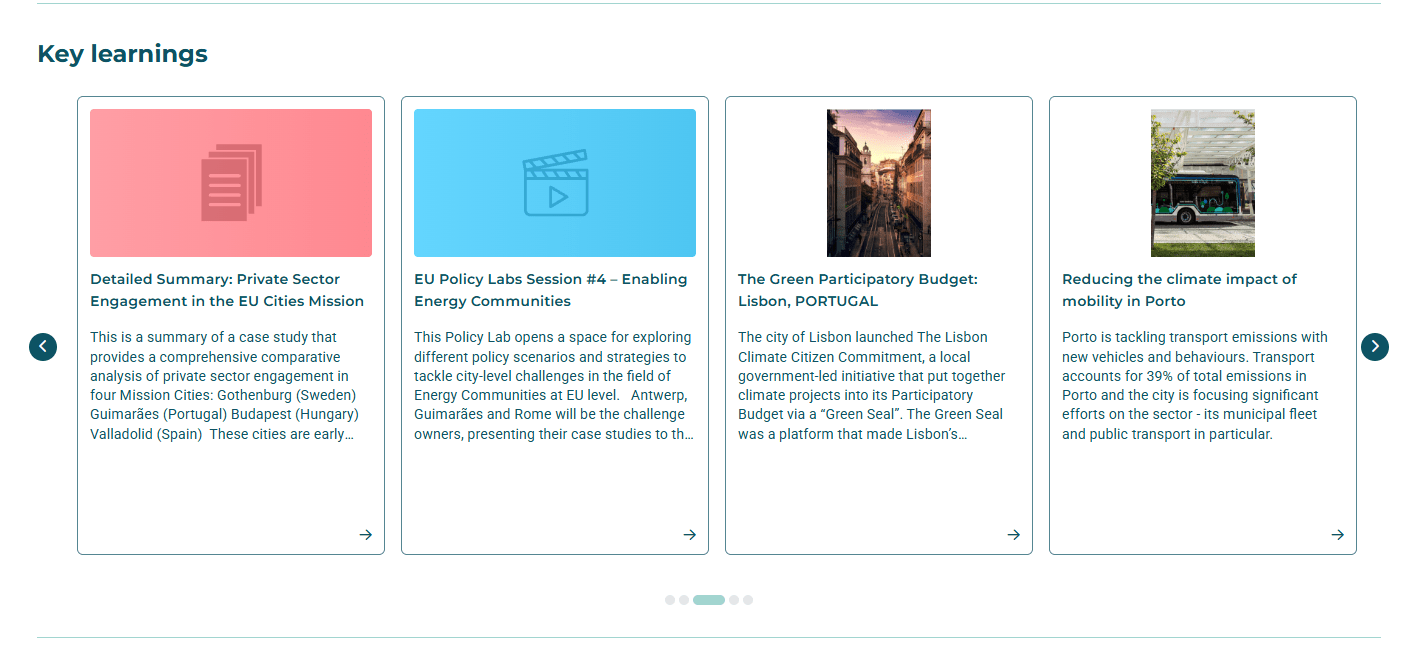
- Learnings and pilot projects implemented in the cities and developed through NetZeroCities.
- Tools like the Barometer, which offers a snapshot of how each country is progressing.
Each country page tells the story of a national ecosystem — the actors, structures and cities working together towards climate neutrality. Think of them as a working approximation: not a complete picture, but an honest reflection of what is happening on the ground and who is involved. And because this work is never static — cities progress, new stakeholders engage, priorities shift — the pages are designed to evolve with it.
Making the invisible visible
One of the ideas behind this work is quite simple: every country already has a network of actors, initiatives and relationships supporting climate action — along with real progress being made on the ground — even if it’s not always formally structured, or easy to see.
What has often been missing is not activity, but visibility.
By mapping out actors and interactions, these pages aim to:
- make it easier to understand what exists,
- help users find relevant entry points,
- and support more informed connections.
They don’t change the system itself, but they can help people see it more clearly — including initiatives supported under the Mission umbrella, such as CapacITIES.
Cecile Kerebel, a CapaCITIES partner from the Salzburg Institute for Spatial Planning and Housing (SIR), sees this visibility as one of the main strengths of the initiative:
“The biggest value of this space is that it provides a clearer picture of what is happening across Mission Cities and Mission-minded cities in different countries. It can help identify relevant pilot projects, governance approaches and concrete learnings, which is very useful when designing targeted exchange and peer-learning activities for cities.”
What about national platforms?
In some countries, coordination goes a step further through ‘national platforms’, which bring together cities with national governments and key stakeholders in a formal setting that previously wasn’t available to them.
Where these platforms exist, the pages also explain briefly:
- how they are organised,
- what role they play,
- how they support cities.
Their work often:
- Coordinates cities climate action at national level. Engages all cities, not only Mission Cities.
- Support Climate City Contracts in local languages.
- Provides structured facilitation and alignment across governance levels.
- Fosters learning and collaboration among cities.
- Builds long-term governance capacity and shared ambition.
At the same time, these pages try to capture that diversity rather than standardise it. Not every country follows the same approach and that’s expected. Each ecosystem reflects its own national context.
There is no single blueprint, only a shared ambition to support cities more effectively.
A small step towards better connections
At their core, these pages are about supporting better connections between local and national levels – also known as ‘multi-level governance’.
Climate neutrality doesn’t happen in one place alone. It depends on how different actors and levels of governance interact. This first version doesn’t solve that complexity, but it may make it a bit easier to navigate.
For example:
- A city might use the page to get a clearer sense of who to engage with nationally.
- A national actor might better understand what cities are working on.
- Both might use it as a starting point to connect or align efforts.
For Maria João from the Portuguese platform Cidades pelo Clima, one of the most valuable aspects of the initiative is precisely its potential to connect perspectives across governance levels:
“This space can be useful for facilitating multi-level governance as it gives national platforms a shared arena where local, national and European perspectives come together, helping align priorities, surface common challenges, and act as bridges between city needs, national enabling frameworks and European Mission ambitions.”
A first version, designed to evolve
These pages are very much afirst version. They are designed as a living resource and something that will grow and evolve as:
- countries deepen collaboration,
- new structures are established,
- more insights and experiences are shared.
Interestingly, across all the conversations held for this blog, cities, platforms and organisations showed a shared willingness to use the space not only to access information, but also to contribute experiences, lessons learned and practical approaches that could support others.
In that sense, the pages reflect the EU Cities Mission itself: ongoing, adaptive, and shaped by the people involved.
Where to start?
If you're wondering how this applies to you, the best way is simple: explore your country page.
Whether you're a city, a national stakeholder or part of the wider climate neutrality community, these pages are intended to offer a simple entry point to explore and connect.
Start by exploring your country page and see who is involved, what is happening, and where you can connect at: https://netzerocities.app/countries.