
Authors: Barbara Jarkiewicz and Joanna Trimble
In Copenhagen, demand flexibility prepares the city for electrification growth. In Bristol, innovative financing models are helping turn community renewable energy ambitions into investable projects. And Oslo uses its procurement power to decarbonise the construction sector. Across Europe, cities bring a groundswell of evidence to deliver one of COP31's biggest ambitions: bolstering energy security through electrification.
Electrification is a flagship of COP31's Action Agenda. Türkiye's Presidency is backing a 35-by-35 Global Electrification Pledge: electricity should supply 35% of global final energy by 2035, up from just over 20% today. The pledge covers transport, buildings and industry, and recognises that grids, storage and system flexibility must grow alongside rising electricity demand.
The number is global. But much of delivery will be local.
The 112 Mission cities supported by NetZeroCities are testing approaches to electrification that others can scale, from procurement and industry partnerships to balancing energy demand across buildings and grids. As COP31 shifts its focus to implementation, five lessons from Mission Cities show how local action can help deliver global electrification ambitions.
1. Demand flexibility prepares cities for electrification growth
Heating accounts for around half of the EU's final energy use, with demand often peaking when the energy system is already under strain. As heating electrifies, demand flexibility will be key to easing grid pressure, cutting emissions and building resilience against energy shocks.
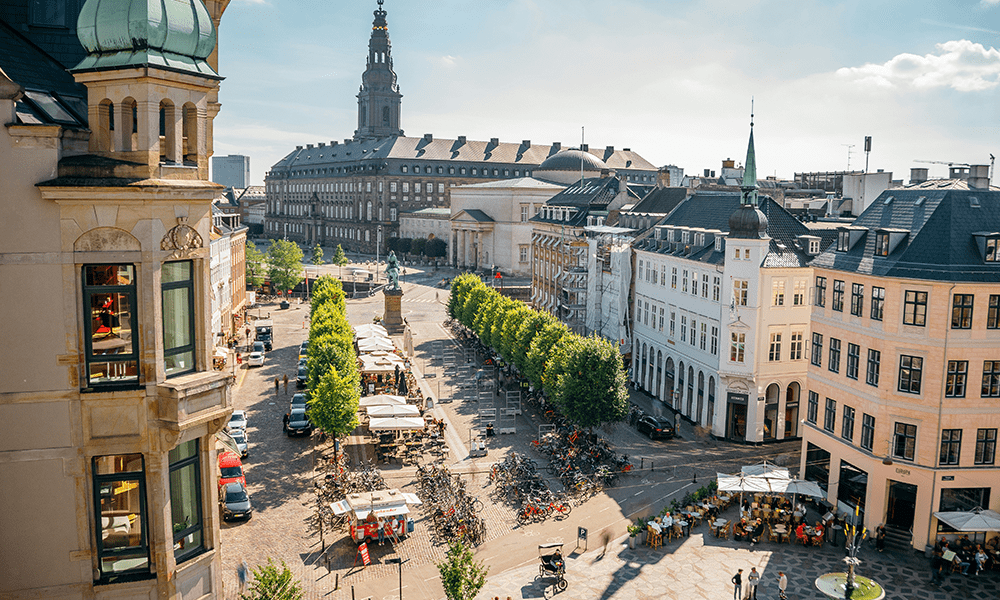
In Copenhagen, the next frontier of the energy transition lies inside ordinary buildings. Through its NetZeroCities Pilot Cities project, the Danish capital is turning its buildings from passive consumers of heat into active "flexumers" (flexible consumers) that help balance heat demand and supply.
By installing digital building controls in municipal, privately run and professionally operated buildings, the city lets heat demand shift to other times of day without compromising comfort.
The goal is to reduce city-wide heating demand at critical moments and avoid the need to activate carbon-emitting peak heating plants. This translates to lower emissions, stable energy costs and makes heating more resilient and better connected to the electricity grid.
In Finland, the Mission City of Lappeenranta is already reaping the rewards of such flexibility. By using sensors and intelligent controls to optimise heating in residential buildings, the city achieved an average energy savings of around 27% when demand response was combined with weather-based optimisation.
In an electrified future, where global energy demand is predicted to double by 2035, Copenhagen and Lappeenranta show that flexibility can play an essential role in managing electrification demand and making better use of existing infrastructure.
2. Electrifying heavy transport has a business case
In Sønderborg, Denmark, electrification has moved into one of transport’s toughest corners – heavy vehicles. But what would it take to get businesses to switch from diesel to electric? Through the Pilot Cities Programme, the city is working with local industry to accelerate the shift as the market hits a tipping point.
Through the Pilot Cities Programme, the city is working with local industry to accelerate the shift as the market hits a tipping point.
The city learned early on that eight of the ten industrial companies initially approached did not control the trucks transporting their goods. So they turned to logistics operators instead, confronting the economic barriers directly. An electric truck could cost around €350,000, compared with roughly €150,000 for a diesel equivalent. Rather than focusing on the purchase price alone, Sønderborg helps operators assess the total cost of ownership, including long-term costs, maintenance and operating conditions.
Additionally, Sønderborg acts as a service provider, connecting companies with partners and expertise to help them adapt their business models and stay competitive so new technology pays off. For other cities hoping to go electric, the city demonstrates how to show companies where investment can deliver both environmental and economic value.

3. Public procurement can spark a faster shift to electric technologies
Oslo has taken a market-making role onto the construction site. Excavators, loaders and other heavy machinery remain a significant source of urban emissions, so Norway's capital turned towards its purchasing power. Through public procurement, the city creates market demand, investment certainty and influences the wider local market to accelerate the electrification of entire sectors.
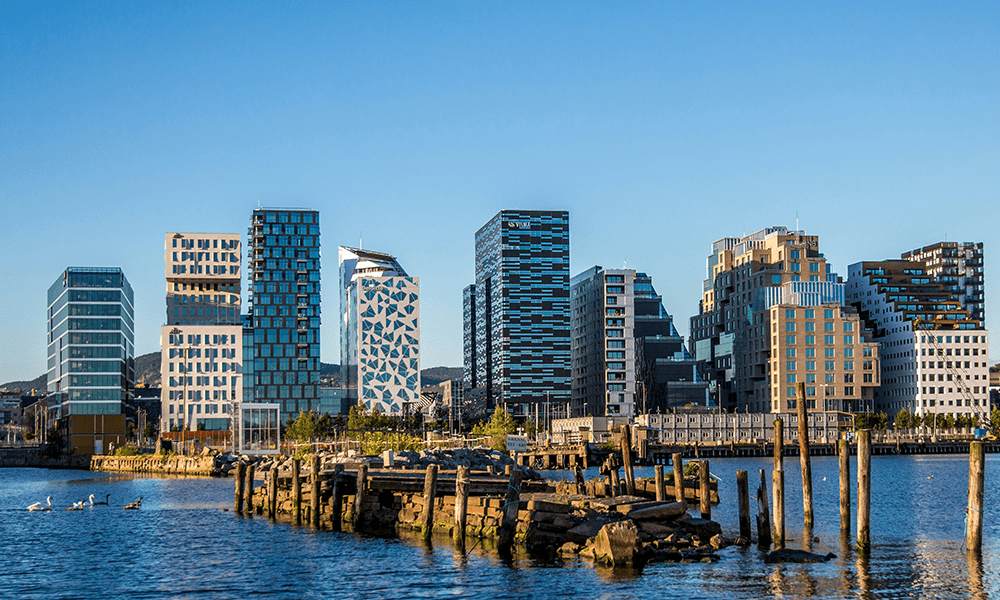
Starting with pilots, the city tested what suppliers could deliver, and over time, progressively raised the standards as technology and infrastructure matured. Then in 2019, all suppliers received a clear message: all public works commissioned by the city should be zero‑emission by 2025. These standardised purchasing criteria were uniformly applied across municipal agencies, giving suppliers the confidence to invest in fossil-free alternatives. With an expected increase in electricity demand, Oslo also began planning for future power needs and equipping suppliers with information on available grid capacity.
By 2025, around 94% of energy used on municipal construction sites came from zero-emission sources. This transition carries a wider message for industrial policy. Cities are major buyers of construction, transport and infrastructure services, helping the last domino fall for electrification to become a mainstream market.
4. Cities can find new places to generate clean electricity
Solar is now one of Europe's biggest power sources. In 2026 it made up 25% of Europe's electricity, compared with just 10% in 2021. Some of Europe's untapped renewable energy potential is hiding in plain sight. In Aarhus, Denmark, municipal buildings have roofs that cannot support conventional solar panels. Through the NetZeroCities LIFT programme, the city is testing lightweight, adhesive mounted photovoltaic panels that could turn these surfaces into sources of clean electricity. That would deliver a modest but direct cut of 5.2 tonnes of CO₂ annually.
Beyond installations, the goal is to find out if lightweight panels can close a 10-15% cost gap with conventional solar. If so, the city could use another 20,000 m² of rooftop space. Such a compact and complementary approach is one other cities can replicate.
Meanwhile, Bristol is tackling another barrier to local renewable generation. Through its LIFT project, the city council is working with an energy cooperative and a private energy company to establish a community energy accelerator. The initiative assesses 50 council-owned community buildings for rooftop solar, as well as develops the financial and commercial models needed to attract investment from community investors and commercial lenders into renewable energy projects.
Together, they illustrate how cities can unlock new sources of clean power. In Aarhus, the obstacle is engineering. In Bristol, it is finance. Both must be addressed if local renewable generation is to grow alongside electricity demand.

5. The grid underpins the success and pace of the transition
Electrification brings a fundamental challenge: cities can install clean technologies faster than their grids can accommodate them. The Hague is already facing grid congestion that delays housing and clean heating projects, motivating the city to move quickly on interim solutions like demand flexibility and local energy hubs.

In Espoo, Finland, peak electricity demand is expected to more than double this decade as heating, transport and other systems electrify. That would require an estimated €520 million in distribution network investment alongside new transmission infrastructure. Beyond these cities, the problem is sweeping, with the European Commission estimating a grid investment of €584 billion by 2030.
These pressures reveal why electricity networks can no longer be treated as a separate technical concern. Decisions about housing, transport, construction and local energy generation increasingly depend on the same infrastructure.
The implications extend to international and European policy. Ambitious electrification targets will only translate into tangible results if cities are formally recognised in key climate agreements as delivery partners.
From 35 by 35 to the city street
The COP31's 35×35 pledge calls for stronger grids, storage, system flexibility, investment and knowledge sharing. And cities are explicitly invited to help deliver on this. Europe's Mission Cities already offer a preview of what that means in practice.
But cities cannot deliver electrification alone. Many of the decisions that determine its pace, such as grid connection and permitting, energy market rules, and the funding available for local projects, sit with national governments and beyond. For European institutions, investment in clean technologies and grids must be matched by local authority to act, access to finance, and coordination across every level of government.
COP31 puts a number on the ambition. The next decade will determine whether the systems underneath have the support to match it. Far from the negotiating rooms in Antalya, the work will be done in municipal buildings, depots, construction sites, control rooms and ordinary streets across Europe. The route to 35 by 35 will be built city by city.