Author: Barbara Jarkiewicz
Across the continent, cities know their climate plans far outstrip their budgets. Facilitated by NetZeroCities, many participating cities acknowledge that municipal coffers can typically cover only a fraction of what is needed to deliver climate neutrality, often closer to a fifth than to half once the full cost of transforming buildings, transport and energy systems is on the table.
That gap will not close through grants and city budgets alone. Cities understand that this demands new financial mechanisms and coalitions between public authorities, private investors, citizens and European institutions, and that is exactly what is starting to take shape. In the past two years, from Bristol to Budapest, Drammen to Dijon, Pilot Cities Programme participants have been pioneering new models of climate finance that could transform how Europe funds its path to net zero.
Going beyond municipal budgets
Traditional city budgets were never designed for the scale of transformation now required. When Dijon Métropole analysed its climate investment needs, the numbers were sobering. Achieving carbon neutrality would require €750 million in infrastructure investment, far beyond what municipal coffers could provide.

Rather than accept defeat, the French city created something unprecedented: SEM Énergies, a hybrid public-private entity that pools projects to make them attractive to institutional investors.
The results have been remarkable. By bundling individual photovoltaic installations across parking lots, Dijon discovered that cooperation increases investment feasibility by up to 20%. What seemed impossible for isolated projects became viable through strategic coordination.
This shift from project-by-project funding to systematic investment planning is spreading across European cities. In the Netherlands, seven cities developed District Investment Platforms to mobilise private finance for gas-free neighbourhoods. Though implementation faced delays due to regulatory constraints, the platforms created new frameworks for thinking about climate investment at scale.
Citizens as investors
Perhaps the most surprising development has been the emergence of citizens as climate investors. Bristol Climate Action Investment Scheme revealed an untapped appetite for local climate finance that few had anticipated.
Investments started at just £5, making participation accessible to residents across income levels and ended with securing £1.5 million of the £2 million permitted. What shocked city officials was that many investors lived far beyond Bristol's boundaries, suggesting a national hunger for meaningful climate action.
Investors reported increased engagement with the city's broader climate work, transforming a financing mechanism into a tool for democratic participation. The scheme's success challenges conventional assumptions about how cities should fund their transitions.
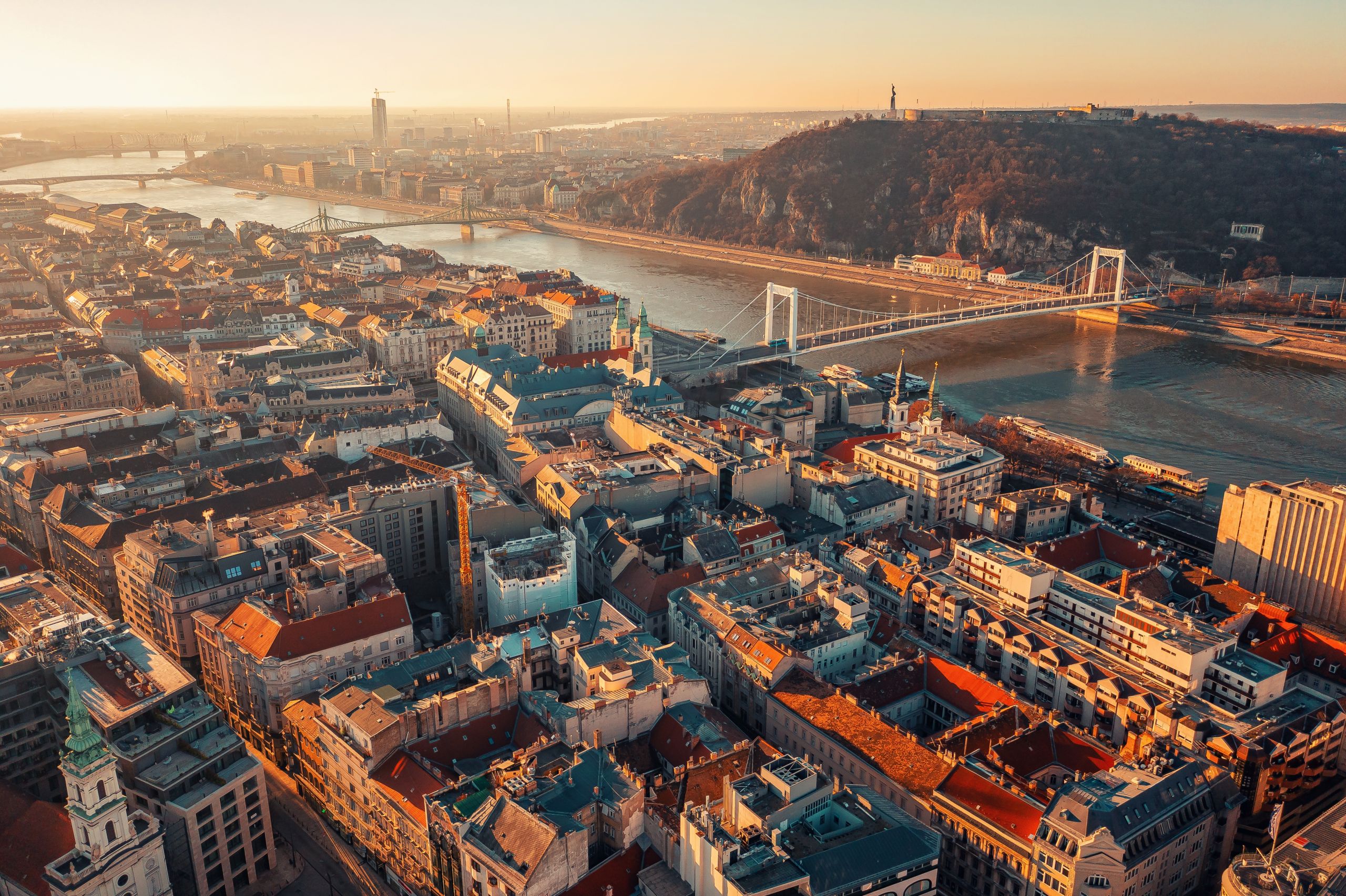
In Hungary, Budapest took a different approach, establishing a climate agency that combines bankable renovation projects with grant support specifically designed for energy-poor households. By mid-2025, ten of Budapest's 23 districts had joined the scheme, creating momentum that surprised even its architects. The model demonstrates how targeted financial innovation can address both emissions reduction and social equity simultaneously.
The private capital puzzle
While citizen investment captures headlines, the larger challenge remains mobilising institutional capital.

Bristol's Green Growth West Fund, the UK's first regional net zero impact investment fund, secured £10 million in initial commitments with a target of £100 million. Early analysis identified a pipeline of £113 million in potential projects – proof that investment opportunities exist when properly structured.
In Espoo, on Finland's southern coast, the question of who pays has been built into the city's overall strategy. The city has committed to climate neutrality by 2030 and knows that current measures will not be enough to reach its target. As part of its Pilot Cities work, Espoo has treated climate action as a shared assignment and developed an investment framework to turn green ambitions into bankable projects, bringing together businesses, civil society and residents. In practice, this means that when officials talk about decarbonising a district or a transport corridor, they also map which actors will invest and how risks and returns are shared.
Governance as financial infrastructure
The most successful financing innovations share a common feature: they treat governance as financial infrastructure. Malmö's integration of climate budgeting into municipal procurement processes created new pathways for embedding sustainability costs into everyday decisions. Rather than treating climate action as an add-on expense, the Swedish city made it part of routine planning.
Their Net Zero Malmö pilot project used sectoral roadmaps and climate budgeting to link construction projects and waste systems directly to emissions and investment decisions. The city updated procurement templates to include circular criteria, tested carbon capture options and worked with regional partners to position itself for EU Innovation Fund support. Malmö's lesson is that every euro spent through public contracts can help shift markets if the rules are written with climate outcomes in mind.
Uppsala has gone even further in tying money to emissions. Through its SCALE UP pilot project, the city created a climate budget that sits alongside the financial one, with an investment plan ensuring each department's spending is assessed for emissions impact. This approach turns abstract targets into hard choices in annual budget cycles. It also makes it easier to talk to external financiers, who can see how city investments line up with long-term decarbonisation pathways.

These cities have demonstrated that financial innovation drives technical innovation, not the reverse. When Istanbul created its GreenIST app to help residents track energy consumption, the behavioural changes it enabled generated measurable emission reductions that made the underlying investments more attractive to funders. This pattern repeats across multiple cities. Drammen's hybrid reuse marketplace succeeded because it solved real business problems for construction companies while advancing circular economy goals.
Structural barriers, shared solutions
The window for climate action grows narrower each year, but these European cities have created blueprints for financing the transition at scale. Their innovations in community investment, hybrid public-private vehicles, and integrated planning approaches provide tested models that other cities can adapt to local contexts.

The path forward requires scaling successful models while addressing persistent barriers. Italian cities discovered that while they could prepare sophisticated tools and policies, misaligned national frameworks continued to constrain their effectiveness. Their Let'sGOv initiative discovered that coordinated advocacy could unlock resources impossible for individual municipalities to access. By acting as a network rather than isolated actors, they gained political leverage with banks, national agencies, and EU institutions that transformed their financing prospects.
These experiences highlight a fundamental tension in climate finance. Cities can innovate financing mechanisms, but they cannot overcome structural barriers alone. National governments must create enabling conditions for local climate investment to flourish.
Financial ecosystem of support
What ties all these stories together is the broader architecture that NetZeroCities is building around them. The Pilot Cities Programme is one pillar. Another is the Climate City Capital Hub, a dedicated facility that helps cities translate climate plans into credible investment pipelines and then connects those pipelines with potential financiers. Led by Bankers without Boundaries, the hub provides technical assistance, supports cities in structuring projects and pools smaller initiatives into bundles that meet investor requirements. It also works closely with the European Investment Bank and other public banks, so that cities that earn the EU Mission Label can move more quickly from climate contracts on paper to projects on the ground.
The scale of the challenge remains daunting. Estimates suggest that the 112 Mission Cities will need in the order of 650 billion euro in investment to reach their goals. The emerging lesson from NetZeroCities is that progress comes where several pieces line up. Cities use the Pilot Cities Programme to prove that new business models and governance arrangements can work in real life. They develop investment plans that bundle those models into coherent portfolios. Facilities such as the Climate City Capital Hub then help match those portfolios with the right mix of grants, concessional finance and private capital.
Ambitious targets need to be matched with credible investment plans and the capacity to deliver them. That means people in city halls who understand both climate policy and finance, using tools like climate budgeting and investment frameworks, and leaning on resources such as the hub to structure deals and de-risk early projects.
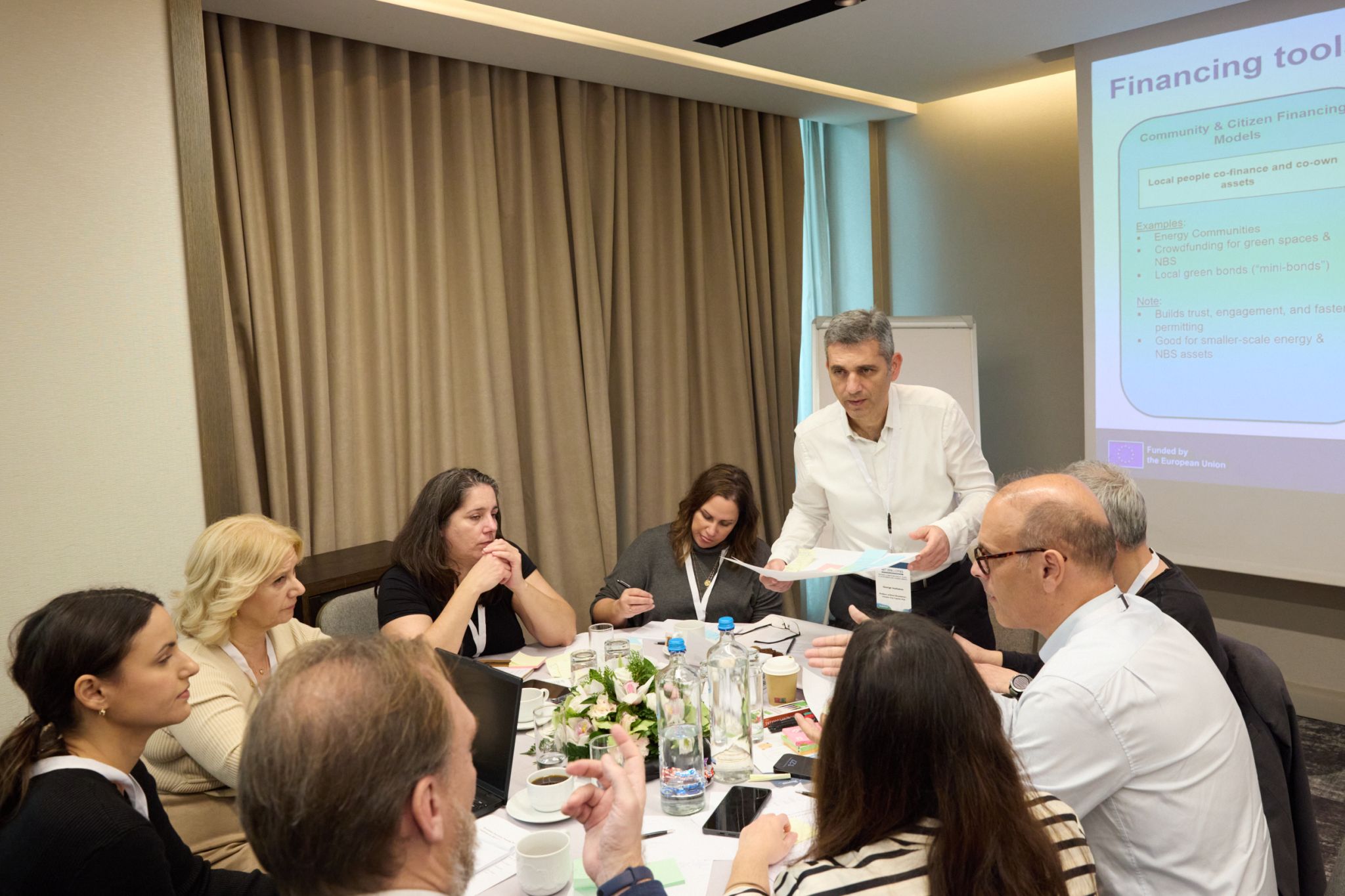
For investors, these stories show that there is a growing pipeline of projects that combine climate impact with stable, long-term returns. District heating upgrades, energy efficient retrofits, community energy schemes and low– carbon transport corridors are not abstract concepts. They are concrete portfolios that cities are now able to present in a language that banks and funds recognise.
The bill for Europe's urban transition is large and it will not be met by municipal treasuries alone. But examples above show that when finance is treated as part of the climate ecosystem, not an afterthought, it can unlock new actors, new tools and new forms of solidarity. That is how climate neutrality moves from a promise to reality.