Getting citizens more involved in city actions isn't easy – especially when action is needed beyond the life of a project. Alongside the University of Parma and the Italian Space Agency, the municipality of Parma's smart city initiative will involve citizen scientists and so faces these engagement questions directly. Alfredo Cosco from its department of digital transition writes here about what a city needs to consider when looking for lasting collaboration.
Almost every European project aimed at cities includes work on citizen engagement.
However, the risk is that a process presented as collaborative only collects opinions, leading to disaffection even among the most motivated participants and making it harder to involve them in the next project.
And repeating a good practice over periods longer than a single project makes it possible to turn engagement into behaviour.
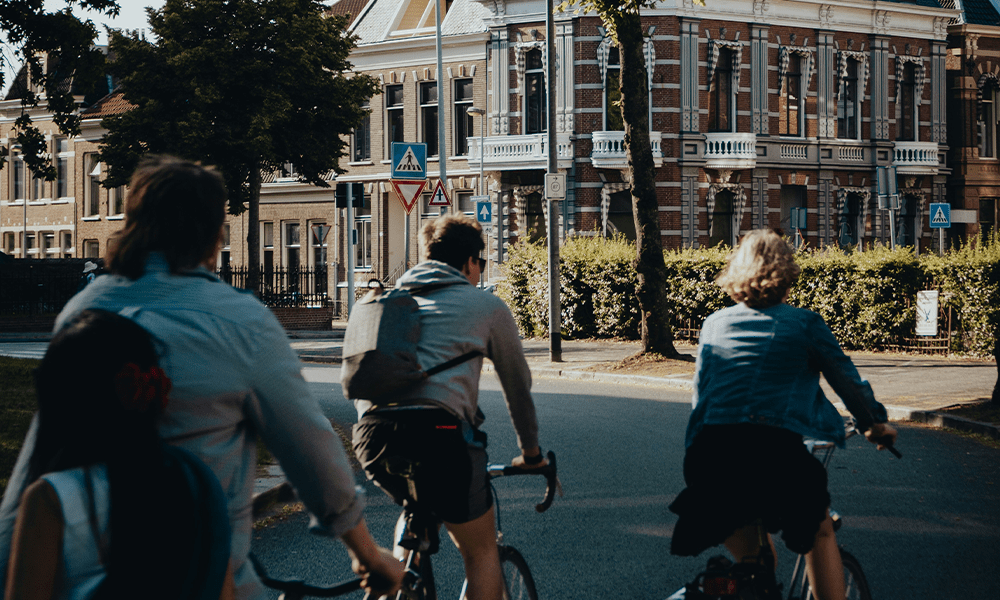
The highest level of engagement is reached when engagement itself becomes invisible. Consider a project that aims to shift urban travel from cars to bicycles. At the beginning the city has to persuade, reward and remind. If the change succeeds, over time residents take the bicycle without weighing the alternatives because it has become the ordinary way of moving around the city. At that point no campaign is needed any more, and the behaviour the project set out to produce sustains itself.
Choosing the guestlist – and getting them to the party
It is useful to separate the problem of meaningful engagement into two opening questions: what motivates a citizen to take part, and what tools the administration uses to issue its invitation. For motivations, at least four can be identified. They do not exclude one another and therefore can exist in the same person.
- Economic interest leads people to join an initiative when it proposes a saving, for example, a discount on a public transport pass.
- Personal or sectoral interest concerns people who already have expertise or a passion related to the topic, and they are usually reached through associations.
- Direct territorial interest arises when a project or a risk affects the area where people live (the most obvious example is a major public work such as an airport or a stadium), and mobilises people who do not belong to any organisation.
- Civic motivation is the willingness to contribute to a shared goal.
Each motivation also attracts people with their own particular characteristics.
The public reached through an economic incentive is large and varied, but tends to coincide with people who already use the service or with specific income groups. Those with sectoral interests are homogeneous and competent, but arrive through organised bodies that do not represent the whole population concerned. Territorial interest produces participation that is intense but limited in space and time, and often emerges in reaction to a project that has already been decided. The public driven by civic motivation is small in number but tends to stay involved over time.
As for the best tools to reach them, these are chosen according to the phase of the project.
When trying to raise awareness, reach and numbers matter, and gamification tools are well suited. In the co-design phase, competence and consistent participation matter, and associations are most helpful. In the data collection and monitoring phase, citizen science makes it possible to continue measurements with the voluntary contribution of participants.
For a medium-sized Italian municipality, where funds for direct incentives are limited, the tools that can actually be used are those with low start-up costs:
- gamification on platforms already in use,
- citizen science,
- and direct relations with local associations.
Keeping them active, however, requires continuous commitment. Without it, participation tends to fade when the project ends.
Recruiting citizen scientists in local climate action
Parma and its partners are grappling with these methods in a project that integrates satellite Earth observation data, measurements from ground sensors and other geographic data into an existing municipality platform to monitor air quality, urban surfaces, waterways and microclimate in support of its goal of climate neutrality by 2030.
The project addresses the municipal offices, which will use the data in their everyday work, and citizens. For the citizens, three channels are planned, each aiming at an audience from the groups identified above.
The first is the project website, which has to reconcile a highly scientific, very technical and specialised subject with communication that speaks to people’s basic needs, such as the quality of the air they breathe or the heat in their neighbourhoods during the summer. For this purpose, communication follows two lines: short news items and links to related content that can be read in a few minutes, and articles and interviews that explore the project’s themes in depth.
The second channel is the publication of data on the municipality’s open data portal, both in real time and as a historical series. It is aimed at people with technical skills or sectoral interests and can encourage the development of applications and services based on those data, including ones with economic returns.
The third is support for citizen science initiatives to build a network of self-built sensors, which appeals to civic motivation and adds an independent data source alongside the institutional network.
To prevent the civic network from fading when the project ends, citizen science needs to be anchored to bodies that have their own institutional continuity, such as schools and research centres. Schools renew their group of participants every year and can include the care of the sensors in their teaching activities, while research centres can ensure the validation of the data and its use in the following years.
Citizen science and city resilience
Data collection by volunteers is particularly important for a resilient smart city.
A civic monitoring network, if kept active over time, is an independent source alongside sensor and administrative data, and makes it possible to validate the same measurements in parallel.
The people who run it are also part of the social capital the city can count on when digital systems stop working – a key element of urban resilience.
The reflections above represent the opinions of the author only and arose from a session of the NetZeroCities Online Planning Lab (Module 2, practical session ‘Mapping the Ecosystem – Developing a Transition Team’, 29 September 2026).
More information about NetZeroCities’ online lab and upcoming sessions can be found here.
InSTARSmartCity (Integrated Satellite and Terrestrial dAta for a Resilient Smart City) is a project of the Municipality of Parma carried out with the University of Parma under an agreement with the Italian Space Agency.