Author: Joanna Trimble
Every sector faces the pressing need to outpace climate impacts for economic and environmental security. In France, Bordeaux Métropole teamed up with Bordeaux University to turn this challenge into an opportunity. By forging alliances across business, government, research, and civil society, they hope to build a foundation capable of catching cascading climate risks in their tracks.
"Collective investments in resilience are cheaper than everyone building their own fortresses. Shared standards reduce fragmentations. Complementarities are positive sum."
With this message at the World Economic Forum, Canada's Prime Minister Mark Carney urged that decades of prioritising efficiency over resilience have created fragile dependencies that leave citizens increasingly vulnerable – now intensified by mounting climate impacts. And he called on middle powers to work together to strengthen economic and political resilience.
Compared to other EU nations, France's metropoles play a unique role in governance. As "local middle powers", they're positioned to take a territorial approach – one that aligns national and regional policies with the local priorities of cities, communes, and citizens.
In steering coordination across transport, housing renovation, energy, land use, waste and business, they hold the potential to set systems change in motion at a pace matched to demand to bolster climate resilience.
© Bordeaux Métropole
In this very spirit of transformative connection, Bordeaux Métropole paired its wealth of expertise in the green transition with the University of Bordeaux's in bridging research and real-world solutions. And as part of the NetZeroCities Pilot Cities Programme, they launched the project, Acting by Collaborating Differently (ABCD) to bring to life the climate neutrality goals set out in their territorial Climate Plan (PCAET) and Climate City Contract.
"Our goal is to make climate action a shared responsibility across all sectors and connect actors throughout the entire territory to drive this forward. It's a model of systemic transformation rooted in resilience," says Clémence Belloir, Network Animation and Coordination Officer with Bordeaux Métropole.
To do this, the project threads research from diverse fields – social psychology, economics, materials science, sociology and more – into the fabric of decision-making.
"We're working closely with local authorities to align our work with their road maps to ensure our topics are impactful. We also involve businesses so sustainable economic and environmental transitions continue to play an increasingly important role in their agendas."
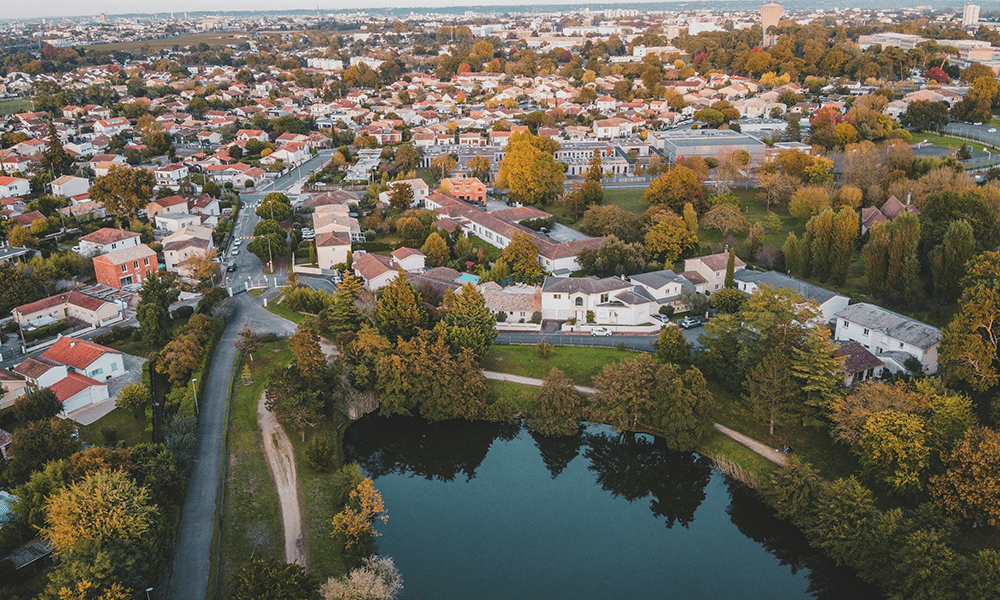
Bordeaux Métropole spans 28 cities that weave together a patchwork of smaller and larger cities, home to over 820,000 people. From Pessac and Mérignac, where calm residential streets meet research and industrial hubs, to Saint-Médard-en-Jalles and Cenon, where leafy streets blend with vibrant urban life, to the historic heart of Bordeaux – the "Port of the Moon" – a city with Roman roots and gleaming white stone buildings, recognised by UNESCO for over 2,000 years of trade, cultural exchange, and commercial links.
With expansive influence over the health and quality of life of its residents, Bordeaux Métropole serves as a pivotal backbone of climate resilience. That makes the ABCD project ambitions even bolder. And it casts a spotlight on something less visible: the value of a shared understanding.
Architects of understanding cultivate a common language for change
The Bordeaux Métropole territory is teeming with a wealth of talent to power change. Associations work on everything from community education to zero waste, air quality, transport, food, and the circular economy. Local authorities tackle these issues through their roadmaps, and businesses are key to turning those plans into practice.
But while these groups are united by a groundswell of motivation to achieve the same city goals, they often lack a dedicated place to come together.
"People from so many different backgrounds and sectors don't really have the opportunity to meet, exchange ideas, collaborate and build new projects," says Claudia Simon, European Project Coordinator with University of Bordeaux.
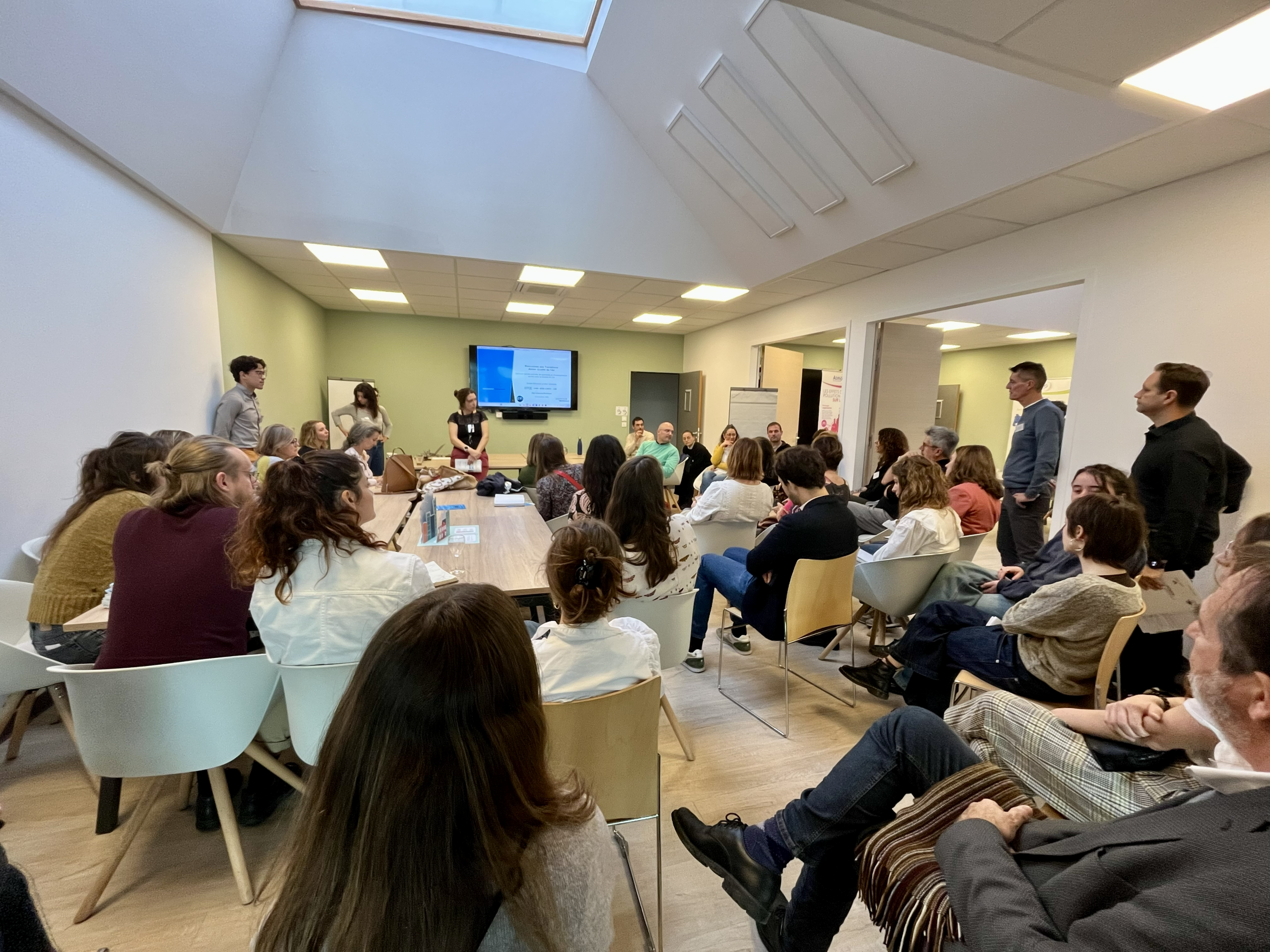
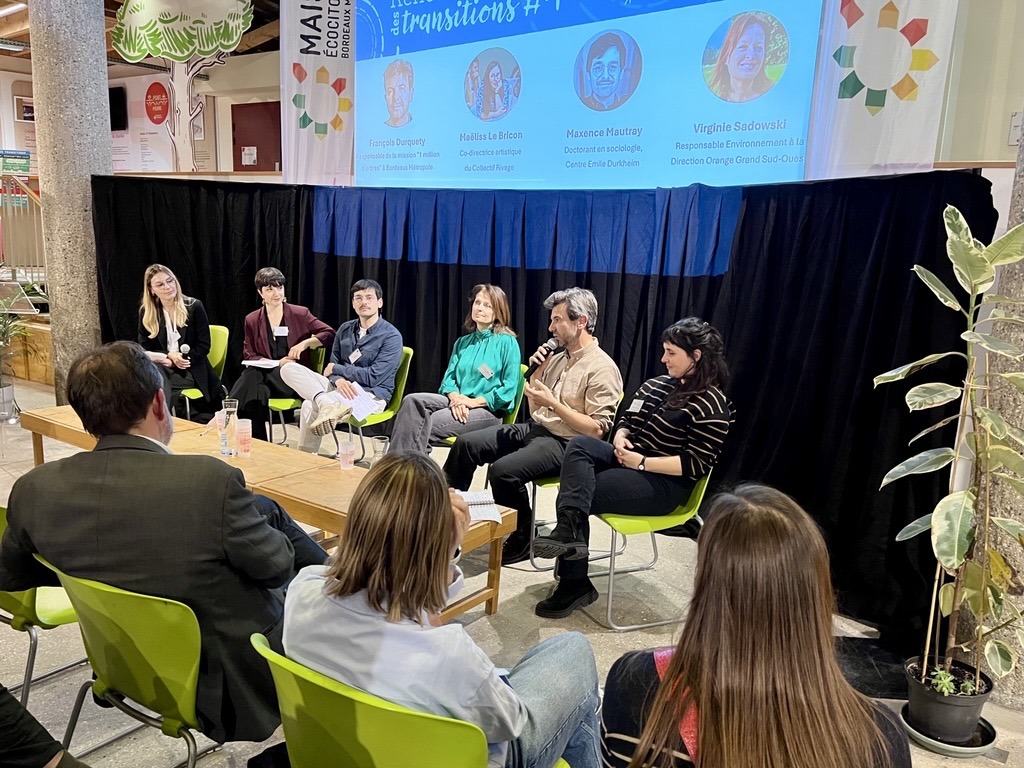
That's why Bordeaux Métropole and Bordeaux University rolled out the red carpet for innovative ideas at their annual Transition Forum (Rencontres des Transitions). Bright minds from across the territory gathered around one mission: transform the urban ecosystem of ideas into action.
"Through our yearly event, we're creating the conditions for collaborative project development across sectors to achieve widespread ownership," says Belloir. "And we don't just bring people together. We help them make sense of the nature and pace of the other's work. Processes need to be adjusted and concepts need translation. We're forging a much-needed common language to propel the ecological transition forward."
© Bordeaux Métropole
This dynamic institutional duo uses scientific mediation – where dense research is revived into clear insights – to fuse new perspectives, marking their role as architects of understanding.
"We bring a methodology for connecting people dealing with the same issues in different ways," says Simon. "And we break down barriers, building something effective."
From lab to launch, setting ideas in motion
The Forum supports local actors – academics, administrations, businesses, and associations – in moving their ideas from concept to delivery.
“Everything needs to be built from scratch: partnerships between stakeholders that usually do not work together, the ideas and projects,” says Belloir. “And this event really allows us to first guide participants in using research insights to shape hypotheses and then for those to be tested, learned from, improved and eventually replicated.”
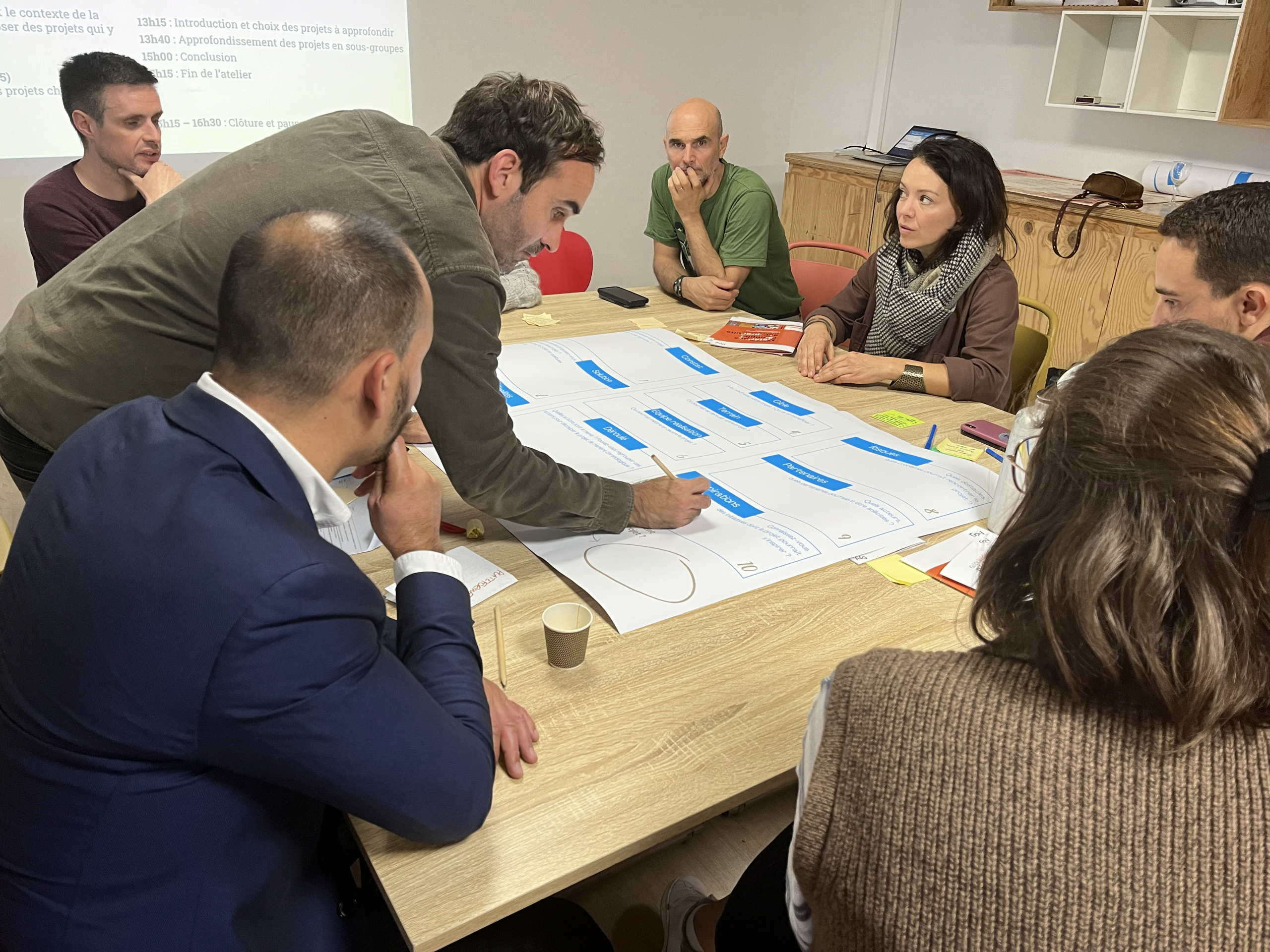
© Bordeaux Métropole
During the real-world testing phase, some pilot projects faced hurdles. But teams embraced the spirit of innovation, which often means stumbling first.
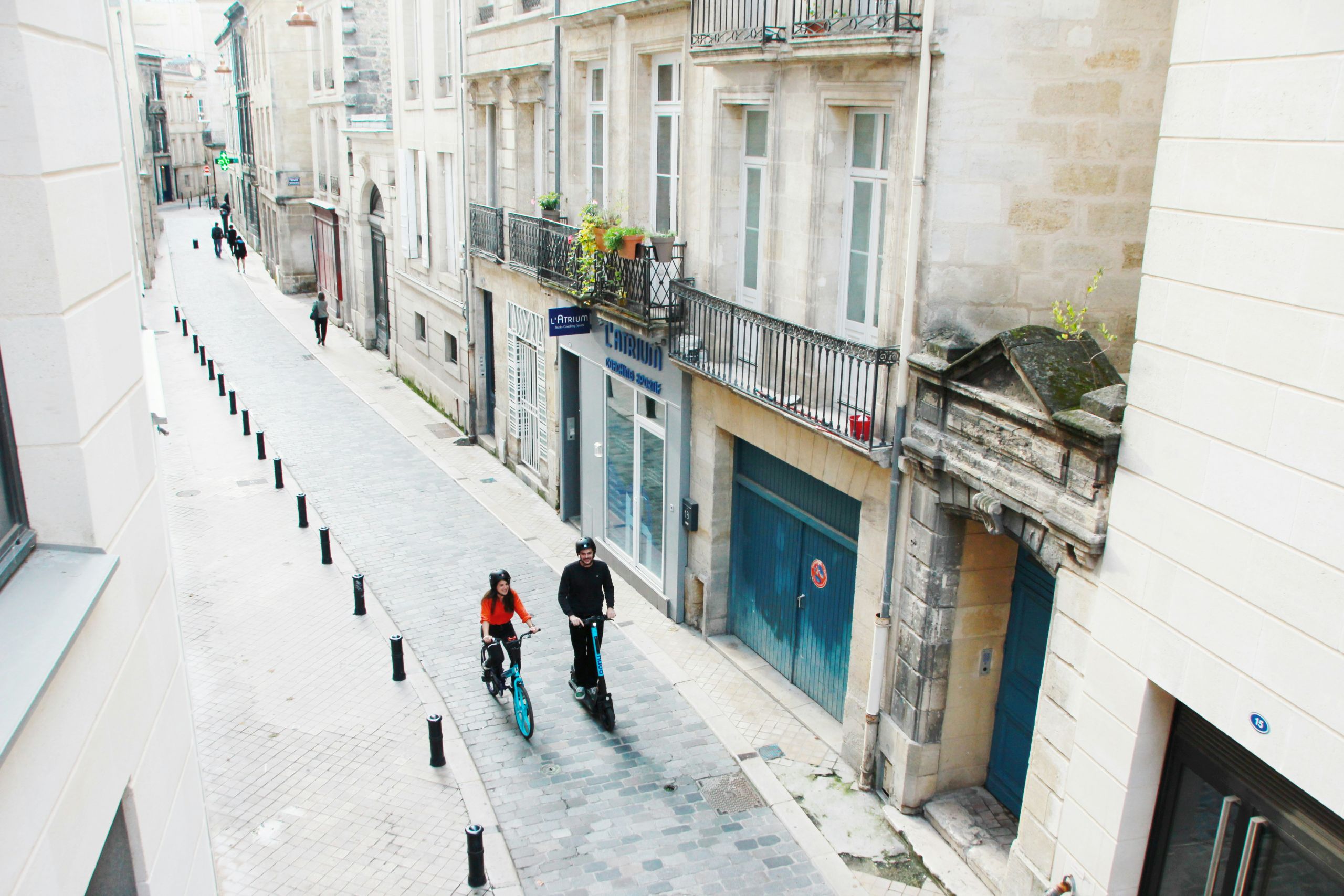
For example, one standout project from the event led to local authorities, businesses, social psychologists, and sustainability organisations joining forces to cut down solo car commuting. The plan was to use behavioural science to guide and encourage employees to choose greener transport options.
"The initial experiment didn't go as planned," explainsSimon. "We didn't have enough participants, and our social psychology experiment required strict timing and control groups, which made it difficult to fit the real conditions of a business environment."
But the pilot's shortfalls proved instructive, opening the door to refine the solution and draw in new stakeholders.
"Based on our learnings and the ideas they inspired, we're now helping the Métropole's mobility department engage with companies that haven't yet developed mobility plans," says Belloir. "And we're organising an event to bring these companies together, where the department will explain what a mobility plan is, how it can be implemented, and what support the Métropole can provide. This in turn helps us reach our original goal of reducing solo car use."
An information product is also in the works to help companies guide employees toward lower-carbon commuting choices. And already, the lessons they've learned have been invaluable.
"This entire process allowed us to learn from and share insights on our experimentation so people can understand what worked and what didn't," says Simon. "For example, we can now showcase how to better apply these kinds of experiments in a way that accommodates business needs."
The project also harnesses the power of the Maison Ecocitoyenne – a landmark of the ecological transition in Bordeaux – to share these lessons widely. Through exhibitions, workshops, and conferences, this resource centre brings together new audiences, like collectives and school groups, to raise awareness on the importance of every visitor doing their part to create a sustainable city.
Local middle powers shape the future of territorial resilience
Through discovery and experimentation, the Métropole and University illuminate how different approaches across sectors click or clash, simplifying a complex landscape of action. This makes it easier for people to imagine, take ownership of, and apply new solutions to their own fields.
As Bordeaux Métropole embraces its role as an influential local middle power and forges unique collaborations across the territory, it has the timely opportunity to sow widespread clarity of purpose and a unified vision – seeds that grow into shared standards that reduce fragmentation, build out complementarities, and foster resilience at a faster pace.