
Authors: Barbara Jarkiewicz, Deniz Celik Bulgurlu, and Joanna Trimble
Cities are where climate ambitions hit the ground running. Their innovation and leadership translate climate targets into real emissions cuts across every municipal system – how it powers and moves, how it builds and consumes. More than 20 Turkish municipalities compared their climate implementation experience, and the conversation kept returning to one place: the biggest barriers are no longer a lack of plans, but the institutional machinery needed to deliver them.
They need effective governance, finance, sufficient capacity, reliable data and more to close the persistent gap between planning and delivery.
"This is the work NetZeroCities is built for: giving cities the support, resources and tools to reach climate neutrality, and making sure what one city learns reaches the others. In Ankara, Türkiye, at the İNŞA × CapaCITIES 2.0: Joint Steps for Climate-Neutral Cities conference, cities brought into sharp focus what works, what still holds them back and which common priorities must be set to move forward." – said Deniz Celik Bulgurlu, City Advisor, NetZeroCities.
The discussion comes at a significant moment for Türkiye, as Antalya gears up to host the UN Climate Change Conference COP31 in November 2026. Cities are the local drivers of the transition, best placed to deliver on the Action Agenda. And the experiences of Turkish municipalities offer practical insights on the conditions that enable cities to do it.
Here are five priorities that emerged from Ankara that can strengthen local climate action in Turkey and beyond.
1.Cities need investment-ready projects and financing to match them
Financing remains one of the greatest barriers to accelerating climate action. Yet international grants can only go so far. Rather than providing a long-term financial model, grants are often most valuable when they help cities test ideas and improve project readiness. Funding greenhouse gas inventories, technical assessments, and preparatory work can turn an early concept into a project capable of attracting larger-scale loans and private investment.

İNŞA Forum Panel © İNŞA
Cities identified several conditions needed to make this possible. Projects need a strong framework that supports planning, design and financial structuring to become financeable, supported by a phased pathway in which grants fund early-stage work, loans follow as projects mature, and private investment and capital markets come into play later.
Practical, standardised decision-support tools can help cities match projects with the right financing models, from grants and loans to ESCO models, blended finance, public-private partnerships and green financial instruments. Just as importantly, municipal teams need the skills and capacity to develop projects and navigate these increasingly complex financing options.
The broader lesson is that grants work best when they seed investment rather than sustain it. Building the pipeline between an idea and an investable project is therefore as important as increasing the amount of finance available.
2. Climate action requires governance across the whole municipal administration
Coordination is a design problem, and some cities are already solving it. Several cities showed that governance works best when climate objectives are woven across the entire municipal administration rather than parked in a single department. And the consensus was clear: baking in institutional coordination from the start produces the best results.
Governance models proved strongest when they featured institutional coordination, shared ownership and clearly defined responsibilities across departments.
Several practical solutions included appointing climate focal points across departments, sometimes spanning hundreds of staff, and developing integrated data systems coordinated through strategic planning units.
Internal review processes can also ensure that climate implications are weighed in at the design stage before they proceed, instead of being discovered later. Procurement can incorporate criteria such as emissions thresholds or sustainable materials into tender requirements and scoring, the same way social clauses already shape bids, which pulls every supplier towards better practice. Shared repositories of coordination tools packaged for shareability can also help these approaches travel between municipalities, allowing them to be adapted to different levels of capacity.
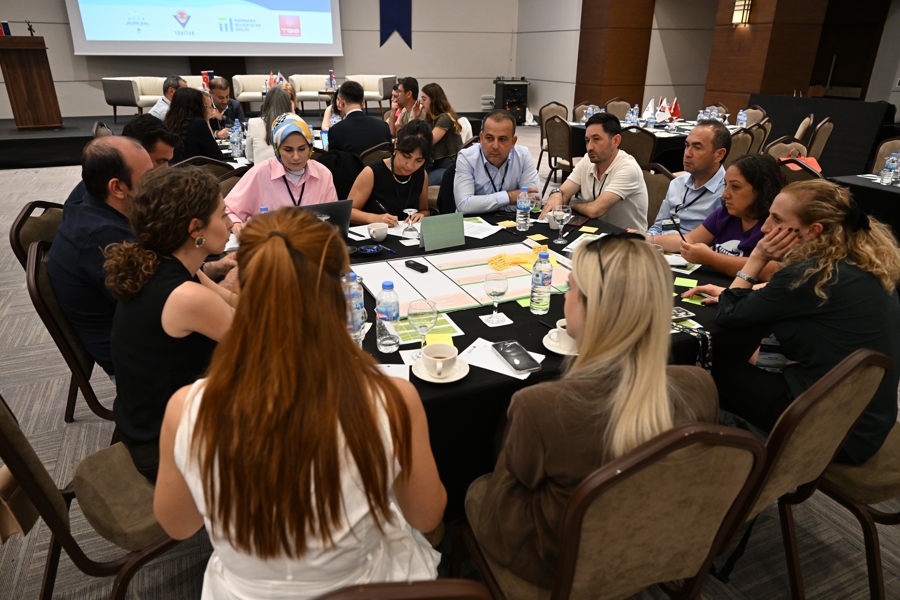
İNŞA Forum © İNŞA
These changes determine whether climate strategies survive contact with everyday municipal decision-making. A climate target has limited power if investment, procurement and planning decisions continue to be made without reference to it.
3.Effective governance cannot follow a one-size-fits-all model
Municipal capacity varies enormously. A metropolitan municipality with hundreds of climate staff faces fundamentally different governance challenges compared to a small district where climate responsibilities may fall to a single official, or no one at all.

Joanna Kiernicka-Allavena, Deputy Director, NetZeroCities speaking at the İNŞA Forum © İNŞA
Treating both in the same way risks widening the implementation gap that climate policy is trying to close.
Scale matters and applying identical rules to both simply produces failure at the smaller end. Governance frameworks, support mechanisms and regulatory expectations therefore must reflect these differences – and be differentiated by scale, with shared or regional service models for the smallest municipalities. This paves the way for a coherent national approach.
Municipalities also cannot decarbonise assets and systems they do not control. Even within their own boundaries, many municipalities lack control over the forests, carbon sinks, and large green spaces they cannot manage. Cities can only act right up to the edge of their authority, which compels the need for clearer division of responsibilities between national and local government, and between metropolitan and district municipalities.
4. Building a pathway for a just transition
The just transition agenda offers a valuable framework to ground local climate plans in social equity, but it's the least developed area for cities. Tackling energy poverty, for example, requires social protection to be combined with investments in energy efficiency, access to clean energy, and employment opportunities linked to the green transition.
What emerged was a clear call for stronger local needs assessments, systematic use of spatial and socio-economic analyses, and gender disaggregated indicators to underpin climate plans. Cities were also clear that aggregated and estimated data will not cover everyone. The people most exposed to the effects of climate change are often the ones least visible in official records, missing from the datasets a strategy is built on. Elected neighbourhood principals (Muhtar) are a vital link for reaching those residents, gathering information, and turning a climate plan from a document held at city hall into something that connects with people it's meant to serve.
5. Climate data must be a shared public infrastructure
Beyond collection, data is a question of access and use. For many cities the problem was not a shortage of data. They needed access to reliable data that already exists and systems capable of translating it into useful evidence for decision-making.
For example, transport authorities, energy distribution companies and other organisations often hold datasets with essential insights for local climate planning. But access to it is often limited – with transport data being one of the hardest to obtain for many municipalities. The effort to obtain it often costs more time than the analysis itself, leaving less to translate into evidence to support their strategies.
Other gaps have direct implications for a just transition. Data on energy poverty, disability, migration and income is often unavailable at neighbourhood scale, partly due to data-protection rules towards central social-services records. That makes it harder to identify the most vulnerable communities and design adaptation measures that respond to local realities.
Cities repeatedly emphasised that these challenges are better addressed nationally than municipality by municipality. A coordinated open-data system, with shared protocols and common reporting standards that would improve data availability, clarity on data ownership, and interoperability across municipalities with different sizes. Ideally, those standards would line up with international reporting frameworks, so a city gathers its data once and submits it multiple times, instead of rebuilding the same figures for each new platform and framework.
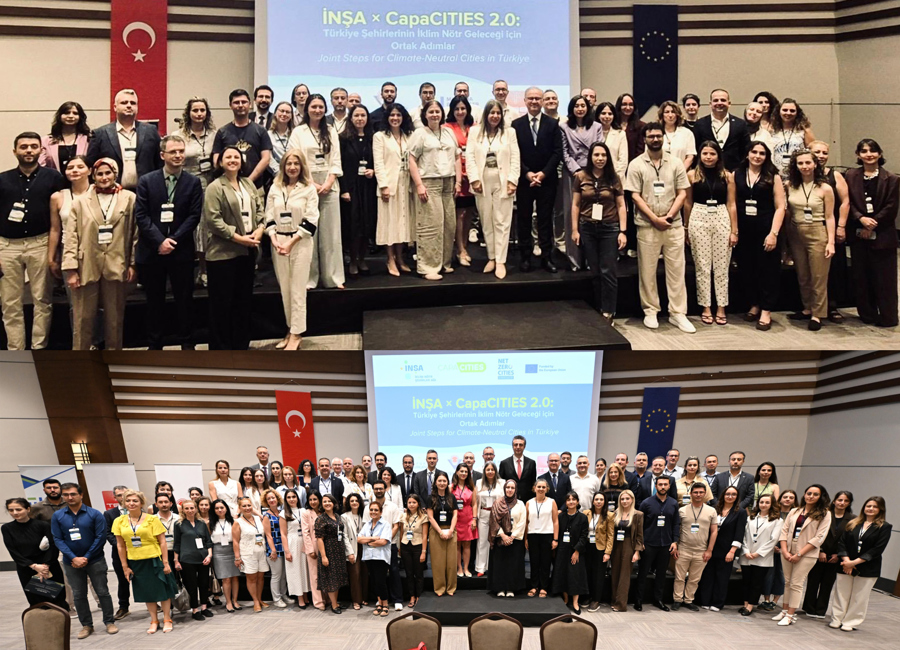
İNŞA Forum © İNŞA
Beyond global targets, cities need enabling conditions to deliver
What came out of Ankara was not a call for another round of climate plans, but rather the means to deliver the ones cities already have. What turns a plan into action is a municipality's capacity to run it, the data to guide it, and the finance to build it.

"These are precisely the kinds of implementation questions that become visible when cities are able to compare experiences. Municipalities will inevitably find different solutions, but because they work under the same national framework, one city's experience in one area can quietly answer another's question elsewhere, and taken together, those experiences can reveal common conditions that make climate action easier to deliver," – said Celik Bulgurlu.
COP31 gives those lessons additional urgency, but their relevance extends well beyond one conference. If national and European climate ambitions are to translate into measurable change, cities need more than targets to work towards. They need the institutional conditions to deliver them.
Learn more about the Türkiye Climate-Neutral Cities Network (İNŞA) led by Marmara Municipalities Union. İNŞA harnesses the commitment of 55 Turkish municipalities to advance climate action, thanks to the support of NetZeroCities' City Expert Support Facility – delivering tailored support to cities that advance their climate neutrality efforts.
Thanks to our partners, TÜBİTAK and Union of Municipalities of Türkiye from CapaCITIES 2.0, for joining forces with us and bringing national platforms and stakeholders together around a shared purpose.