Author: Barbara Jarkiewicz
The shift in how cities move is happening in places people notice immediately. It's tangled up in the school run, the commute, deliveries, parking, the width of a pavement. Cities across Europe are finding out just how far they need to reach to get it right, and that cutting emissions from mobility usually means engaging with a lot more than the vehicles themselves.
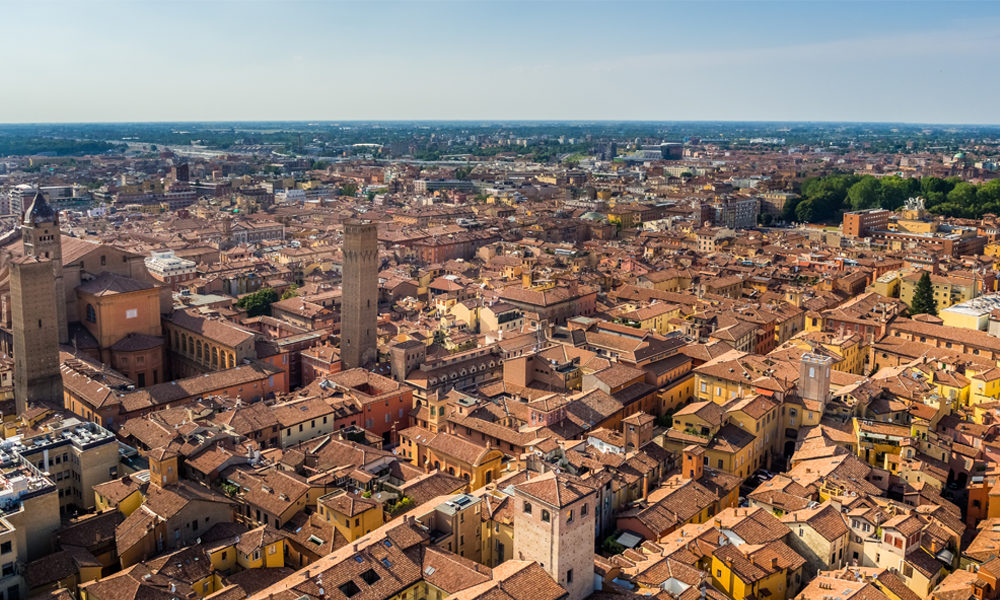
Take Bologna. The tram is coming back, and with it, the city has had to pick a fight with one of the most politically radioactive things in urban life: the parking space. The Red Line is the first of four planned battery-hybrid tram routes, eventually stretching 60 km and carrying 300,000 commuters a day. But you can't lay tracks through a dense historic centre without taking space away from cars.
Rather than treating it as a headache, Bologna leaned into it. Parking rules and pricing are being rebuilt around the new tram network. Park-and-ride hubs will let people leave their cars before they even reach the centre. Cycling infrastructure is expanding alongside it. Along the city's UNESCO-listed porticos, reclaiming parking space is viewed not as a loss but as a way of giving the public realm back to people and rethinking how the city moves.
Bologna's experience captures why transport remains such a difficult part of Europe's climate puzzle. Transport made up roughly 31% of EU greenhouse gas emissions in 2023. International aviation, shipping and road transport alone account for almost 73%. Cities themselves are responsible for around 23% of the EU's transport emissions.
Part of what makes the challenge hard is that mobility is a sum of millions of small decisions made every day. Is the bus actually going to show up on time? Would you let your kid cycle to school on that road? Can a small delivery company afford to go electric?
A growing number of cities are exploring those questions through their work with NetZeroCities, using local pilots to see what will work best before trying to scale it. Their approaches differ, but they share a recognition that electrifying existing traffic will only take them so far. Streets, behaviour, freight, public transport, planning rules and business models all come into play.
Taking space back from the car
Ioannina, in northern Greece, is testing this at the neighbourhood scale. The city developed Greece's first standardised methodology for climate-neutral zones and chose the Ampelokipoi neighbourhood as the testing ground. Before changing the streets themselves, officials modelled combinations of mobility, green space and energy interventions. The proposals included 598 metres of pedestrianisation and a 4.2-km cycling network.

Planning extended beyond city hall. More than 200 residents joined workshops, and four secondary schools serving 962 students helped shape Bike2School and Walk2School routes. Lawyers, engineers and planners were involved early too, partly to understand what could already be done within existing legislation.
For Giorgos Antoniou, the project coordinator, reclaiming street space has implications well beyond transport. Car-free zones, low-speed areas and mixed-use streets can be difficult to deliver, he says, but they also "open up so much public space for people".
Elbasan in Albania is taking a similar experimental approach under the eCIM project. As car use has increased and walking and cycling have declined, the Albanian city has started testing temporary cycling infrastructure alongside smart crossings and air-quality monitoring.
Both cities are applying the same logic: let people feel a different street before you ask them to vote for it and let the city learn what actually works before it spends real money on it.
Changing the daily routine
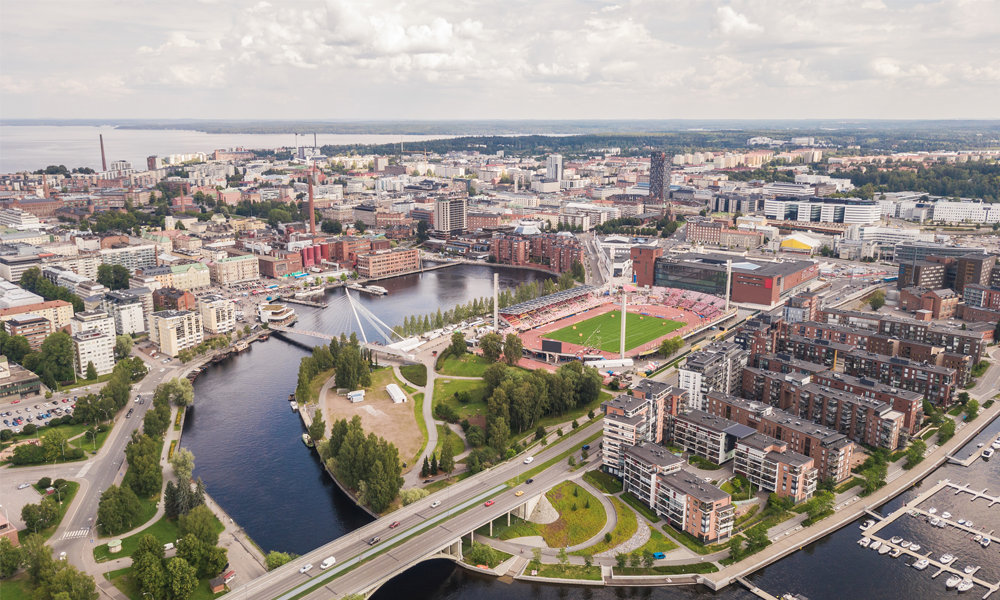
Infrastructure only works if people use it. Thanks to its work under the Pilot Cities Programme, Tampere, Finland, offers a revealing example in their Mobility Mindshift project. Walking, cycling and public transport accounted for 62% of trips in 2023. Yet the city found a gap in the journeys. Nearly half of trips between two and five kilometres were still being made by car.
So the city went straight to young people, on the theory that habits formed now will stick. It surveyed 753 young residents and pulled 120 students from four schools into workshops where Lego, Play-Doh and maps doubled as design tools for bike lanes, footpaths and public spaces. Some of those ideas are expected to shape the redevelopment of the Hakametsä Sport Campus. "Building a greener city once, together, can shape a lifetime of greener habits," says project manager Maiju Juntunen.
A few hundred kilometres away in Lahti, the question was how employees get to work. The city worked with them to map commuting patterns and identify what was getting in the way of dropping cars. Over 1500 employees took part, pointing at often ordinary barriers, from inadequate cycling facilities to public transport that did not fit people's schedules.
The language used to talk about mobility matters too. Health, safety, lower costs and an easier daily routine gave people reasons to change that felt more immediate than carbon reduction.
Freight brings the economics into view
Then there are journeys most residents rarely think about. Every supermarket delivery, parcel and construction project adds another layer to urban transport. In Lahti, heavy vehicles account for 42% of road transport emissions.

The city's ZERO-TRAIL work looks beyond the truck itself, combining a Sustainable Urban Logistics Plan with mapping of freight flows, charging needs, business models and regulation. The lesson is predictability. Companies are more likely to invest when charging infrastructure, policy and demand point in the same direction.
Gävle in Sweden has reached a similarly important conclusion. Its work on freight electrification initially focused heavily on transport operators and charging infrastructure. Conversations with the sector exposed another bottleneck. Haulers can struggle to justify investing in electric trucks without sufficiently long contracts from the companies purchasing their transport services.
That pushed the city to widen the conversation to freight buyers as well as operators, while researchers model regional charging demand to understand where infrastructure actually needs to go.
Gothenburg is testing a similar idea through a wider coalition. The city wants to cut transport's climate impact by at least 90% by 2030 and reduce motorised traffic by a quarter. Through its FastForward Green City Zone, property owners, employers, mobility companies and other partners are piloting shared mobility, public transport and zero-emission logistics together.
Sometimes the obstacle is hidden in a contract
The lesson matters to policymakers. City hall controls only some levers, making the ability to convene private actors' part of the transition itself.
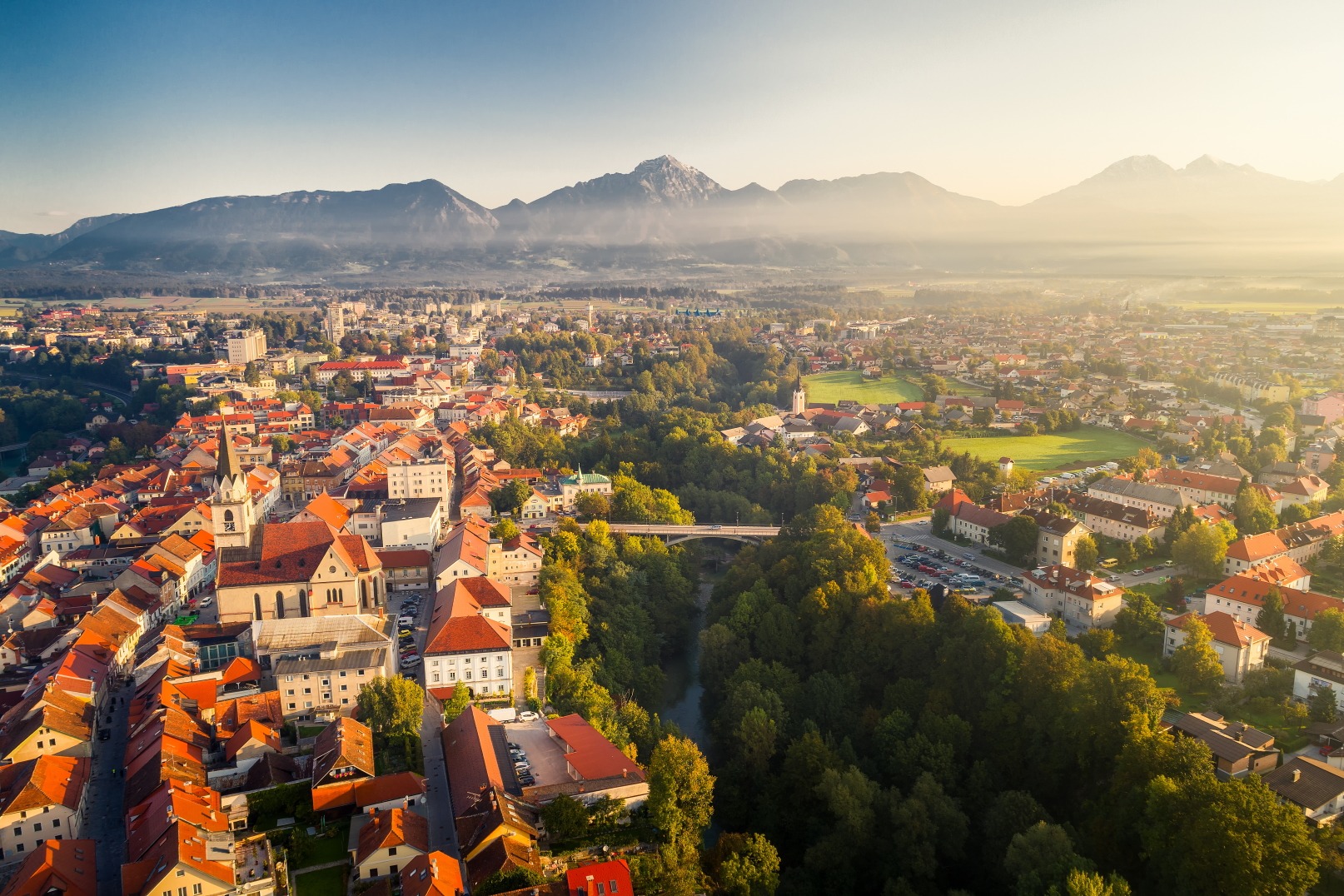
Kranj discovered this when it tried to modernise a public transport system that had remained mostly unchanged for almost three decades. The Slovenian city wanted a Mobility-as-a-Service platform bringing buses, walking, cycling and shared mobility together. But access to data from its transport concessionaire proved insufficient.
So Kranj began gathering data itself, equipping buses with computers and sensors. Passenger and route information can now feed into decisions on stops, timetables and the network, while the city's smart card has been extended to public transport.
The experience also made its way into future contracts. Open data requirements have now been incorporated into transport agreements, giving the municipality better access to the information it needs.
That may prove more important than technology itself. Through its NetZeroCities pilot with Ljubljana and Velenje, Kranj began moving away from an infrastructure-first mindset. Instead of predominantly focusing on what to build, officials began asking how the mobility system works and what value it provides.
From experiments to a European shift
Those local experiments are happening as Europe raises the stakes. Under revised trans-European transport network rules, 431 urban nodes are required to adopt and monitor Sustainable Urban Mobility Plans by 2027. The plans will arrive on paper. Making them visible on the street will be harder.
Cities need room to test changes before scaling them. They need investment that joins up public transport, walking, cycling, electrification and logistics. They need procurement and regulation that give private actors confidence to invest. And they need to involve the citizens. The payoff isn't just carbon. Fewer cars mean safer routes for kids. Walking and cycling are good for public health. Better transit means better access to jobs and services. Cleaner logistics means less noise and cleaner air.
None of these produce a single blueprint. Bologna is starting with trams and parking. Tampere is putting Lego in the hands of teenagers. Lahti is looking at economics. What connects them is a growing understanding that mobility is shaped by an entire urban system. Changing that system takes experimentation and political courage. It becomes durable when the cleaner journey is also the safest and most practical one. That is when the mobility transition starts showing up in everyday life.