Host: Sean Errey | Produced by NetZeroCities
Episode summary
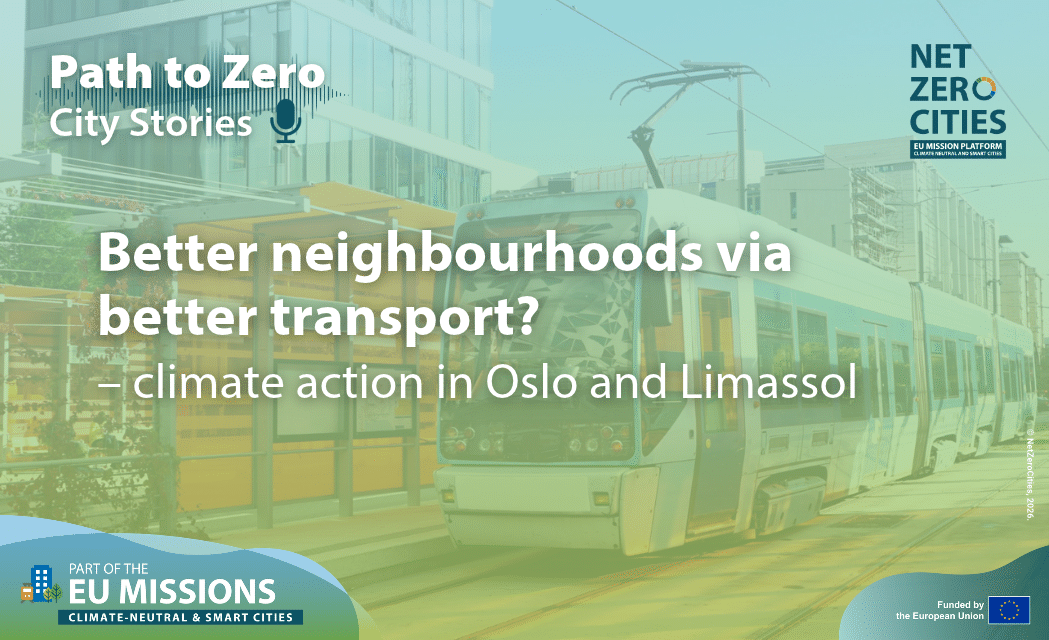
How do you move around your city? And what would it take for that choice to be easier, greener, and better for everyone? In this episode of Path to Zero: City Stories, host Sean Errey explores one of the biggest levers in urban climate action: mobility. Featuring the Mayor of Limassol, Cyprus, and a climate expert from Oslo, the episode shows that rethinking how people move through cities isn't just a transport challenge – it's a story of identity, public space, urban density, local economies, and the long-term shape of a city itself.
Limassol is a fast-growing Mediterranean port city where over 90% of journeys are made by car, and green space covers less than 2% of urban land. Mayor Yiannis Armeftis explains how the EU Cities Mission is giving Limassol both the ambition and the framework to rethink its streets, increase density, and build green corridors. Oslo's Hilde Solli offers a different perspective: a city that has spent decades building transit-oriented development and nudging citizens toward walking, cycling, and public transport, and learning, sometimes the hard way, that even broadly welcome change creates friction. Both cities are honest about what transformation actually takes.
Listen to the episode
View on Zencastr
Five key takeaways
- Mobility transformation is urban transformation. Changing how people move isn't just about transport infrastructure; it reshapes public space, urban density, local economies, air quality, and social life. As Mayor Armeftis puts it, what is happening to a city is not only a transport story, but a story of transformation.
- If you design a city for cars, you get cars. Limassol's experience shows that adding roads and parking perpetuates car dependency. Breaking the cycle requires redesigning the city itself; increasing density, shortening distances, and creating green corridors that make walking and cycling viable.
- Making the sustainable choice the easy choice takes decades. Oslo has been building its transit-oriented approach since the post-war years, expanding the city along subway lines and densifying around transport hubs. The result is a city where public transport, walking, and cycling are genuinely competitive with the car, but that outcome took generations of consistent policy.
- Change creates friction, even when people broadly support it. Both cities acknowledge that reducing parking, reallocating road space, and changing daily routines can generate real resistance from residents, businesses, tradespeople, and disability advocates. Navigating that friction honestly and transparently is part of the job.
- Long-term financing is as important as long-term vision. Limassol's transformation requires an investment of €1.3–1.5 billion, with two-thirds needing to come from the private sector. The EU Cities Mission framework helps cities build the credibility and governance structures needed to attract that capital over the long term.
Guest quotes
"What is happening to a city is not only a transport story, but a story of transformation. Mobility is no longer a purely technical issue. It's directly linked with the quality of life of the citizens, public health, and economic activity."
Yiannis Armeftis — Mayor of Limassol, Cyprus | ~ 02:15
"If we design a city for roads and for cars, we will have cars. Our approach to address these concerns is clear and direct communication with people, transparency, a continuous dialogue."
Yiannis Armeftis — Mayor of Limassol, Cyprus | ~ 11:30
"It's a political vision for Oslo that public transport, walking and biking should be the easiest choices for people in their everyday life."
Hilde Solli — Agency for Climate, Oslo | ~ 09:10
Guest Bios
Yiannis Armeftis — Mayor of Limassol, Cyprus
Yiannis Armeftis is the Mayor of Limassol, Cyprus's second-largest city and fastest-growing urban area. An architect by training, he brings a city-planning perspective to Limassol's climate transformation, linking mobility directly to urban density, green space, and the long-term identity of the city. Limassol is one of the 112 EU Mission for Climate-Neutral and Smart Cities, and under Mayor Armeftis's leadership the city is pursuing an ambitious €1.3–1.5 billion investment programme, including 20km of green cycling and walking corridors, 25 new neighbourhood parks, and 10,000 new trees.
Hilde Solli — Agency for Climate, Municipality of Oslo, Norway
Hilde Solli works at the Agency for Climate within Oslo's municipal government, where she focuses on the city's long-term mobility and land-use strategy. Oslo has been building its transit-oriented development approach for decades, expanding the city along subway lines and consistently working to make walking, cycling, and public transport the default choice for residents. Between 2015 and 2023, Oslo installed 155km of new and upgraded cycling infrastructure and reduced the risk of fatal or serious cycling collisions by 47%.
Resources & links
→ NetZeroCities — Official Website & podcast hub
→ Spotify
→ EU Mission: 100 Climate-Neutral and Smart Cities
Produced & scripted by Alan MacKenzie | Edited & designed by Anne-Charlotte Costabadie | Hosted by Sean Errey